Published on: 2026-03-10
Many people think investing requires large capital, discouraging beginners. Yet fractional shares, ETFs, and automated platforms allow you to start small.
Understanding how to start investing with little money is less about the initial amount and more about disciplined strategies. Investors who prioritise consistent contributions, diversification, and long-term investing often achieve stronger results than those trying to time the market with larger, irregular investments.
Investors can begin building portfolios even with small amounts of capital.
Starting early allows compound growth to work over longer time horizons.
ETFs, index funds, and fractional shares provide accessible investment options.
Dollar-cost averaging supports disciplined and consistent investing.
Long-term strategies often outperform short-term trading attempts.
One of the most important principles in investing is that time in the market often matters more than the size of the initial investment. Investors who begin early give their capital more time to grow through compounding.
Compound growth happens when returns earn more returns. Instead of just earning interest on what you invest, you also earn on gains. Over time, this effect can boost portfolio growth.
Even modest monthly contributions can grow substantially when invested over many years.
This example shows disciplined investing can turn small sums into larger portfolios. Despite yearly fluctuations, long-term investors often gain from economic growth and reinvested returns.
For beginners concerned about limited capital, the key message is clear: starting early and investing consistently can be more powerful than waiting to build a larger initial investment.
Small investments may seem insignificant at first, but consistent contributions, reinvested returns, and compound growth can gradually transform modest portfolios.
Reinvesting dividends or interest generates additional returns, accelerating growth over time.
Regular investing also reinforces financial discipline. Instead of attempting to predict short-term market movements, investors simply continue contributing to their portfolios while allowing time to work in their favour.
Even those starting with minimal capital can gradually build diversified, long-term portfolios.
Warren Buffett is one of the world’s most renowned investors. He began investing as a teenager, buying small amounts of stock in companies he understood and focused on long-term growth rather than quick profits. Over decades, disciplined investing and a value-oriented approach allowed him to build extraordinary wealth. Buffett’s story demonstrates that consistent, patient investing, even with modest initial capital, can lead to significant financial outcomes.
Modern markets offer accessible investment vehicles for small amounts. These let investors build diverse portfolios without big sums.
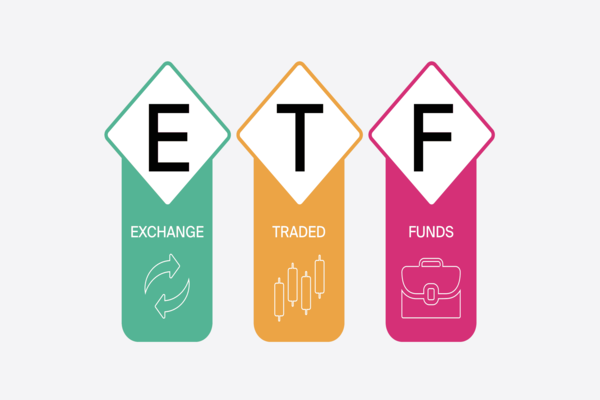
ETFs are funds that trade on exchanges like stocks. Each holds assets such as stocks, bonds, or commodities.
One of the primary advantages of ETFs is diversification. By purchasing a single ETF, investors can gain exposure to dozens or even hundreds of underlying securities.
ETFs are popular for low-cost investing, as they have lower management fees than actively managed funds. For new investors, ETFs offer broad market exposure while reducing the need to choose individual stocks.
Examples of ETFs include SPDR S&P 500 ETF (SPY), which tracks the S&P 500 and provides exposure to large U.S. companies, and Vanguard Total Stock Market ETF (VTI), which offers exposure to the entire U.S. equity market.
Fractional shares let investors buy partial shares instead of a whole share.
For example, some well-known technology companies trade at prices exceeding $500 per share. Without fractional investing, investors with limited capital might struggle to gain exposure to these companies.
Fractional shares let investors spread small amounts of capital across assets. This enables individuals to build diversified portfolios, even with modest capital.
Index funds are a popular, long-term, low-cost investing option.
An index fund tracks a specific market index, such as a broad benchmark. Rather than trying to outperform the market through active management, index funds aim to match the index's performance.
Because they require less active management, index funds often have lower expense ratios. This cost efficiency makes them attractive to individuals who want to implement small-investment strategies while maintaining broad market exposure.
Examples of index funds include Vanguard 500 Index (VFINX) and Schwab Total Stock Market Index (SWTSX).
Investors with smaller amounts should use strategies that emphasise consistency, diversification, and risk management.
Dollar-cost averaging is a strategy in which investors contribute a fixed amount to investments at regular intervals. These intervals might be weekly, monthly, or quarterly.
This strategy reduces pressure to time the market. When prices fall, the fixed amount buys more shares. When prices rise, the same amount buys fewer shares.
Over time, dollar-cost averaging smooths volatility and supports consistent investing.
Diversification reduces risk. Spreading money across asset classes limits losses from any one asset. A simple diversified structure might look like the following:
For investors learning to invest with limited capital, diversification ensures portfolio growth is not reliant on a single asset or market segment.
Successful investing depends on patience, not rapid trading. Investors who frequently adjust their portfolios in response to short-term market movements may incur unnecessary costs and make emotional decisions.
Long-term investors reach goals by contributing regularly and letting investments compound, even with small portfolios.
Beginners with small capital often make mistakes that reduce long-term gains.
Small investors should build consistent habits rather than chase quick profits. Avoiding mistakes protects and grows investments.
Set a regular investment schedule: Even $50–$100 monthly can grow over time.
Avoid chasing short-term trends: Stick to your strategy and avoid reacting emotionally.
Reinvest dividends: Let returns compound by automatically reinvesting them.
Start with diversified funds: ETFs and index funds reduce risk compared to single stocks.
Keep costs low: Use low-fee investment options to maximize long-term growth.
Yes, many modern brokerage platforms allow investors to begin with small amounts through fractional shares and exchange traded funds. These tools enable individuals to build diversified portfolios even when their starting capital is limited.
Exchange traded funds, index funds, and fractional shares are commonly used by investors with smaller budgets. These investments provide diversified market exposure while keeping costs relatively low.
Many investors choose to invest monthly because it aligns with income cycles. Regular contributions support dollar-cost averaging and encourage consistent portfolio growth over time.
Investing small amounts can still produce meaningful results when contributions are consistent. Over long periods, compound growth and reinvested returns can significantly increase the value of modest portfolios.
Investors should be aware of market volatility, concentration risk, and emotional decision-making. Maintaining diversification and a long-term perspective can help manage these risks.
Learning how to start investing with little money is an important step for many beginners entering financial markets. While large capital can accelerate investment growth, it is not required to get started.
Modern investment tools allow individuals to build diversified portfolios with relatively small contributions. Focusing on consistent investing, diversification, and long-term strategies, investors can gradually grow their portfolios.
Disclaimer: This material is for general information purposes only and is not intended as (and should not be considered to be) financial, investment or other advice on which reliance should be placed. No opinion given in the material constitutes a recommendation by EBC or the author that any particular investment, security, transaction or investment strategy is suitable for any specific person.