Published on: 2026-03-17
In financial markets, trends rarely move in a straight line forever. Even the strongest bullish or bearish trends eventually lose strength, slow down, and reverse direction. This phase, known as trend exhaustion, marks a critical turning point when market momentum begins to fade.
Understanding trend exhaustion is essential for traders and investors because it helps identify when a trend may be nearing its end. Recognising these signals early can improve trade timing, reduce risk exposure, and prevent entering positions just as the market is about to reverse.
Trend exhaustion occurs when buying or selling pressure weakens after a sustained move.
It often appears near market tops or bottoms before a reversal or consolidation.
Traders use volume, momentum indicators, and price patterns to identify exhaustion signals.
Recognising exhaustion helps improve risk management and trade exits.
Trend exhaustion refers to a condition in which a prevailing market trend begins to lose strength because the dominant side (buyers in an uptrend or sellers in a downtrend) is no longer able to push prices significantly further.
In simple terms, trend exhaustion means the market is “running out of fuel.” This does not always result in an immediate reversal. In some cases, the market may enter a period of sideways consolidation before establishing a new direction.
Identifying exhaustion requires combining multiple signals rather than relying on a single indicator.
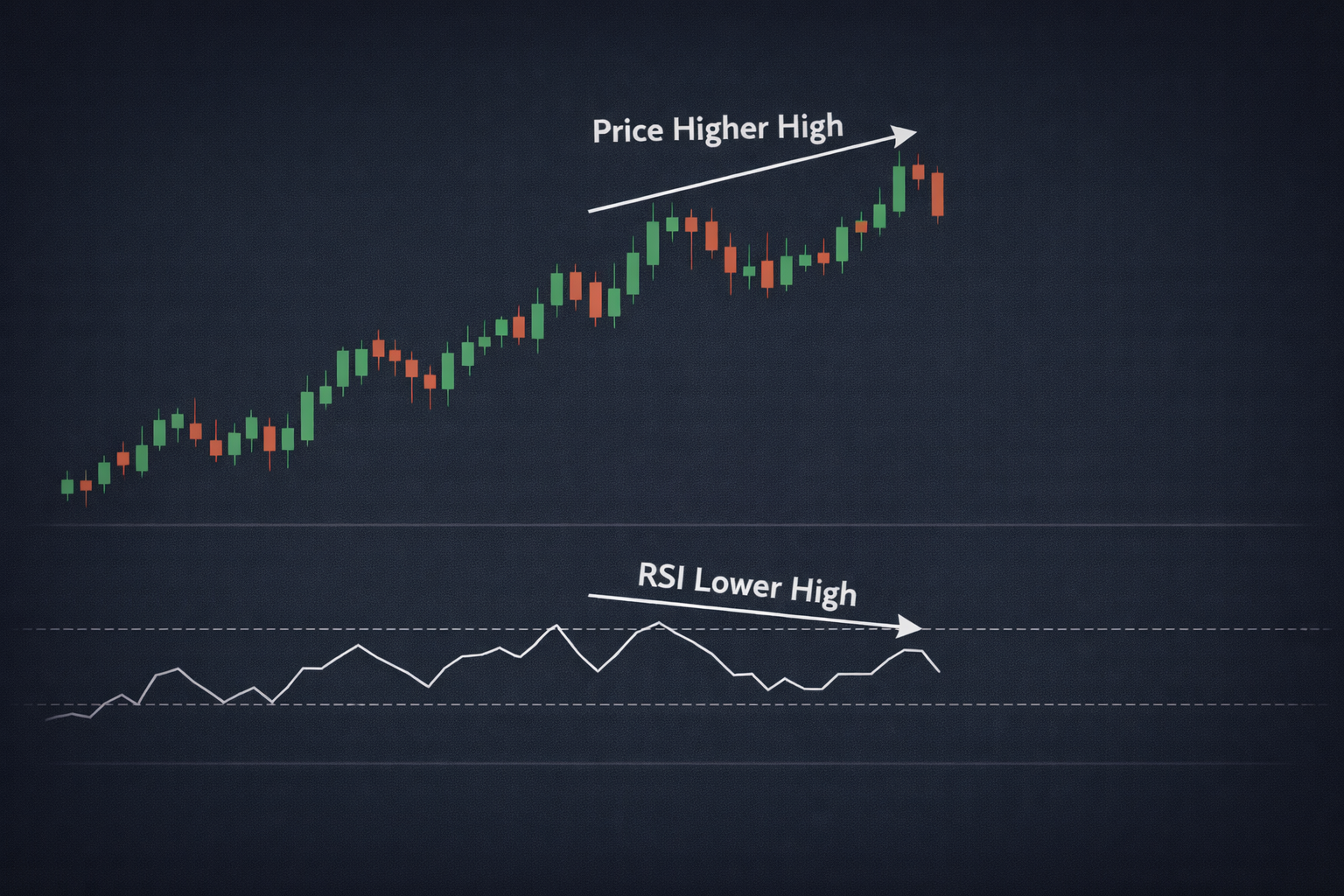
When prices continue to rise while momentum indicators weaken, it signals fading strength.
RSI: Lower highs while price makes higher highs
MACD: Histogram weakens despite price trend
Stochastic: Overbought/oversold divergence
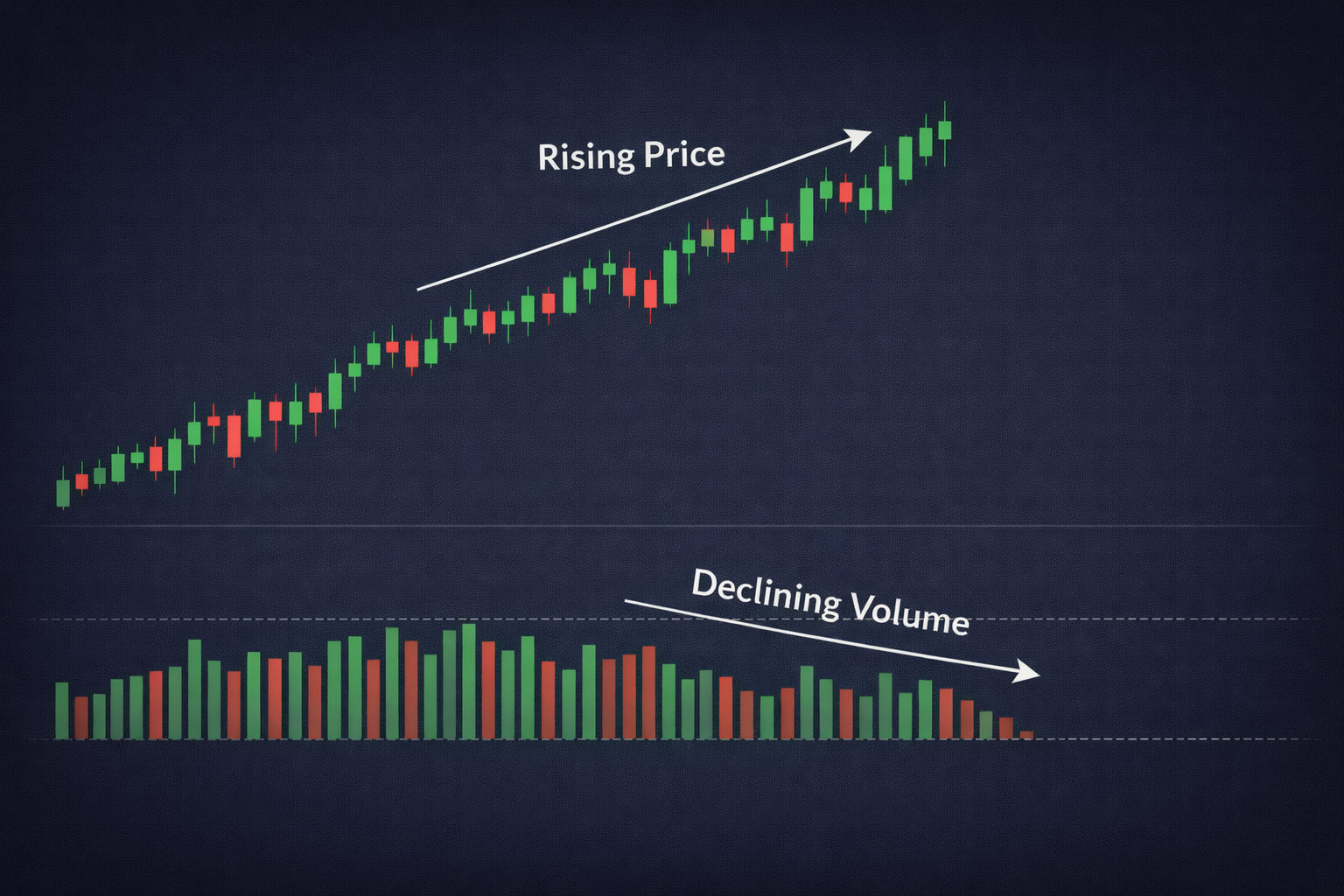
A strong trend is usually supported by high volume. When volume starts decreasing:
It indicates reduced participation.
Suggests weakening conviction.
Signals potential exhaustion.
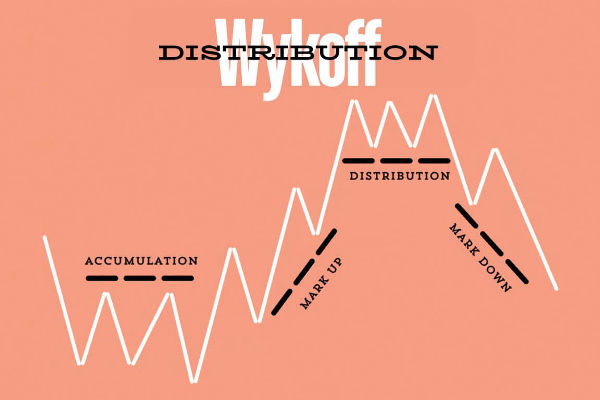
Certain chart patterns are classic exhaustion signals:
Double top / double bottom
Head and shoulders pattern
Rising wedge / falling wedge
These patterns reflect a struggle between buyers and sellers.
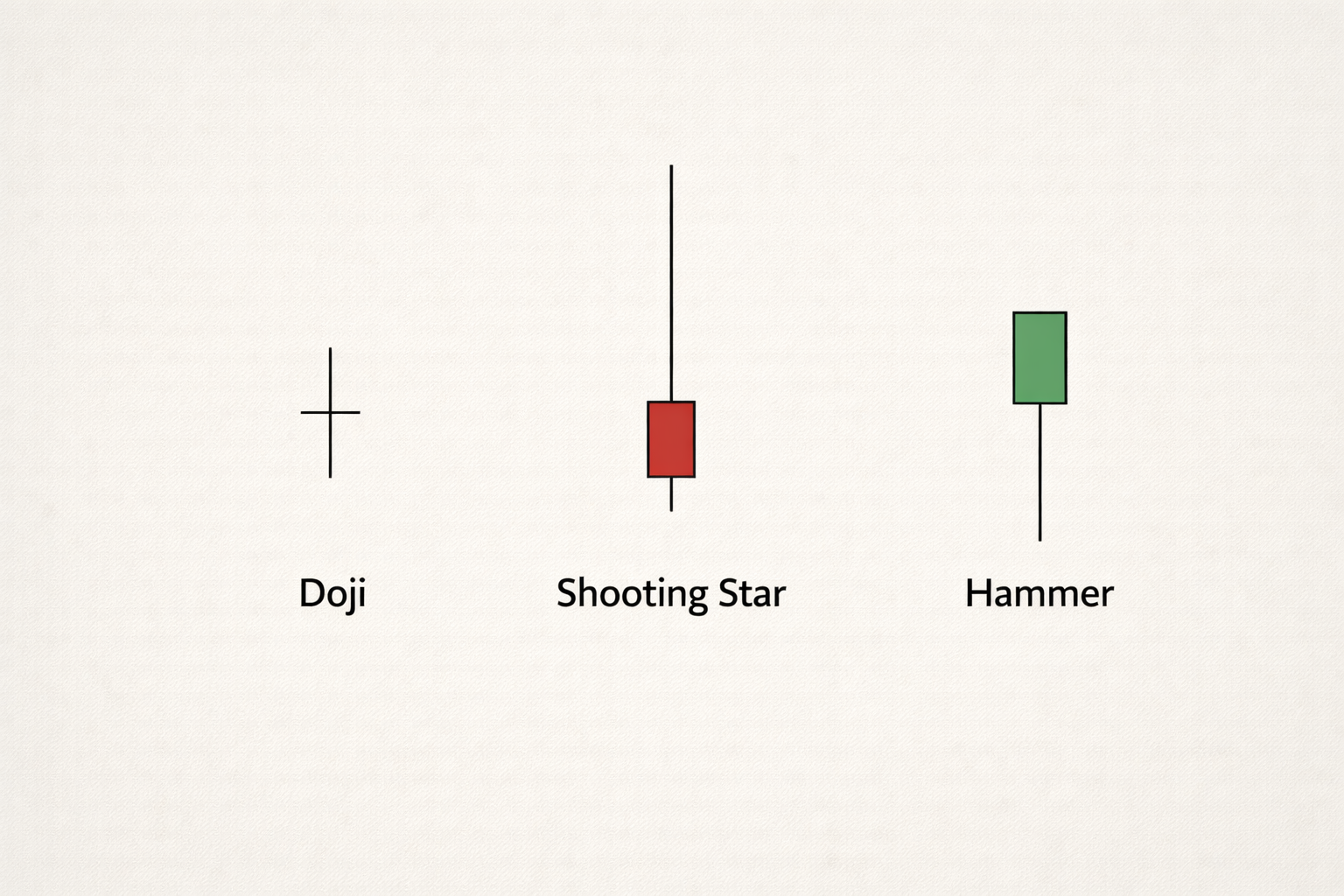
Candlestick formations often provide early warnings of exhaustion:
Doji (indecision)
Shooting star (bearish exhaustion)
Hammer (bullish exhaustion)
Trend exhaustion typically results from a combination of market psychology, liquidity dynamics, and macroeconomic factors.
As a trend progresses, fewer participants are willing to enter at extreme prices. Early traders begin taking profits, while new participants hesitate.
Institutional traders and large investors may start closing positions after strong gains, reducing momentum.
Markets that move too far too quickly often reach extremes where further movement becomes unsustainable.
A lack of new buyers in an uptrend (or sellers in a downtrend) creates an imbalance that weakens price continuation.
It is important to distinguish between exhaustion and reversal.
Key insight: Exhaustion is a warning, while reversal is the confirmation.
Traders use exhaustion signals to:
Lock in profits.
Reduce exposure.
Avoid holding positions into reversals.
Experienced traders may:
Enter short positions near exhausted uptrends.
Buy near exhausted downtrends.
However, this approach carries a higher risk and requires confirmation.
Recognising exhaustion helps traders:
Tighten stop-loss levels.
Adjust position sizes.
Avoid late entries into crowded trades.
Consider a stock in a strong uptrend:
Price continues making higher highs.
RSI starts forming lower highs.
Volume begins to decline.
This combination suggests that buyers are losing strength, even as prices continue to rise. Shortly after, the stock may enter a consolidation or reverse downward.
A similar pattern was observed in major indices, such as the S&P 500, during extended rallies, where weakening momentum preceded corrections.
Trend exhaustion occurs when a strong market move loses momentum as buying or selling pressure weakens, often signalling a potential reversal or a consolidation phase ahead.
No, trend exhaustion does not always result in an immediate reversal. Markets may consolidate or move sideways before a new trend forms, which is why confirmation signals are important.
Common indicators include RSI, MACD, and volume analysis. Traders also use price patterns and candlestick signals to confirm a weakening market momentum.
Divergence is one of the most widely used signals for identifying exhaustion, but it should be combined with other indicators because it can produce false signals in strong trends.
Yes, beginners can use trend exhaustion as part of their strategy, but they should rely on confirmation signals and proper risk management to avoid premature entries.
Trend exhaustion is a powerful concept in technical analysis that helps traders identify when a market move is losing strength. While it does not guarantee an immediate reversal, it provides valuable insight into market sentiment, momentum shifts, and potential turning points.
By combining indicators such as divergence, volume analysis, and price action, traders can make more informed decisions, improve timing, and manage risk more effectively. In fast-moving markets, recognising exhaustion early can be the difference between capturing profits and getting caught in a reversal.
Disclaimer: This material is for general information purposes only and is not intended as (and should not be considered to be) financial, investment or other advice on which reliance should be placed. No opinion given in the material constitutes a recommendation by EBC or the author that any particular investment, security, transaction or investment strategy is suitable for any specific person.