Published on: 2026-09-01
The headline collapsed, underlying inflation did not. CPIF fell to 0.7% from 1.3%, but excluding energy it rose to 0.6% from 0.4%.
Underlying inflation bottomed in April. CPIF-XE has climbed from zero to 0.6% over three months.
Jansson flagged a risk, not a hike. On 31 August he saw slightly higher inflation risk ahead, with scope to wait.
Growth is outrunning the labour market. Q2 GDP was revised up to 1.6%, while adjusted unemployment held at 8.7%.
September decides it. August inflation lands on 7 and 14 September, the Riksbank rules on 24 September.
The krona trades on the path, not the print. Markets carry close to one 25 basis point hike by year end.
Sweden’s inflation problem did not disappear in July. It stopped showing up in the headline.
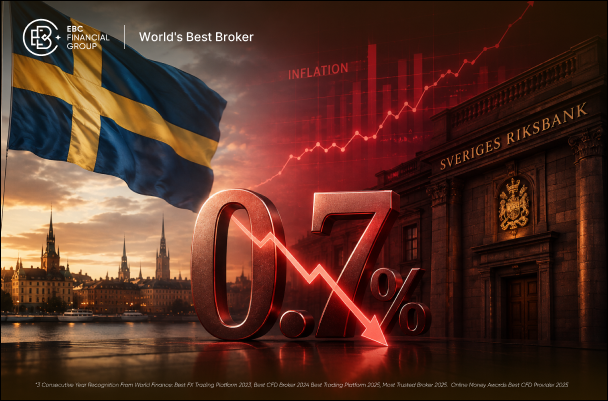
CPIF fell to 0.7% from 1.3%, the softest reading since December 2020, while the policy rate held at 1.75% against a 2% target.
Strip out energy and prices went the other way, rising to 0.6% from 0.4% and running above the Riksbank’s June forecast. On 31 August, Deputy Governor Per Jansson said the risk of elevated inflation ahead had increased slightly.
Cheap energy did the immediate work. Electricity fell 11.6% on the month and fuel 9.4%, together taking 0.6 percentage points off the index, and Statistics Sweden put July’s decline down to energy above all else.
A second suppressant runs alongside it. July brought a temporary cut to petrol and diesel tax and a 50% reduction in monthly public transport passes, which pulled transport fares down 26.4%, on top of the halved VAT on food in place since April. The Riksbank has said that inflation stripped of energy and the direct effects of such measures already runs relatively close to 2%.
None of this holds the annual rate down indefinitely. Each measure’s downward effect drops out of the comparison once it has been in place a year, and reversing one later adds a mechanical push the other way.
| Indicator | July 2026 | June 2026 |
|---|---|---|
| CPIF inflation | 0.7% | 1.3% |
| CPI inflation | 0.2% | 0.7% |
| CPIF-XE inflation | 0.6% | 0.4% |
| Policy rate | 1.75% | 1.75% |
The underlying series has been grinding higher since spring. CPIF excluding energy, or CPIF-XE, bottomed at zero in April and has printed 0.5%, 0.4% and 0.6% since, gaining 0.4% in July alone. Package holidays rose 17.3% on the month and 10.5% over the year, home electronics 6.8% with computers leading, and restaurants and accommodation sat 3.5% above last summer.
A 1.3 point undershoot on the headline would ordinarily build the case for cheaper money. It does not here, because a rate set today lands on prices two years out.
Jansson opened generously at the Swedish Bankers’ Association, calling Sweden’s starting position favourable. Then came the qualification: the summer’s unexpectedly high figures are clouding it.
Travel-related services did most of the damage, and that line climbs every June and July before handing the gains back by autumn. Read one way, this is calendar noise. Jansson raised the second reading himself.
The increases may carry unusually large indirect effects from the supply disruptions, higher aviation fuel prices among them. Jet fuel reaching an airline ticket is contained. Jet fuel reaching the wider price level is not, and he conceded that in that case the upturn could prove more lasting.
Growth supplies the third strand. Final national accounts on 28 August put second-quarter GDP up 1.6% on the quarter and 3.3% on the year, revised from a 1.4% flash and well ahead of forecast, with investment, exports and household spending all contributing.
Firms facing customers who are spending find it easier to move costs down the chain than absorb them in margin. Jansson stopped short of calling the economy hot, but he now rates the risk of demand-driven inflation higher than he did.
The Riksbank said much the same on 20 August, holding at 1.75% and noting that both growth and inflation had overshot its June forecasts.
Read the same speech again and the hawkishness thins out.
The labour market has barely moved. Seasonally adjusted and smoothed unemployment was 8.7% in July, where it has sat every month this year even as output accelerated. The unadjusted figure was 7.8%. The August statement conceded the labour market had developed more weakly than the bank expected, corporate pricing plans are subdued, and the supply-chain strains behind the summer’s cost pressure have been unwinding.
Credibility carries the rest. Long-run inflation expectations sit near 2% and the wage round has been disciplined, which is what stops a seasonal price bump turning into a wage problem.
Hence his landing point: room to wait, with the caveat that he would press for action the moment a genuine inflation problem took shape. The bank kept the same door open in August, saying the probability of an increase later in 2026 remains. Flagging a risk is not pre-committing to a hike.
The Executive Board meets on 23 September and publishes the next morning, this time with a full Monetary Policy Report and new forecasts. August was an interim update carrying no new numbers, so this is the first full reassessment since June, when the bank framed the position as low inflation alongside an increased risk of it running too high later.
Three data points land first. Statistics Sweden publishes the August flash estimate on 7 September and the full breakdown on 14 September, with August labour force figures following on 16 September. Sweden also holds a general election on 13 September.
Four things will decide the meeting. Breadth, meaning whether pressure is spreading past the volatile lines or staying trapped inside them. Services, meaning whether August gives back the summer gains. Labour, because 8.7% unemployment caps domestic cost pressure whatever import prices do. Demand, because another quarter of upside surprises hands Swedish firms pricing power they have not held in years.
The decision will not turn on whether inflation runs below 2% today. It will turn on whether the board still believes it will be there in two years.
July’s print is already priced. The krona trades on the expected path of the policy rate, and that path has two credible versions.
The constructive one runs through the rate differential. Markets have been carrying close to one 25 basis point increase by year end. Confirm it, or simply push any eventual cut further out, and Swedish yields improve against a euro area whose central bank is still expected to tighten. Krona holders get paid to wait.
The bearish one works the same data from the other side. Inflation more than a point below target and adjusted unemployment at 8.7% keep the easing scenario alive, and the currency has already given back ground on a trade-weighted basis since June.
EUR/SEK, trading around 11.1, is the cleaner expression, isolating the Swedish leg against a single competing rate path. USD/SEK drags in the Federal Reserve and reads as much on Washington as on Stockholm.
Either way, the krona moves on the revision, not on the release that has already happened.
| Signal | Potential Policy Implication |
|---|---|
| Services inflation stays firm | Greater risk of persistent underlying inflation |
| CPIF-XE keeps rising | Headline understates true price pressure |
| CPIF stays well below 2% | More room to leave policy unchanged |
| Labour market weakens further | Less need to tighten |
| Growth keeps outperforming | Higher demand-driven inflation risk |
| Inflation expectations drift up | Stronger case for acting early |
Sweden’s 0.7% headline and 1.75% policy rate are products of the same summer: temporary tax relief, collapsing energy prices and a travel season that behaved strangely. Neither number answers what the board actually has to answer, which is where prices settle once the relief expires.
Jansson has not signalled a hike. He has said the odds of one have moved, and that a slack labour market and expectations anchored at target let him wait for proof rather than act on suspicion.
For the krona and Swedish yields, August inflation will provide the clearest test ahead of 24 September. July has already had its say.