Published on: 2026-03-13
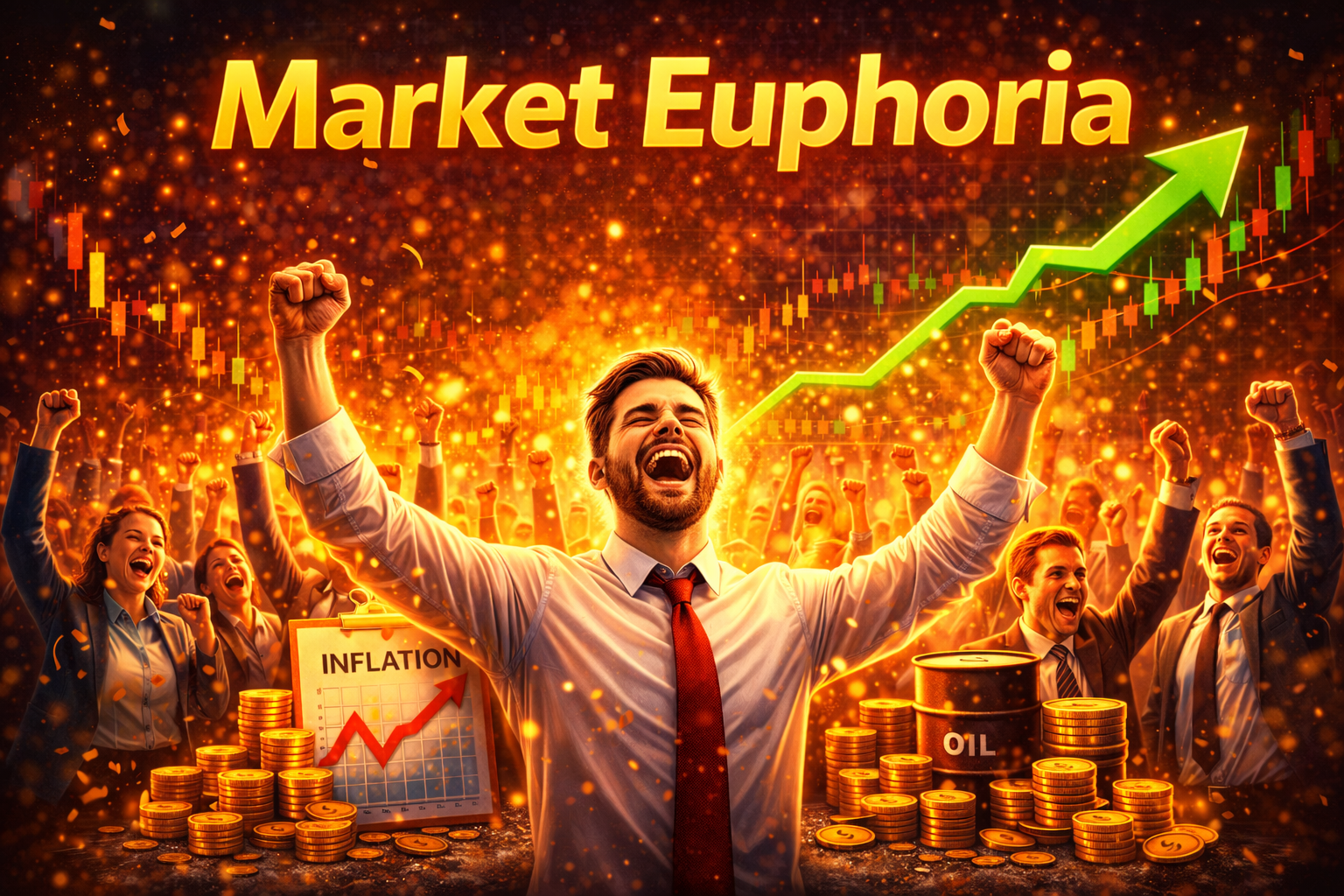
Market euphoria is when investors become highly optimistic, pushing asset prices well above fundamentals. Confidence spreads, and many believe prices will rise indefinitely.
As optimism grows, market participants may begin to overlook traditional valuation measures, underestimate potential risks, and focus primarily on the possibility of short-term profits. Rising prices reinforce this sentiment, attracting additional buyers and creating a feedback loop that can accelerate market momentum.
Euphoric conditions typically emerge during the later stages of a bull market, when strong price performance, positive media coverage, and high investor participation combine to create powerful upward trends. While such environments can generate significant returns, they may also precede market corrections or speculative bubbles.
Market euphoria occurs when investor optimism becomes extremely strong, and asset prices rise rapidly.
It often develops during the late stages of a bull market cycle.
Euphoric markets are often characterised by speculation, intense media coverage, and increased retail participation.
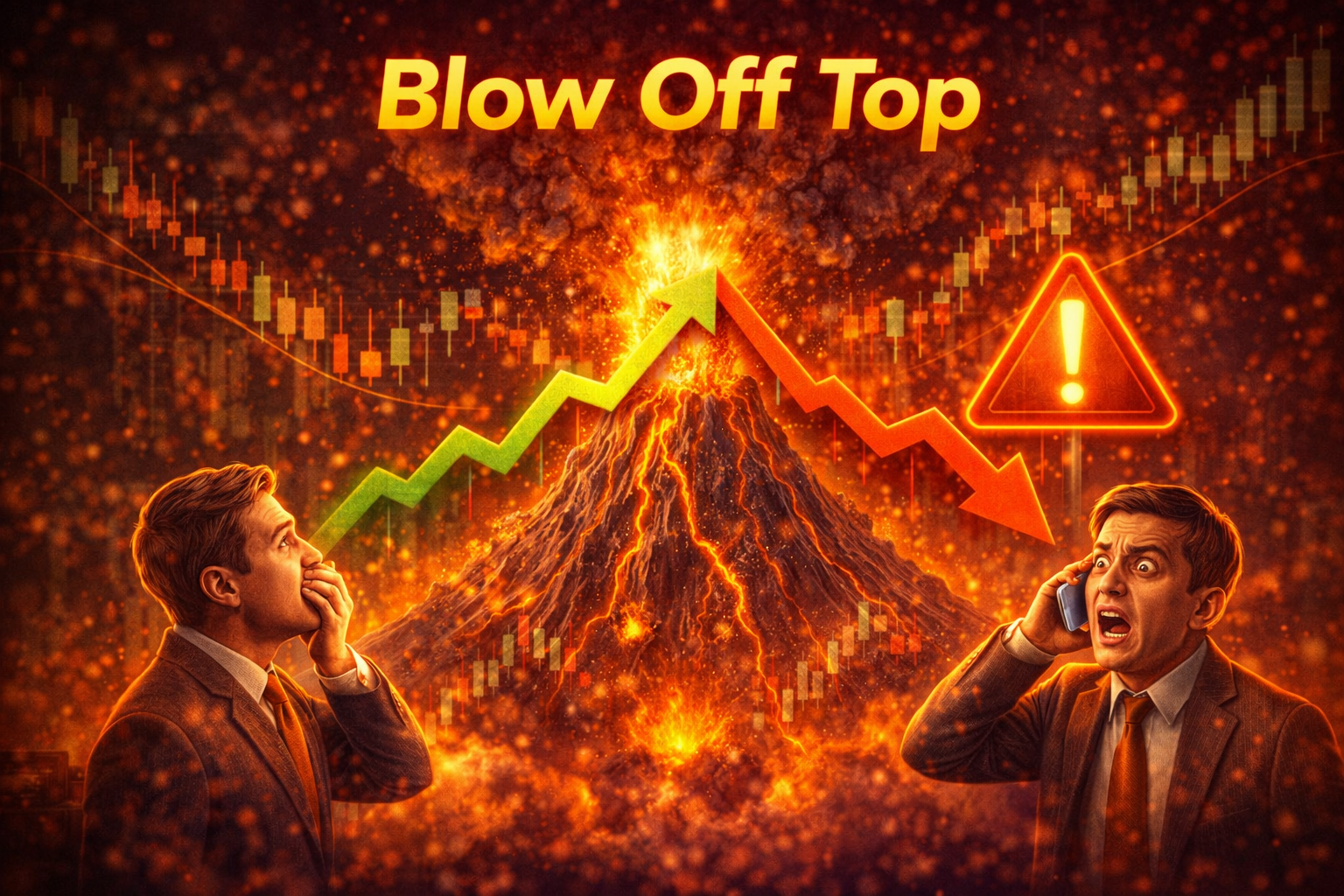
Signs may include parabolic price movements, rising trading volumes, and widespread fear of missing out (FOMO).
Recognising euphoric conditions can help traders evaluate risk and potential market turning points.
Market euphoria rarely develops suddenly. Instead, it typically builds gradually as economic conditions, market momentum, and investor psychology reinforce one another.
A prolonged period of rising prices is one of the most common foundations for market euphoria. When markets deliver consistent gains over an extended period, investors may begin to perceive rising prices as the norm.
As confidence grows, market participants often increase their risk exposure, believing that the upward trend will continue.
Periods of low interest rates and abundant liquidity can also contribute to euphoric market conditions.
When borrowing costs are low and capital is widely available, investors may allocate more funds toward equities and other risk assets. Increased liquidity can accelerate price appreciation, reinforcing bullish sentiment across financial markets.
Many euphoric market periods are driven by compelling narratives surrounding technological innovation or economic transformation.
Examples include:
The internet expansion during the late 1990s
Growing enthusiasm for cryptocurrencies and blockchain technology
Strong investor interest in artificial intelligence and emerging technologies
These narratives can encourage investors to believe that traditional valuation methods are outdated, leading to aggressive speculation.
Fear of missing out is one of the strongest psychological drivers behind market euphoria.
When investors observe others achieving significant gains, they may rush into the market to capture similar profits. This behaviour can create a self-reinforcing cycle in which rising prices attract new participants who push prices even higher.
Although it is difficult to determine precisely when markets become euphoric, several indicators often appear during these phases.
These indicators often signal that investor sentiment has become excessively optimistic.
Throughout financial history, several major market events have demonstrated how investor enthusiasm can push asset prices far beyond sustainable levels.
One of the earliest recorded speculative bubbles occurred during Tulip Mania in the Netherlands.
During the 1630s, tulip bulbs became highly desirable luxury goods. Prices increased dramatically, and some rare bulbs were reportedly sold for amounts equivalent to several years of income. When demand suddenly collapsed in 1637, prices fell sharply, ending the bubble and leaving many participants with substantial losses.
This episode remains one of the earliest examples of collective investor euphoria influencing asset prices.
The technology boom of the late 1990s represents one of the most widely recognised examples of stock market euphoria.
During this period, investors poured money into internet-related companies, often overlooking whether these businesses had sustainable revenue models. Technology stocks surged as investors believed the internet would fundamentally reshape the global economy.
When the bubble burst in 2000, the technology-focused Nasdaq Composite Index declined sharply, highlighting the risks associated with speculative market enthusiasm.
A more recent example occurred during the 2021 meme stock rally, when retail investors coordinated buying activity through online communities.
One of the most notable cases involved GameStop Corp., a video game retailer whose share price rose dramatically as traders coordinated buying activity, triggering a short squeeze. At one point, the stock traded nearly 30 times higher than its earlier valuation, largely driven by social media momentum and retail investor participation.
This event illustrated how collective sentiment and digital communities can amplify euphoric market behaviour.
Understanding market euphoria is important because it provides insight into market cycles and potential risks.
Extreme optimism can drive asset prices far above their intrinsic value. When valuations become detached from underlying fundamentals, markets may become increasingly vulnerable to corrections.
Investors who recognise euphoric conditions may better evaluate whether current prices remain sustainable.
Euphoria often contributes to the development of asset price bubbles, in which prices rise primarily because investors expect further gains rather than because of fundamental improvements.
When such bubbles eventually burst, declines can occur rapidly, leading to significant losses.
Historically, periods of intense optimism have frequently appeared near the peaks of market cycles. While markets can remain euphoric longer than expected, these phases often precede increased volatility or trend reversals.
Professional traders often interpret market euphoria as a sentiment indicator rather than a purely positive signal.
Traders frequently monitor indicators such as:
Investor sentiment surveys
Options market positioning
Unusual spikes in trading volume
Social media activity
Market volatility indicators
In some cases, extreme optimism may act as a contrarian signal, suggesting that markets could be approaching overextended conditions.
However, experienced traders also recognise that euphoric trends can persist longer than anticipated. As a result, risk management tools such as position sizing and stop-loss orders remain essential.
Extreme optimism can push asset prices far above their intrinsic value, increasing vulnerability to corrections.
When prices rise primarily on expectations of further gains rather than fundamentals, bubbles form. These bubbles often collapse abruptly, causing significant losses for late entrants.
Euphoric markets are prone to sharp swings. Even small news events can trigger rapid price declines once sentiment shifts.
FOMO and herd behavior can lead investors to enter the market at inflated prices or exit during panics, undermining long-term wealth accumulation.
Some speculative or thinly traded assets may be difficult to sell quickly during downturns, magnifying potential losses.
Traders who recognise euphoria early can implement risk management strategies such as:
Position sizing
Stop-loss orders
Diversification
Hedging through options or safer assets
Market euphoria does not always lead to an immediate crash. However, historical patterns show that periods of extreme optimism often increase the likelihood of market corrections or downturns, particularly when asset prices have moved far beyond their fundamental value.
Traders typically look for signals such as rapid price increases, surging trading volume, strong retail investor participation, extensive media coverage of market gains, and valuations that exceed historical averages. When several of these indicators appear simultaneously, market sentiment may be approaching euphoric levels.
Euphoria can occur across many asset classes, including equities, cryptocurrencies, commodities, real estate, and foreign exchange markets. Assets associated with strong speculative narratives or emerging technologies often experience the most intense euphoric phases.
Yes, investors can achieve significant returns during euphoric market periods because prices often rise rapidly. However, entering the market late in the cycle can be risky if sentiment reverses and prices decline sharply.
Market euphoria describes a phase in financial markets when investor optimism becomes extremely strong, driving rapid price increases and heightened speculative activity. Although these periods can generate substantial gains, history shows they often occur near the later stages of bull market cycles. Recognising signs such as parabolic price movements, rising participation, and excessive optimism, traders and investors can better understand market sentiment and manage risk more effectively.
Disclaimer: This material is for general information purposes only and is not intended as (and should not be considered to be) financial, investment or other advice on which reliance should be placed. No opinion given in the material constitutes a recommendation by EBC or the author that any particular investment, security, transaction or investment strategy is suitable for any specific person.