Published on: 2026-03-18
One of the clearest and most dangerous signals of a market peak is known as a blow-off top. In financial markets, some of the most dramatic price movements occur not at the early stages of a trend, but at its very end.
A blow-off top is a technical pattern that marks the final phase of a strong uptrend, characterised by rapid price gains over a short period, often accompanied by extreme trading volume and investor optimism, before a sharp reversal. It is essentially the market’s “last burst of energy” before momentum collapses.
A blow-off top is a rapid price surge followed by a sharp decline, typically marking the end of a bullish trend.
It is driven by euphoria, speculation, and fear of missing out (FOMO).
The pattern often includes extreme volume, overbought indicators, and parabolic price movement.
Recognising a blow-off top can help traders avoid buying at the peak and manage downside risk effectively.
A blow-off top is a chart pattern in technical analysis that occurs when a financial asset experiences a steep and rapid increase in price and trading volume, followed by an equally sharp decline.
In simple terms: A blow-off top is when the market goes “straight up” before suddenly crashing down.
This pattern usually forms at the end of a prolonged uptrend, where buying pressure becomes unsustainable and eventually collapses.
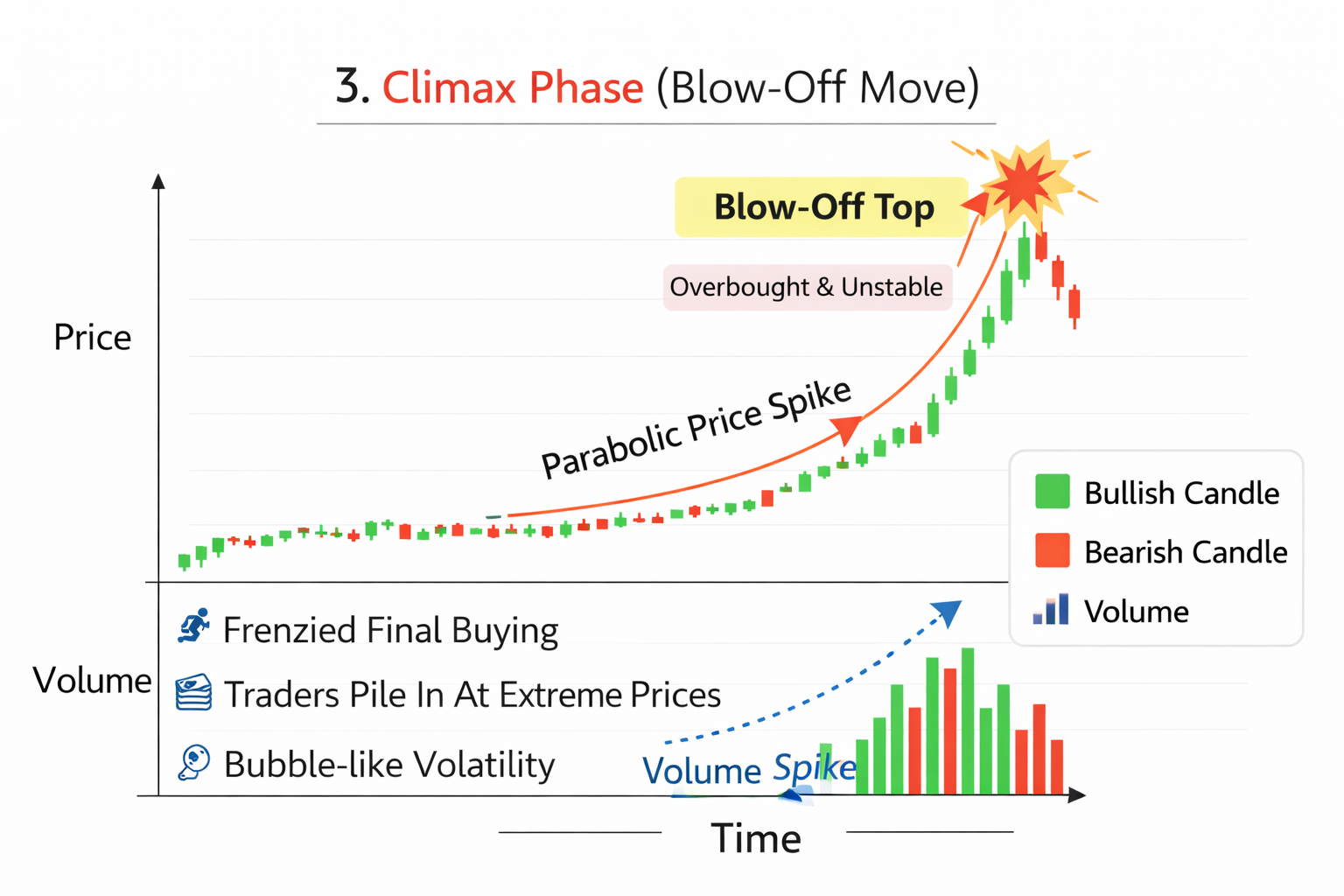
A blow-off top does not happen randomly. It typically develops in three distinct stages, driven by market psychology and liquidity dynamics.
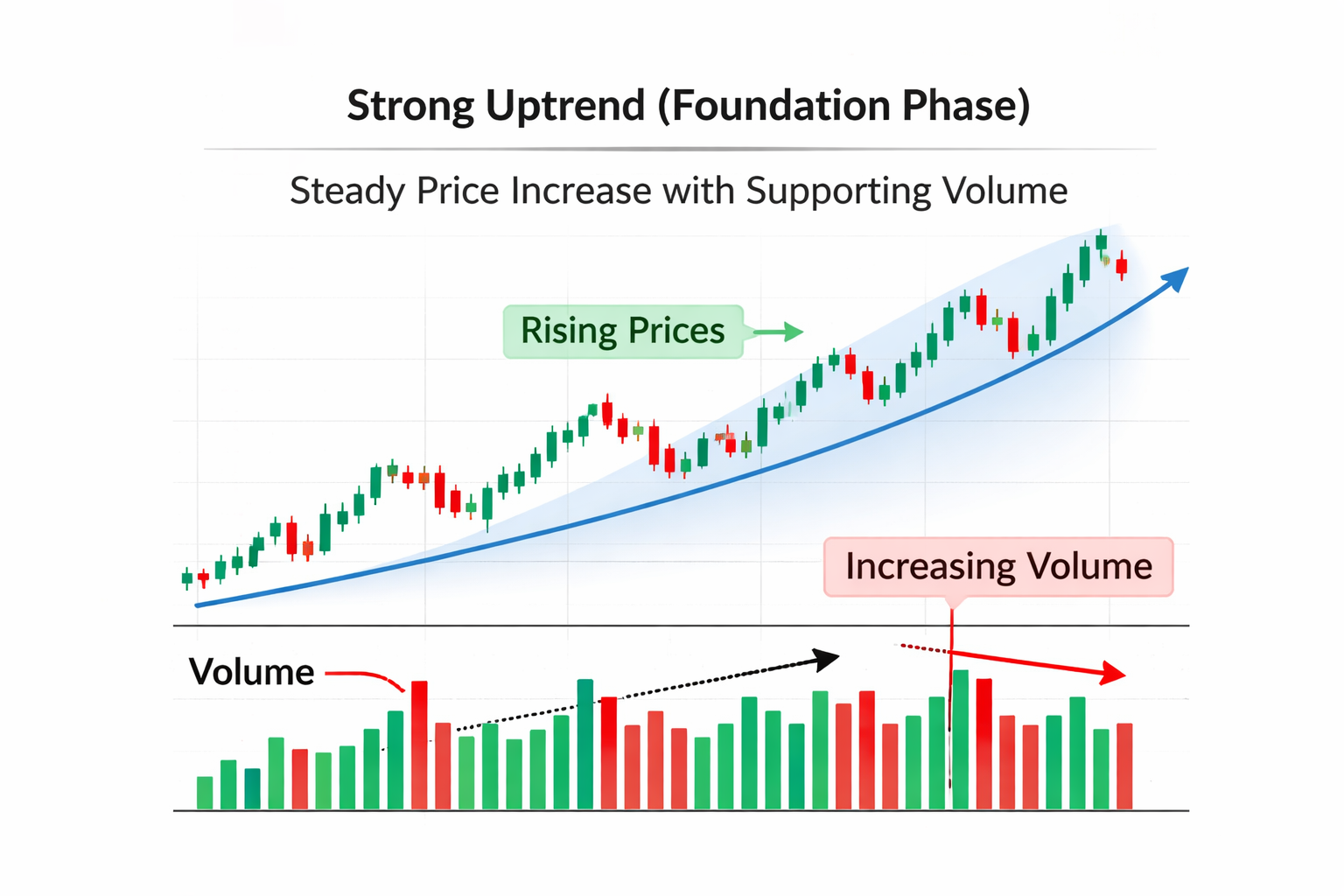
The market is already in a steady upward trend.
Fundamentals and sentiment support rising prices
Institutional investors are often early participants.
The price begins to rise faster than usual.
Retail investors enter aggressively.
Media attention increases
FOMO starts driving demand
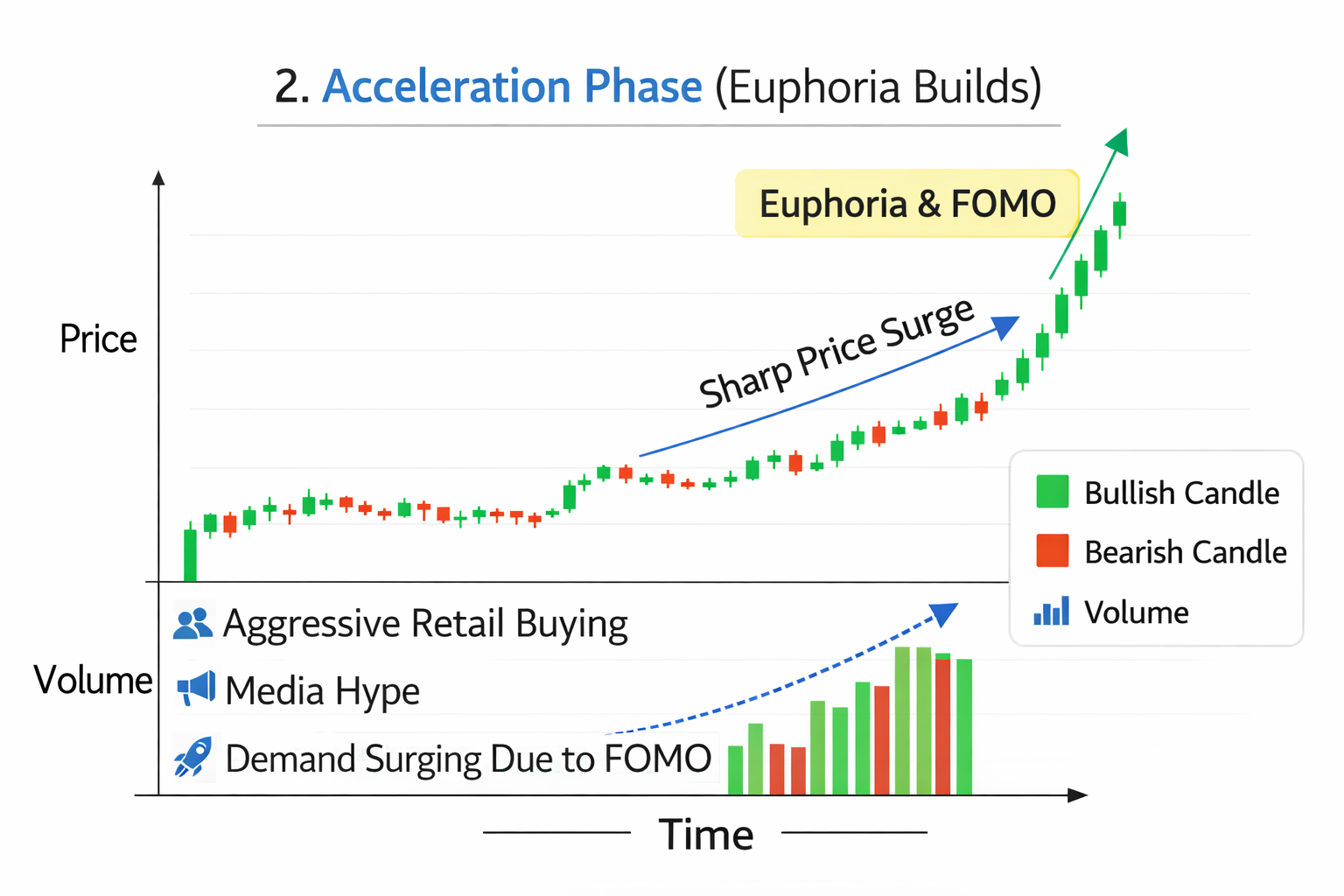
Prices spike parabolically
Trading volume surges dramatically.
The market becomes overbought and unstable.
Final buyers enter at extreme prices.
Shortly after this phase:
Buying pressure is exhausted.
Sellers dominate
Price collapses rapidly
This sharp reversal is what defines the blow-off top.
The following table summarises the most important features:
Blow-off tops are often described as unsustainable moves in which price accelerates beyond what fundamentals can justify.
At its core, a blow-off top is driven by human behaviour, not just numbers.
Market Euphoria: Investors become extremely optimistic, believing prices will continue to rise indefinitely.
Fear of Missing Out (FOMO): Late participants rush into the market, fearing they will miss profits.
The Greater Fool Mindset: Many buyers believe they can sell to someone else at a higher price, even if the asset is overvalued.
Profit Taking by Smart Money: Early investors begin selling into strength, creating hidden selling pressure.
This combination creates a fragile market structure in which prices are supported more by sentiment than by fundamentals.
Dot-Com Bubble (2000): The NASDAQ Composite surged dramatically during the late 1990s before collapsing nearly 80% after reaching its peak.
Meme Stocks (2021): Stocks such as GameStop experienced rapid, speculative rallies driven by retail trading and social media momentum, followed by extreme volatility and pullbacks.
It is important to distinguish between a healthy trend and a blow-off top.
Blow-off tops often mark major turning points, allowing traders to avoid buying near the top.
Recognising this pattern helps traders:
Tighten stop losses
Reduce position size
Lock in profits
Advanced traders may:
Short overextended assets
Trade volatility spikes
Use options strategies for hedging.
However, timing a top is extremely difficult due to high volatility.
Traders can look for the following signals:
RSI above 70–80 (overbought)
Divergence between price and momentum
Large bullish candles followed by sharp reversals
Excessive media hype
Retail investor frenzy
Rapid price increases without fundamental support
Sudden surge in trading volume at the peak
Heavy selling volume after the peak
Timing Difficulty: Tops are only obvious after they form
False Signals: Strong trends can continue longer than expected
High Volatility: Rapid price swings increase risk
Emotional: Fear and greed can distort decisions.
A blow-off top is a sharp and rapid price increase followed by a sudden decline, usually marking the end of a strong bullish trend driven by excessive optimism and speculation.
A blow-off top often leads to a sharp correction, but not always a full crash. Sometimes the market may consolidate before deciding on the next direction.
Traders look for parabolic price moves, volume spikes, overbought indicators, and extreme market sentiment as early warning signs of a potential blow-off top.
A blow-off top is often the final stage of a speculative bubble, but not all bubbles end immediately with a blow-off pattern.
Beginners should be cautious because these patterns involve high volatility and timing risk, making them more suitable for experienced traders with strong risk management.
A blow-off top is one of the most important patterns in trading because it signals the end of a powerful trend and the potential start of a sharp reversal. It represents the moment when optimism peaks, buying pressure is exhausted, and the market becomes unstable.
By understanding the structure, psychology, and warning signs of blow-off tops, traders can avoid costly mistakes such as buying at the peak or holding through rapid declines. While no signal is perfect, combining technical indicators, volume analysis, and market sentiment can significantly improve decision-making.
In fast-moving markets, recognising a blow-off top is not just a technical skill, it is a critical edge that separates disciplined traders from those caught in the final wave of speculation.
Disclaimer: This material is for general information purposes only and is not intended as (and should not be considered to be) financial, investment or other advice on which reliance should be placed. No opinion given in the material constitutes a recommendation by EBC or the author that any particular investment, security, transaction or investment strategy is suitable for any specific person.