Published on: 2026-08-11
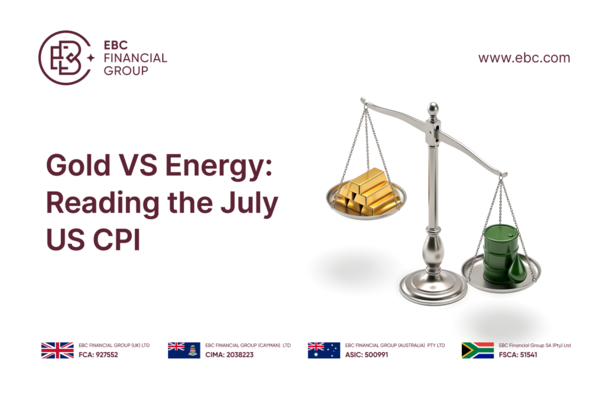
The July United States (US) Consumer Price Index (CPI) will be released at 8:30 a.m. Eastern Time (ET) on 12 August. The report measures how consumer prices changed during July, but gold and energy stocks could respond in very different ways.
SPDR Gold Shares (GLD) is a gold-backed exchange-traded product designed to follow the price of gold bullion after expenses. The Energy Select Sector SPDR Fund (XLE) is an exchange-traded fund (ETF) holding large US energy companies.
GLD is mainly affected by gold prices, interest-rate expectations, real Treasury yields, and the US dollar. XLE also depends on oil and gas prices, company earnings, operating costs, and the outlook for energy demand.
These different drivers mean GLD and XLE can move in opposite directions after CPI.
By the end of this article, you’ll understand:
Why GLD and XLE provide different types of market exposure;
How CPI may affect gold through real yields and the US dollar;
Why higher consumer energy prices do not automatically support energy stocks; and
Which market signals may help explain the reaction after the report.
In June, headline CPI fell 0.4% from May on a seasonally adjusted basis. Core CPI, which excludes food and energy, was unchanged.
Energy was the largest contributor to the monthly decline. The energy index fell 5.7%, including a 9.7% drop in gasoline prices. The Bureau of Labor Statistics (BLS) also reported declines in electricity and fuel oil.
Energy prices were a major reason headline CPI fell in June. If energy prices decline by less in July, remain stable, or rise, they would place less downward pressure on the headline figure. Headline CPI could therefore rise even if price pressure across the rest of the economy remains limited. Traders will need to check the individual components to see what drove the result.
A higher headline reading does not automatically mean energy was responsible. Food, shelter, and other prices could also affect the result.
The BLS August 2026 release calendar confirms that the July CPI report is due at 8:30 a.m. ET on 12 August.
GLD and XLE are both traded on an exchange, but their exposures are different.
| GLD | XLE | |
|---|---|---|
| Main exposure | Gold bullion | Shares in large US energy companies |
| What it follows | The price of gold, less expenses | The Energy Select Sector Index |
| Main CPI-related drivers | Real yields, interest-rate expectations, and the US Dollar | Oil and gas prices, expected earnings, costs, demand, and interest rates |
| Other important influencers | Central bank demand and geopolitical risk | Production, refining margins, capital spending, dividends, and share buybacks |
| Common misconception | Higher inflation always lifts gold | Higher consumer energy prices always lift energy stocks |
State Street describes GLD as a product designed to reflect the price of gold bullion, less the trust’s expenses.
XLE tracks the Energy Select Sector Index, which represents energy companies in the S&P 500. Its holdings include businesses involved in oil, gas, consumable fuels, energy equipment, and energy services.
Gold’s reaction to CPI usually depends on how investors think the report will affect US interest rates. A reading above or below expectations can move interest-rate expectations, real Treasury yields, and the US dollar, which then influence gold prices. A real Treasury yield is the return on a government bond after expected inflation is taken into account.
Gold does not pay interest. If an unexpectedly high CPI reading pushes real yields higher, interest-bearing assets may become more attractive by comparison. A stronger US dollar may add further pressure because gold is priced in dollars.
The reverse can happen after a softer CPI report. If real yields and the dollar fall as traders expect easier monetary policy, gold may receive support.
This relationship is not fixed. European Central Bank research found that gold prices were negatively correlated with US real yields between 2008 and early 2022. The relationship weakened after Russia’s full-scale invasion of Ukraine as geopolitical risk and central-bank demand became more influential.
Real yields remain a useful signal because gold pays no interest. Rising real yields increase the potential return available from inflation-adjusted government bonds, which may place pressure on gold. However, central-bank purchases and demand linked to geopolitical risk may sometimes offset or weaken this relationship.
The CPI energy index tracks the prices consumers pay for gasoline, electricity, fuel oil, and utility gas. These prices do not directly measure energy-company profits. Earnings across the sector also depend on factors such as crude oil and natural gas prices, production levels, refining margins, operating costs, and the type of business each company runs.
Consumer prices and company earnings may therefore move differently, even when both are affected by changes in the wider energy market.
Timing creates another difference. July CPI records price changes during July, while XLE reflects what investors expect energy companies to earn in the future. Energy CPI could rise even if oil prices have since fallen or the outlook for demand has weakened.
Interest rates also affect XLE because it holds company shares. Investors use a discount rate to translate expected future profits into their value today. Higher interest rates generally reduce the present value of those profits.
Stronger oil prices may improve expected revenue, but XLE could still fall if higher interest rates, rising costs, or weaker economic growth place more pressure on its holdings.
The table outlines four possible combinations based on whether headline and core CPI come in above or below market expectations. Each row explains what traders would need to check before assessing the possible response in GLD and XLE. The descriptions are relative to forecasts rather than fixed inflation rates.
| CPI Outcome | What to Check | Possible GLD Response | Possible XLE Response |
|---|---|---|---|
| Hot headline and hot core | Whether inflation pressure is spread across several categories | Could weaken if real yields and the US dollar rise | Depends on whether firmer energy prices and expected earnings outweigh pressure from higher rates |
| Hot headline and softer core | Whether energy, food, or another category caused the headline surprise | Direction still depends on real yields and the dollar | Could receive support if energy drove the increase and current oil prices point in the same direction |
| Soft headline and firm core | Whether falling energy prices offset stronger underlying inflation | Support may remain limited if real yields stay high | Could weaken if the energy component and current oil prices both point lower |
| Soft headline and soft core | Whether the report leads to lower interest-rate expectations | Could strengthen if real yields and the dollar fall | Depends on whether easier financial conditions outweigh weaker oil prices or demand expectations |
The first market move may change once traders examine the components. The headline figure alone does not explain what happened inside the report.
GLD could rise while XLE falls because softer inflation may lower real yields and weaken the US dollar, reducing the opportunity cost of holding gold. At the same time, falling oil prices or weaker expectations for energy demand may reduce expected earnings for energy companies and place pressure on XLE.
A falling US dollar, lower real yields, weaker crude prices, and XLE underperforming the S&P 500 would support this reading.
This outcome would be more plausible if headline CPI rises because of energy, current oil prices remain firm, and investors raise their expectations for energy-company revenue.
GLD could come under pressure if the same report pushes real yields and the US dollar higher.
For XLE to rise, stronger oil prices and expected earnings would still need to outweigh the pressure that higher interest rates place on share valuations.
Both could rise if softer CPI lowers interest-rate expectations while the outlook for oil demand remains firm. Both could fall if higher rates pressure gold and the wider equity market at the same time.
Real yields, the US Dollar, and the wider equity market will provide a clearer reading than assuming the two products must move apart.
CPI arrives one hour before the regular US equity session opens. GLD and XLE are listed on NYSE Arca, where the early trading session begins at 4:00 a.m. ET. Both products can therefore begin reacting before the regular session opens at 9:30 a.m. ET.
Early trading may have lower liquidity, wider spreads, and greater price volatility than the regular session, so the first move may not last.
| Time | New Information | What to Compare |
|---|---|---|
| 8:30am ET | Headline CPI, core CPI, and component data | Real yields, the 2-year Treasury yield, the US dollar, gold, crude oil, and the early GLD and XLE reaction |
| 9:30am ET | Regular US equity session begins | Whether the first moves continue, whether XLE follows crude, and how XLE performs against the S&P 500 |
| 10:30am ET | Weekly US petroleum data | Crude and fuel inventories, production, refinery activity, and any change in the oil-market outlook |
The Energy Information Administration (EIA) normally releases the main parts of its Weekly Petroleum Status Report after 10:30 a.m. ET on Wednesdays. With no holiday delay listed for that week, the report is due after 10:30 a.m. ET on 12 August.
This creates a second event for energy markets. CPI may shape the first response, while the petroleum report could either confirm or challenge it later in the morning.
GLD and XLE could respond differently to July CPI because they provide different market exposure. The market’s interpretation of the report could move interest-rate expectations, real Treasury yields, and the US dollar, which may then affect gold prices and GLD. XLE holds energy-company shares, so its response will also reflect current oil prices, expected energy demand, company earnings, and the wider effect of interest rates on stocks.
The CPI energy component provides useful context, but it should not be treated as a direct measure of energy-company earnings.
For traders who want to follow these markets through eligible ETF contracts for difference (CFDs), EBC’s current campaign offers zero commission and zero swaps until 11 September 2026 (UTC+3), subject to campaign terms and regional availability. See the eligible ETF CFDs and campaign terms.