Published on: 2026-06-09
Updated on: 2026-06-09
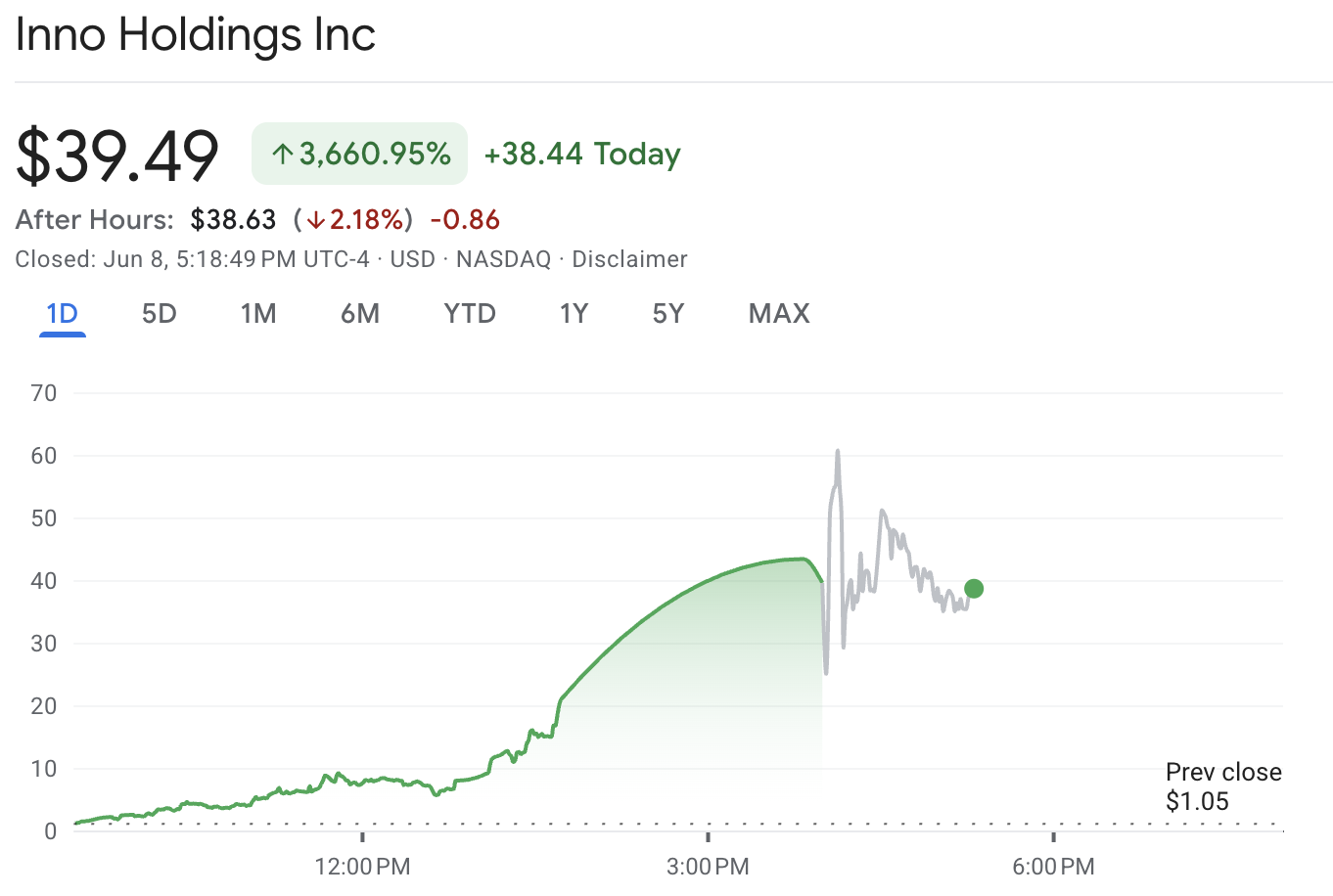
INHD stock surged 3,660.95% on 8 June 2026, closing at $39.49 from a prior close of $1.05, lifting Inno Holdings to a near $100 million market capitalisation in one session.
Though, after Monday’s close, Nasdaq halted the stock under a T12 “additional information” code. The halt continued through June 9 with no resumption time set, and orders remain frozen at the halt price.
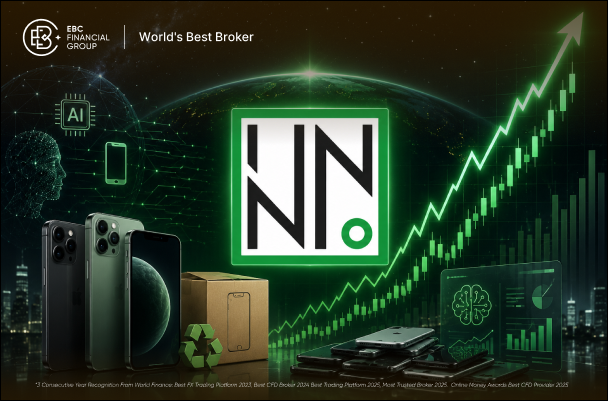
The catalyst was a company-confirmed $3 million development-services agreement with a Hong Kong-based AI provider to build a used-phone sales-agent system.
The agreement is a build order, not a revenue stream. Inno disclosed that the project is in early development, not yet deployed commercially, with no assurance on timing or implementation.
INHD is buying AI, not selling it. The financials show the gap: six-month revenue of $2.39 million but gross profit of only $95,982 and a net loss of $1.11 million, so margin proof matters more than headline revenue.
The stock was structurally distressed before the rally, with three reverse splits since October 2024 (1-for-10, 1-for-24 and 1-for-20) that compound to a cumulative 1-for-4,800 consolidation.
A $60 million at-the-market equity programme through Aegis Capital, announced 19 May 2026, means the surge also widens the issuer’s window to raise capital, raising dilution risk for late buyers.
Inno Holdings (NASDAQ: INHD) became one of the market’s loudest speculative AI names on 8 June 2026, with the stock surging 3,660.95% to close at $39.49 from a prior close of $1.05. The move lifted a tiny, thinly traded company to a near $100 million market capitalisation in a single session, with the closing price and one-day gain confirmed by market data.
The catalyst was company-confirmed. Inno announced a $3 million development-services agreement with a Hong Kong-based AI provider to build an AI-powered used-mobile-phone sales agent for its trading business. The open question is whether the rally reflects a new AI revenue model or a low-float repricing around an unproven technology narrative.
However, after Monday’s close, Nasdaq halted the stock under a T12 code, the designation used when the exchange requests additional information from a company before trading can resume. As of June 9, INHD remained halted at its $39.49 reference price, with no resumption time set.
That development moved the central question from valuation to disclosure: did the market price a new AI revenue model, or did a low-float micro-cap reprice on an unproven narrative until the exchange intervened?
Nasdaq applied a T12 code, which indicates the exchange is seeking more information from the issuer before letting trading restart. It is distinct from a volatility pause or a news-pending halt, and it places the next move with the company and the exchange rather than the market.
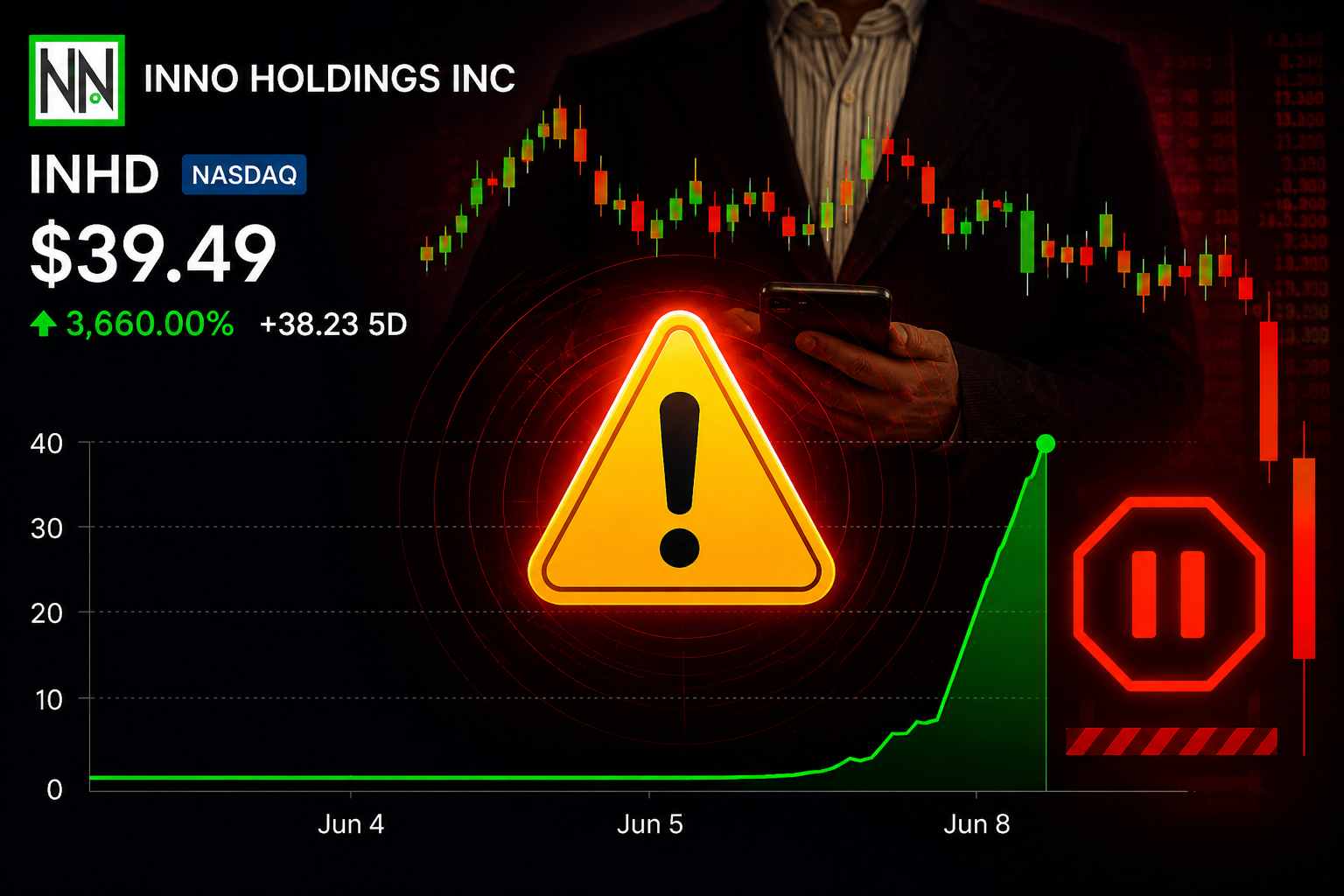
While a T12 halt is in effect, buy and sell orders are frozen. Holders cannot trade at the halted price, and some brokers may permit a request to close a position once trading reopens, though approval is not guaranteed. With no resumption date announced, the duration is open ended.
For a stock like INHD that gained thousands of percent in one session, the halt removes the usual mechanism for price discovery. Whatever Nasdaq is reviewing, the freeze means the $39.49 print is a paused reference, not a live quote.
Reporting around the halt also drew attention to the company’s filings. Fiscal 2025 revenue was about $2.85 million against a roughly $7 million net loss, and auditors flagged going-concern doubt.
Separately, the SEC still classifies INHD under a steel pipe and tubes industry code that no longer matches a business now centered on trading recycled phones through Hong Kong subsidiaries. Neither point is an accusation, but both add context to why an exchange might want more information before trading resumes.
The announcement gave traders a clean catalyst. Inno said the service provider would build a sales-agent system to automate lead generation, improve customer conversion, power product recommendations and add analytics to its used-phone operation.
The market response overwhelmed the size of the contract. INHD closed at $39.49, up $38.44, after trading near a distressed post-split base before the news.
A range expansion of that scale is not an ordinary reaction to a development agreement. It reflects a momentum event built on a small share count, thin liquidity and AI-linked language, layered onto a stock that had already absorbed multiple structural resets.
The issue is proportion. A $3 million contract can be material for a small company, but it does not by itself justify a durable valuation reset. The market priced the prospect of transformation before any evidence of deployment, revenue contribution or margin gain had appeared.
The deal is not a software sale, a licence or a customer win for an AI product. It is a development-services contract under which Inno pays a third party to build a tool for its own use.
The company said the Sales AI Agent Project is designed to optimise core sales workflows in its used-phone business, and CEO Ding Wei framed it as a step toward digitising and scaling that segment.
The same disclosure set the limits. The project is in early development, has not been deployed commercially, and remains subject to testing and evaluation, with no assurance on successful implementation or timing.
The filing therefore confirms intent and capital allocation. It does not confirm AI-led revenue, paying customers, recurring software economics or improved profitability. The stock repriced instantly. The business model has not yet proved it can.
INHD illustrates a wider market distinction: selling AI versus buying it.
A company that sells AI can generate platform revenue, usage-based income or software-like margins. A company that buys AI is making an operating investment. That investment can still pay off, but the proof has to surface through better conversion, lower acquisition cost, faster inventory turns or stronger gross margins.
Inno belongs in the second group. It is applying AI to an existing used-electronics model rather than selling AI as a product. Its core activity is sourcing pre-owned smartphones and tablets and selling them to wholesalers, alongside building-technology and AI research activities.
That makes the project commercially relevant but financially unproven. Used-phone trading turns on sourcing, grading, pricing, logistics and channel access. AI may sharpen pricing and conversion, but the income statement has to register the result.
The reported figures leave little room for assumption.
| Metric | Latest Reported Figure | Analytical Read |
|---|---|---|
| Quarterly revenue | $931,911 | Small operating base |
| Six-month revenue | $2.39 million | Growth from a low level |
| Six-month gross profit | $95,982 | Thin spread economics |
| Six-month net loss | $1.11 million | Business remains unprofitable |
| Cash and equivalents | $31.94 million | Boosted by financing |
| Six-month operating cash use | $7.94 million | Material cash burn |
The latest 10-Q showed six-month revenue of $2.39 million against cost of goods sold of $2.29 million, leaving gross profit of $95,982. The company reported a six-month net loss of $1.11 million and operating cash use of $7.94 million.
A sales agent that raises revenue without lifting gross profit would not improve the quality of the business. Margin proof, not revenue growth alone, is the test.
The AI headline landed on a chart that had already required repeated reverse splits to stay listed.
Inno ran a 1-for-10 reverse split in October 2024, a 1-for-24 split in December 2025 tied to Nasdaq compliance and capital structure, and a 1-for-20 split in May 2026 to support the minimum bid price requirement.

| Reverse Split | Timing | Cumulative Adjustment |
|---|---|---|
| 1-for-10 | October 2024 | 1-for-10 |
| 1-for-24 | December 2025 | 1-for-240 |
| 1-for-20 | May 2026 | 1-for-4,800 |
The arithmetic is direct: a 1-for-10 split, then 1-for-24, then 1-for-20, equals a cumulative 1-for-4,800 consolidation.
Reverse splits are not negative on their own. They can preserve a listing or simplify a capital structure. Repeated splits over a short window, however, usually signal sustained pressure on price, liquidity and investor confidence.
The May split cut issued shares from 50,413,224 to about 2,520,662 while authorised shares stayed at 1 billion. That reduced float helps explain the violence of the 8 June move.
A small share count can amplify both directions, producing sharp upside when demand outstrips supply and leaving late buyers exposed if momentum fades or new shares arrive.
The capital-raising backdrop is the most consequential layer beneath the rally.
On 19 May 2026, Inno announced a $60 million at-the-market equity offering through Aegis Capital, allowing share sales over time at market-related prices, and terminated its prior $50 million programme from November 2025.
That changes how the surge reads. A rally can reward existing holders if it reflects durable fundamental improvement. It can also hand the issuer a stronger window to raise equity. An ATM can supply flexible, low-friction capital, but the trade-off is dilution. Shares sold into a spike can strengthen the balance sheet while shrinking each holder’s stake.
Financing has already been the swing factor. The 10-Q attributed the cash increase mainly to ATM and private-placement proceeds, and reported $32.75 million of net cash from financing activities for the six months to 31 March 2026. The next share-count update is therefore central to the equity story rather than a technicality.
The next phase depends on evidence rather than press-release language. The checkpoints that separate a reset from a squeeze:
Resolution of the Nasdaq halt and the terms on which trading resumes
Commercial deployment of the AI sales agent, beyond development work.
Conversion data, customer metrics or pricing improvement that can be measured.
Gross margin expansion from the current thin base.
Share-count changes tied to the $60 million ATM.
Continued Nasdaq compliance after repeated reverse splits.
Price retention once the first momentum wave clears.
A stock closing far above its pre-news range on extreme volume sits in a breakout state, but breakout quality depends on follow-through. A base above the post-spike zone would suggest the market sees more than a one-session squeeze.
A quick retrace toward the pre-announcement range would mark the contract as a liquidity event rather than a fundamental shift.
INHD surged on a potent mix: AI language, a $3 million contract, a small post-split float, a distressed price history and aggressive momentum flows. The catalyst was real. The transformation is unproven.
Inno Holdings is not yet an AI company in economic terms. It is a used-electronics trader funding an AI project for its own operations. That project may eventually improve sales efficiency and pricing, but it has not been deployed and has not changed reported revenue quality or margin structure.
The rally reads less as proof of an AI business and more as proof of how fast a micro-cap can reprice when a credible technology narrative meets fragile market structure. Until deployment, margins and share-count discipline show otherwise, INHD remains an AI customer priced for a moment like an AI winner.