Published on: 2026-01-23
Updated on: 2026-01-23
USD/ZAR volatility and gold's rand price are
back in focus ahead of the South African Reserve Bank's (SARB) 29 January
decision, as global rate expectations keep shifting in quick bursts. EBC
Financial Group (EBC) noted the International Monetary Fund's (IMF) latest World
Economic Outlook Update strengthens the global backdrop by lifting projected
world growth to 3.3% in 2026 and 3.2% in 2027.
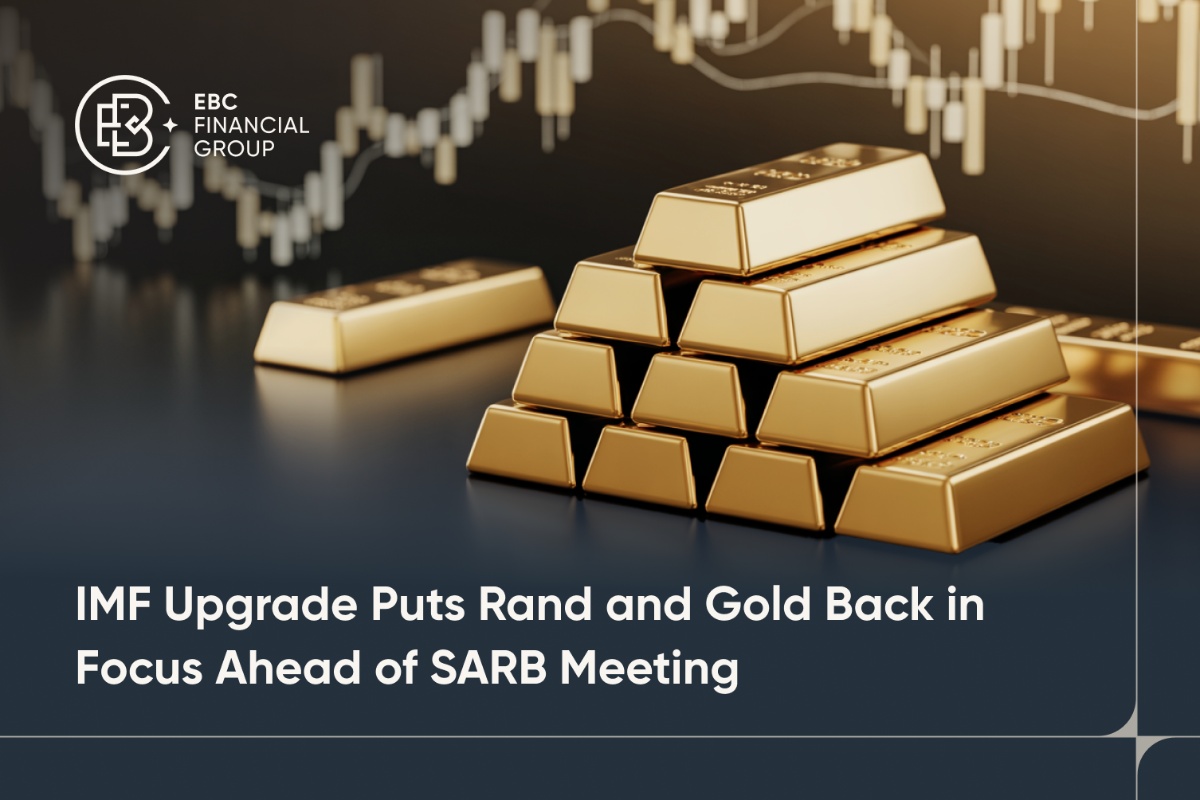
The IMF also expects global headline inflation to cool from 4.1% in 2025 to 3.8% in 2026 and 3.4% in 2027, while warning that US inflation is likely to return to target more gradually than in other large economies. Prices for energy commodities are expected to fall by about 7% in 2026, compared with a 3.7% decline projected for fuel commodities in the IMF's October 2025 WEO, a shift that can quickly feed through to inflation expectations, rate pricing and foreign exchange (FX). The IMF warned that risks remain tilted to the downside, including a rethink of technology expectations, renewed trade tension and geopolitical flare-ups that can disrupt markets and commodity pricing.
David Barrett, Chief Executive Officer at EBC Financial Group (UK) Ltd, said: "We welcome the IMF upgrade, but we are telling traders not to relax their discipline, because the sharpest moves still come when inflation surprises, rate pricing shifts, or risk sentiment turns suddenly. Remaining educated on what causes these movements and exercising prudent risk management measures are essential to sound trading strategies."
The IMF projects South Africa's real GDP growth at 1.4% in 2026, a pace that keeps the rand sensitive to shifts in global capital flows. Annual consumer inflation eased to 3.5% in November 2025, reinforcing how quickly local rate expectations can move when global disinflation narratives change. The SARB lists the current repo rate at 6.75% and has its next announcement scheduled for 29 January 2026, giving USD/ZAR traders a clear near-term catalyst. In that mix, USD/ZAR often reacts to US rates first, while gold priced in rand can swing harder than dollar gold because FX can do half the work on the day. That is why local pricing can turn quickly: when US yields move, offshore flows often do the heavy lifting in the rand before domestic data has time to catch up.
The IMF's update shows a clear split between regions, with advanced economies projected to grow 1.8% in 2026 while emerging market and developing economies are projected to grow 4.2% in 2026. That kind of divergence can drive capital flows and push FX trends harder than the global average number, particularly when investors swing between carry trades and safety. When growth momentum is concentrated in a few regions, markets often reward the "winners" quickly, then unwind crowded positions just as fast when the dollar firms.
The IMF expects global headline inflation to keep falling, but it also flags a slower return to target inflation in the United States than in other large economies. For FX markets, that matters because US rates and US real yields often anchor the direction of the dollar, especially when growth elsewhere is steady rather than booming. Even small shifts in expected Fed cuts can ripple through funding costs globally, which is why emerging-market FX can move sharply on US data that looks "incremental" on paper.
Barrett added: "In this cycle, the dollar still trades the Fed first because it reacts most to what markets expect the US central bank to do next on rates, and the rest of the world second, so it pays to watch the rate path, not the noise around it."
The IMF expects energy commodity prices to fall by about 7% in 2026 compared with a 3.7% decline projected previously, which can shift inflation expectations and reprice rate paths quickly. In precious metals, the same macro chain tends to matter most day to day: the dollar, real yields, and event risk that pushes investors into safe havens. Lower energy costs can ease inflation pressure at the margin, but commodities remain headline-sensitive, and any geopolitical disruption can flip the inflation story and the rates market in a matter of sessions.
EBC provides access to forex and commodity CFD markets, including precious metals such as gold (XAU) and silver (XAG). For clients who want to build a clearer process around macro-driven volatility, EBC's education hub includes a practical CFD starter guide and a gold-focused explainer designed for risk-aware trading. EBC also publishes market education on commodity trading and the key drivers behind gold and silver price action.
Disclaimer: This material is for information only and does not constitute a recommendation or advice from EBC Financial Group and all its entities ("EBC"). Trading Forex and Contracts for Difference (CFDs) on margin carries a high level of risk and may not be suitable for all investors. Losses can exceed your deposits. Before trading, you should carefully consider your trading objectives, level of experience, and risk appetite, and consult an independent financial advisor if necessary. Statistics or past investment performance are not a guarantee of future performance. EBC is not liable for any damages arising from reliance on this information.