Published on: 2025-12-08
Updated on: 2025-12-08
Africa's currency map in 2025 looks very different from the headlines about inflation and devaluation.
While some economies are still battling weak FX, a handful of currencies are quietly holding impressive value against the US dollar. At the top of that list sits the Tunisian dinar, followed closely by the Libyan dinar and the Moroccan dirham.
For traders and anyone sending money across borders, "strongest" here is not about which country feels richest on the ground. It's about how much one unit of local currency is worth in dollars and how stable that value has been.
| Rank | Country | Currency | Code | ~1 unit in USD | ~Units per $1 |
|---|---|---|---|---|---|
| 1 | Tunisia | Tunisian dinar | TND | 0.34 | ~2.9 |
| 2 | Libya | Libyan dinar | LYD | 0.18 | ~5.4 |
| 3 | Morocco | Moroccan dirham | MAD | 0.11 | ~9.2 |
| 4 | Ghana | Ghanaian cedi | GHS | 0.088 | ~11.3 |
| 5 | Botswana | Botswana pula | BWP | 0.075 | ~13.3 |
| 6 | Seychelles | Seychellois rupee | SCR | 0.07 | ~14.3 |
| 7 | Eritrea | Eritrean nakfa | ERN | 0.066 | 15.0 |
| 8 | Namibia | Namibian dollar | NAD | 0.058 | ~17.1 |
| 9 | Eswatini (Swaziland) | Swazi lilangeni | SZL | 0.058 | ~17.2 |
| 10 | Lesotho | Lesotho loti | LSL | 0.058 | ~17.2 |
| 11 | South Africa | South African rand | ZAR | 0.058–0.059 | ~17.0–17.2 |
| 12 | São Tomé and Príncipe | dobra | STN | 0.047 | ~21.3 |
| 13 | Zambia | Zambian kwacha | ZMW | 0.043–0.044 | ~23.0 |
| 14 | Mauritania | Mauritanian ouguiya | MRU | 0.025 | ~39.6 |
| 15 | Egypt | Egyptian pound | EGP | 0.021 | ~47.5 |
The table above shows the top 15 African currencies by nominal value against the US dollar as of early December 2025.
*The list we compiled is based on live and historical rates from XE and Wise.
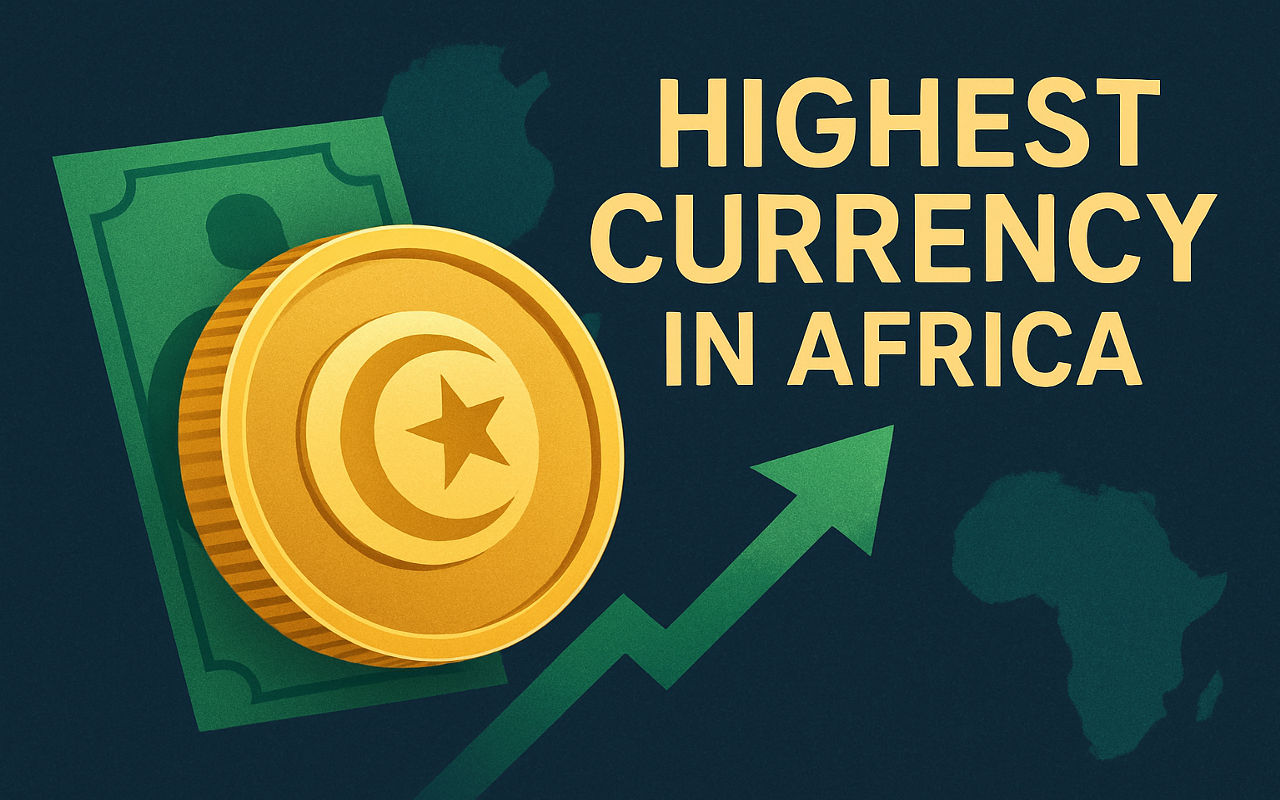
The Tunisian dinar is still the highest currency in Africa in 2025, with 1 TND worth roughly $0.34 and the dollar trading around 2.9–3.0 TND.
Key drivers:
Managed float: The Central Bank of Tunisia operates a tightly managed exchange regime, smoothing volatility and defending credibility.
Inflation control: Tunisia has kept inflation meaningfully lower than many neighbours, preserving purchasing power and real yields.
Capital and FX controls: Restrictions on converting dinar and moving capital offshore help prevent sharp devaluations at the expense of full convertibility.
From the perspective of an FX desk, TND has a high nominal value but low liquidity. It's not a trading vehicle like USD/ZAR or USD/NGN.
The Libyan dinar sits in second place. 1 LYD buys about $0.18, so you need roughly 5.4 LYD for $1.
What keeps LYD so strong:
Large oil reserves: Hydrocarbon exports support FX reserves and the state's external position.
Heavily regulated FX: The Central Bank of Libya tightly manages official exchange flows and restricts access to foreign currency, which props up the official rate.
For traders, that means limited market depth and a big gap between official and any parallel rates when political stress spikes. In practice, LYD is a high-value, low-tradability currency.
Third on the list, the Moroccan dirham, sits around 1 MAD ≈ $0.108–0.11, or about 9.2–9.3 MAD per dollar in late 2025.
Why MAD is viewed positively:
Diversified economy: Exports range from autos and aerospace components to fertilisers and tourism.
Managed band: The central bank runs a flexible peg regime, widening the trading band in recent years to allow gradual adjustment while retaining stability.
Moderate inflation: Morocco has kept CPI relatively contained compared with many peers, which underpins real currency strength.
MAD is one of the few African currencies in this ranking that also enjoys decent liquidity, making it more relevant for actual portfolio flows than many higher-ranked peers.
The Ghanaian cedi is #4, with 1 GHS ≈ $0.088 (about 11.3 GHS per $1 as of early December 2025).
GHS has rebounded sharply in 2025; Data shows the cedi's USD value is up around 30% over 12 months, reflecting IMF-backed reforms, tighter policy, and improved confidence.
The currency still carries event risk from fiscal slippage and commodity swings (gold, cocoa), but 2025 has been a repair year rather than a collapse.
The Botswana pula ranks #5. Recent quotes put 1 BWP around $0.075, or about 13.3–13.8 BWP per dollar.
Support factors:
Low corruption and relatively strong institutions.
Fiscal buffers built on diamond exports.
A crawling-peg style policy that manages BWP against a basket to smooth shocks.
It is a textbook "well-run small market" currency.
The Seychellois Rupee is a relatively high-value currency, trading at approximately 1 SCR ≈ $0.07.
The economy, though small, relies heavily on tourism, and the post-COVID recovery, combined with IMF support, has helped rebuild reserves and restore credibility.
Liquidity is limited, so SCR is more relevant for tourism pricing and local business than for global FX strategies.
At #7, the Eritrean Nakfa has a fixed official rate of 1 ERN ≈ $0.066 (around 15 ERN per $1).
The headline value is high, but:
FX is tightly controlled; access to ERN and USD is highly restricted.
The official rate doesn't necessarily reflect what you'd see in informal or cross-border markets.
So ERN looks strong on paper, yet it's one of the least accessible currencies on this list.
Four of the next entries, NAD, SZL, LSL and ZAR, effectively trade as a cluster:
Namibian Dollar (NAD): pegged 1:1 to the rand
Swazi Lilangeni (SZL): pegged 1:1 to the rand
Lesotho Loti (LSL): pegged 1:1 to the rand
South African Rand (ZAR): the underlying anchor
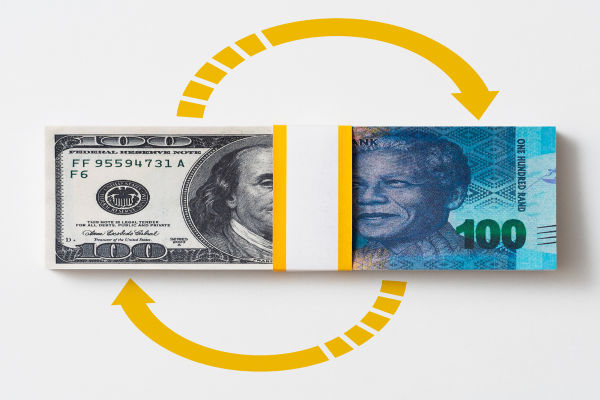
In early December 2025, ZAR is trading roughly 16.9–17.1 per $1, so 1 ZAR ≈ $0.058–0.059. The pegged partners mirror that.
Why this matters:
South Africa's monetary policy and external balances drive all four currencies.
For Namibia, Lesotho and Eswatini, the peg delivers stability and easier trade integration, but also means importing rand volatility.
For traders, USD/ZAR is the liquid instrument; the others mostly matter for local pricing, bond markets and cross-border trade within the Common Monetary Area.
At #12, STN trades near 1 STN ≈ $0.047, or ~21.3 STN per $1.
The dobra is pegged to the euro, so its behaviour against the USD largely reflects the EUR/USD exchange rate combined with local factors.
The economy is tiny, driven by cocoa and budding tourism; liquidity is extremely thin.
The Zambian Kwacha is #13 with 1 ZMW ≈ $0.043–0.044 (about 23 ZMW per $1).
Performance is heavily linked to copper prices and to fiscal/IMF negotiations.
2025 has seen more stable trading after previous episodes of sharp depreciation, helped by tighter policy and better reserve management.
At #14, MRU sits around 1 MRU ≈ $0.025 (about 39–40 MRU per $1).
Mauritania's FX dynamics are tied to iron ore and fishing exports, plus gradual reforms with multilateral backing.
Liquidity is low, spreads are wide, and it's not a mainstream trading currency.
Rounding out the top 15, the Egyptian pound trades at roughly 1 EGP ≈ $0.021, or 47–48 EGP per $1 in early December 2025.
EGP has undergone significant devaluations over recent years as Egypt moved towards more flexible FX and navigated IMF programmes.
Despite that, its unit value is still higher than many other African currencies, thanks in part to tourism, Suez Canal revenues, remittances and repeated restructurings.
As of December 2025, the Tunisian dinar (TND) remains the strongest African currency by nominal value, with around 2.9–3.0 TND per $1 on the official market.
No. "Highest" here only measures value per unit versus the dollar. It doesn't capture GDP size, income levels or productivity.
From a liquidity standpoint, the key African FX pairs are USD/ZAR, USD/MAD, USD/EGP and USD/GHS.
Looking across the continent, the message is clear: currency strength in Africa is policy-driven, not accidental.
Tunisia and Morocco show what steady, conservative monetary frameworks can achieve, while Ghana's cedi highlights how quickly value can be rebuilt when policy hardens, and IMF support kicks in.
For traders and investors, the headline ranking is a starting point, not a trade idea. You still need to filter for liquidity, regime risk and capital controls.
Disclaimer: This material is for general information purposes only and is not intended as (and should not be considered to be) financial, investment or other advice on which reliance should be placed. No opinion given in the material constitutes a recommendation by EBC or the author that any particular investment, security, transaction or investment strategy is suitable for any specific person.