Published on: 2025-12-11
Updated on: 2025-12-11
Forex and commodity markets shape global trade and investment flows. Traders who understand both markets can exploit correlations and manage risk more effectively. This article explains core concepts, trading mechanics, analysis techniques, strategy design, regulation and practical tools with clear examples and up to date statistics.
Forex and commodity markets are linked through trade flows, terms of trade and national incomes. Movements in commodity prices often affect the currencies of commodity exporters and importers.
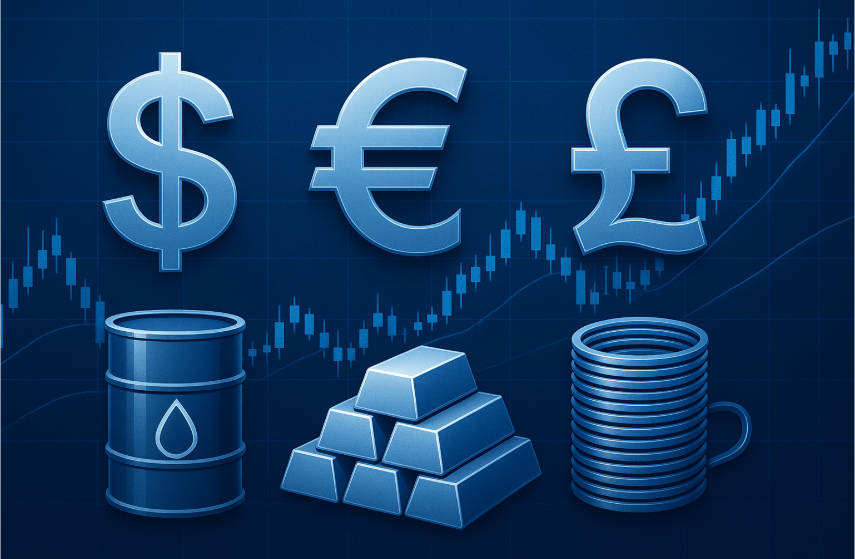
Understanding these links helps traders to formulate cross market strategies and reduce unexpected exposure. Examples include the relationship between oil and the Canadian dollar and between metals and the Australian dollar.
The foreign exchange market is the largest financial market in the world by value traded. Recent triennial surveys by the Bank for International Settlements show that daily FX turnover rose from around 7.5 trillion US dollars in April 2022 to materially higher volumes in 2025. Trading is global and largely over the counter, with instruments that include spot trades, forwards, swaps and options.
Commodities are physical goods such as crude oil, gold, copper and agricultural produce. They trade on spot markets, commodity exchanges using futures contracts and via exchange traded funds and contracts for difference.
Prices respond to supply and demand, inventory levels, seasonal cycles and geopolitical events. Reliable data sources for commodity prices include government agencies and market data providers.
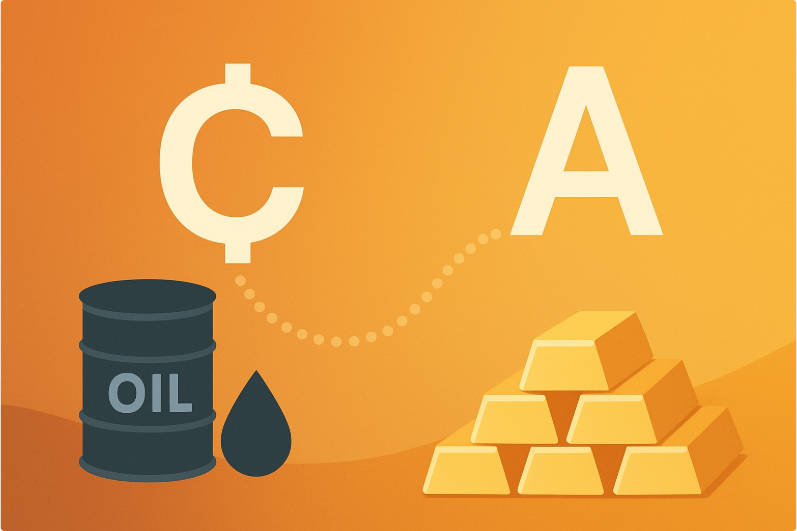
Currency values change when a country's trade receipts or terms of trade change. For example, higher oil prices tend to support the Canadian dollar because oil revenues increase foreign exchange inflows.
The Australian dollar often moves with global metal and mineral prices because mining exports are a large share of Australian exports. These channels create exploitable correlations for traders.
Traders can access both markets through:
Spot forex and spot commodity trades for immediate settlement.
Futures contracts to access standardised exposures and expiry dates.
Contracts for difference to gain exposure without physical delivery.
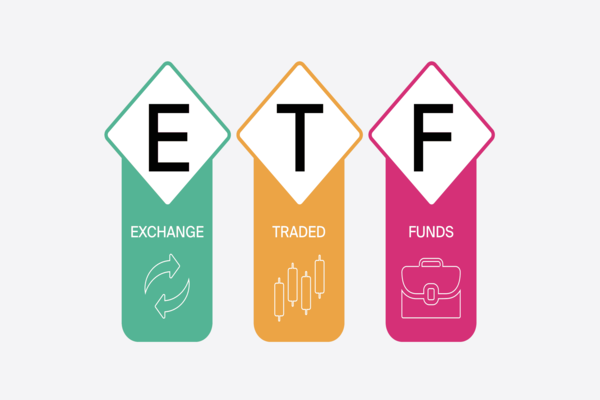
Exchange traded funds that aggregate exposure in a regulated structure.
| Instrument | Typical Users | Typical Use Case |
|---|---|---|
| Spot forex | Retail and institutional traders | Short term currency speculation and hedging |
| Futures | Hedgers and systematic traders | Hedging physical exposure and speculating with margin |
| CFDs | Retail traders | Speculating on price moves without owning the underlying |
| ETFs | Long term investors | Passive or active exposure to commodity baskets |
Liquidity varies across instruments and sessions. Major currency pairs are highly liquid most of the time. Commodity futures liquidity depends on the contract month and the commodity. Spreads and execution speed should be considered when designing an intraday or short term strategy.
Common technical tools include moving averages, relative strength indicators and support and resistance analysis. Traders should select indicators that match their timeframe and test them with historical data before live use.
Fundamental analysis requires monitoring economic releases, inventory reports, central bank policy and geopolitical developments.
For commodities, weekly inventory reports and production data are often market moving. For currencies, central bank statements and employment data are usually important. Use official releases and reputable market data services for decision making.
Measuring correlations between prices helps to identify hedged pairs or pairs trades that exploit temporary divergence. Correlations can change quickly during crises so correlation metrics should be monitored and updated frequently. A simple illustrative table of correlations follows.
| Pair or Asset Relationship | Typical Directionality | Trading Insight |
|---|---|---|
| Oil and Canadian dollar | Positive correlation | Rising oil tends to support CAD |
| Gold and USD | Negative correlation | Rising gold often accompanies a weaker US dollar |
| Iron ore and AUD | Positive correlation | Rising iron ore tends to support AUD |
Begin by defining the objective, timeframe and risk tolerance. Select instruments that match the objective, such as futures for large directional positions and CFDs for smaller tactical trades. Backtest the approach on historical data and stress test the strategy against extreme market moves.
Monitor leverage closely. Use stop loss orders and position sizing rules to control drawdown. Diversify exposures across uncorrelated instruments when possible. Maintain a disciplined plan for trade entry and exit and keep clear records of trade rationale and outcomes.

Forex and commodity trading are subject to different regulatory regimes depending on jurisdiction. Traders should verify broker licences and protections. Use regulated venues when possible and keep abreast of any changes in market structure.
Tax treatment differs by country and by instrument. Keep precise records of transaction dates, sizes and costs. Consult a qualified tax adviser for obligations and filing requirements in the relevant jurisdiction.
Essential tools include a reliable trading platform, a live economic calendar, data feeds for commodity inventories and production figures, charting software, and news services. Continuous education is important. Use exchange documentation, central bank publications and reputable market research.
Forex commodity trading combines currency and commodity exposures. Traders use derivatives or currency pairs to capture price moves influenced by commodity markets. The approach aims to benefit from cross market correlations and manage macro driven risk.
Commodity currencies include the Australian dollar and the Canadian dollar. These currencies often move in line with metal and energy prices because their economies depend heavily on commodity exports. Monitor commodity prices for signals.
Use rolling correlation windows of daily returns and test several horizons. Compare short term and long term correlation and update the analysis after major events that can change structural relationships.
CFDs provide convenient exposure without owning the underlying asset. They carry counterparty and leverage risk. Traders should use regulated providers, understand margin rules and limit position sizes relative to capital.
Main risks include leverage amplification, rapid correlation changes, geopolitical shocks, liquidity squeezes and regulatory shifts. Robust risk controls and scenario testing help to manage these risks.
Use central bank data releases, exchange feeds, government inventory reports and reputable market data vendors. Public sources such as the Federal Reserve economic data service and major exchanges are useful starting points.
A combined understanding of forex and commodity markets provides practical benefits for traders and investors. Use up to date market data, include correlation checks in research, test strategies thoroughly and apply strict risk management. The market is large, liquid and complex, so disciplined practice and continuous learning are essential.
Disclaimer: This material is for general information purposes only and is not intended as (and should not be considered to be) financial, investment or other advice on which reliance should be placed. No opinion given in the material constitutes a recommendation by EBC or the author that any particular investment, security, transaction or investment strategy is suitable for any specific person.