Published on: 2026-06-10
Updated on: 2026-06-10
A dot plot is a chart that shows where central bank officials believe interest rates could go in the future.
In trading, people usually mean the Federal Reserve dot plot when they use this term. The Fed releases it in its Summary of Economic Projections, which shows how each policymaker views the appropriate level of the federal funds rate.
Each dot stands for one official’s interest-rate prediction. The dots are anonymous, so traders do not know which official made each forecast. For beginner traders, the easiest way to think about the dot plot is that it shows what Fed officials might be thinking about future interest rates.
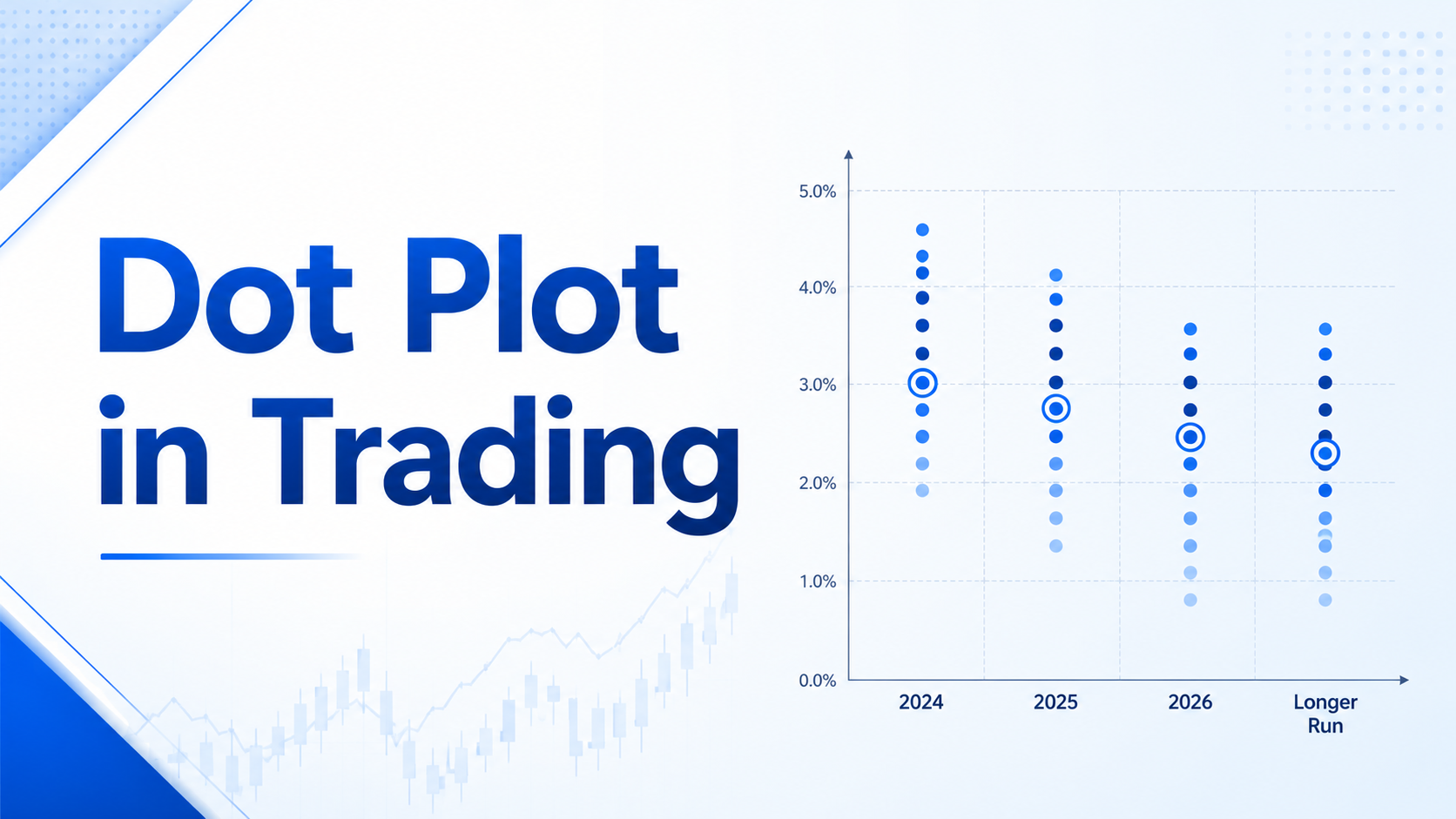
The dot plot is important because people's expectations about interest rates can move financial markets.
If the dots point to higher rates in the future, traders may interpret the Fed as more hawkish. This can boost the US dollar, raise bond yields, and put pressure on stocks.
If the dots point to lower rates ahead, traders may see the Fed as more dovish. This can weaken the US dollar, bring down bond yields, and help risk assets like stocks.
Markets do not just look at the latest dot plot. They also compare it to the previous one. If the dots move up, it can mean officials expect tighter policy. If the dots move down, it can mean rate cuts are more likely.
A dot plot usually shows years on one side and interest-rate levels on the other. For example, one column might show where officials expect interest rates to be at the end of this year. Other columns might show their expectations for the next few years and for the longer run.
If many dots are high, it means officials expect rates to stay up. If many dots are low, it means they expect rates to drop.
Traders often look at the median dot. This is the middle prediction and is often used as a quick guide to the Fed’s overall view on rates.
The distance between the dots also matters. If the dots are close together, officials mostly agree. If they are far apart, it shows more disagreement about what might happen next.
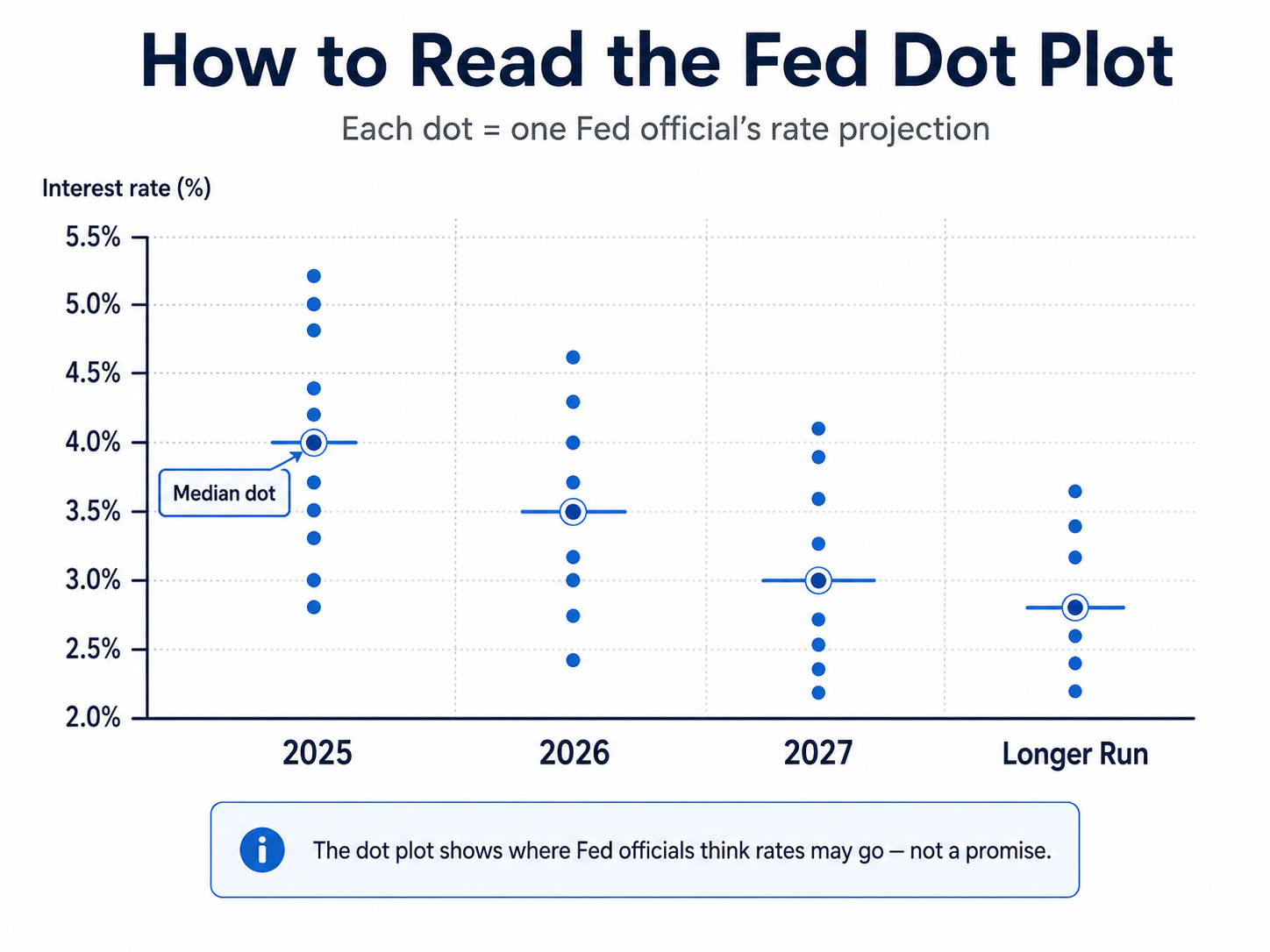
Simplified example of how to read the Fed dot plot. Each dot represents one Fed official’s projection for where interest rates may be in a future year. The highlighted median dot shows the middle forecast, which traders often watch for the Fed’s overall rate outlook. The dot plot is a projection, not a promise, and can change as inflation, jobs data, and economic conditions change.
For the official Fed dot plot, readers can visit the Federal Reserve’s Summary of Economic Projections and look for the chart titled “FOMC participants’ assessments of appropriate monetary policy,” which shows projected federal funds rate levels.
The dot plot can quickly shift market expectations because interest rates affect borrowing costs, company valuations, currencies, and bond prices.
For example, if traders expect rate cuts but the dot plot shows fewer cuts than they thought, markets can react strongly. Bond yields might rise, the dollar could strengthen, and stocks might drop.
If the dot plot shows more rate cuts than expected, the opposite can happen. Yields might fall, the dollar could weaken, and stocks may get a boost.
That is why traders watch both the dots and the market's reaction. Sometimes, the surprise is more important than the actual number.
The biggest mistake is to treat the dot plot as a set plan. It is just a snapshot of what policymakers think at one meeting. Their views can change when new data comes out.
For example, if inflation stays high, officials might expect higher rates for longer. If inflation drops and growth slows, they might expect lower rates.
The median, the spread of the dots, the Fed’s statement, the press conference, and economic data all help give a fuller picture. The dot plot is helpful, but it should not be the only thing you use to make a trade.
A Fed decision tells traders what the central bank has done at this moment. The dot plot provides insight into what officials might do in the future.
For example, the Fed might leave rates unchanged today, but the dot plot could show that officials expect cuts later. Or, the Fed might sound cautious, but the dots could show rates staying higher for longer.
This difference is important because markets often react to what they expect, not just to what is happening right now.
Federal Reserve: The US central bank that sets interest-rate policy and releases the dot plot.
Interest Rate: The cost of borrowing money, often influenced by central bank decisions.
Inflation: A rise in prices that can affect whether central banks raise or lower interest rates.
Hawkish: A policy tone that suggests higher interest rates or tighter monetary policy.
Yield: The return earned from a bond, which often moves with interest-rate expectations.
Market Sentiment: The overall mood of investors and traders toward a market or asset.
No. The dot plot is not a promise or official rate path. It shows individual policymakers’ projections at one point in time. These projections can change when inflation, employment, growth, or financial conditions change.
Traders watch the dot plot because it gives clues about future interest-rate expectations. Changes in rate expectations can affect currencies, bond yields, stocks, and commodities, especially when the dots surprise the market.
A higher dot plot suggests that Fed officials expect interest rates to stay higher than before. Traders may read this as hawkish, which can support the US dollar and bond yields while pressuring stocks.
The median dot is the middle projection among policymakers. Traders often watch it because it provides a quick view of the Fed’s overall rate outlook, though it should still be read alongside the full dot plot and Fed comments.
A dot plot is a chart that shows where central bank officials think interest rates might go in the future. In trading, it usually means the Federal Reserve dot plot.
For beginners, the main thing to remember is that the dot plot shows expectations, not promises. It can help gauge if the Fed might lean toward higher or lower rates, but it should be used alongside data, jobs, bond yields, and Fed comments.



World's Best Broker