Published on: 2026-01-30
American Rebel Holdings, Inc. (NASDAQ: AREB) has confirmed a 1-for-20 reverse stock split covering both its common stock and its publicly traded warrants (NASDAQ: AREBW), with split-adjusted trading scheduled to begin on February 2, 2026.

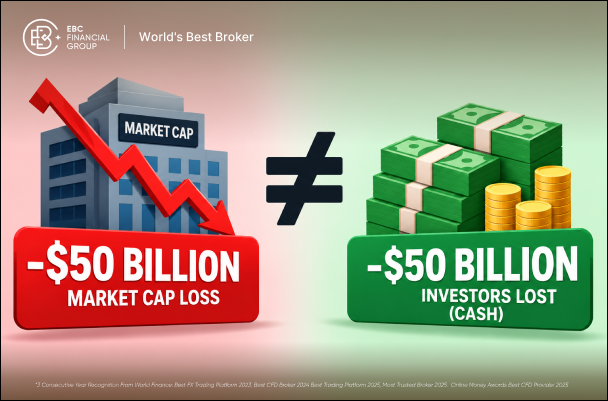
The AREB stock split story is not a conventional “stock split” designed to broaden retail participation. It is a reverse stock split, a corporate action that consolidates shares to lift the quoted price while leaving the company’s underlying value unchanged.
The setup matters because AREB is trading at penny-stock levels, where market microstructure can dominate fundamentals: spreads widen, liquidity fragments, and the Nasdaq minimum bid-price conversation never stays far away.
The company is pairing the reverse split with round-lot stockholder protection and a no-fractional-share policy, two details that can materially affect how holdings translate into post-split share counts.
The 1-for-20 reverse split is effective February 2, 2026: AREB and AREBW are scheduled to begin trading on a split-adjusted basis at the Nasdaq open on Monday, February 2, 2026.
Share count compresses sharply: Using the company’s transfer agent report, issued and outstanding shares are expected to move from about 17,017,944 to about 850,898, before any round-lot rounding shares are issued.
Warrants are included: AREBW remains listed, with proportionate adjustments to derivative securities, including warrants, contemplated to reflect the new share structure.
Nasdaq optics remain central: The company states it has not received and does not expect to receive a Nasdaq bid-price deficiency notice, while also framing the split as supportive of continued compliance.
American Rebel confirmed a 1-for-20 reverse stock split of its common stock and publicly traded warrants, effective February 2, 2026. The common stock is expected to continue trading under “AREB” and the warrants under “AREBW”, with the common stock assigned a new CUSIP (Committee on Uniform Securities Identification Procedures) number.
 Key operational details matter as much as the ratio:
No fractional shares: fractional interests are rounded up to the nearest whole share.
Round-lot stockholder protection: stockholders holding 100 or more shares should not be reduced to fewer than 100 shares after the split.areholder protection: shareholders holding 100+ shares should not be reduced to fewer than 100 shares after a split.
Authorized shares unchanged: the reverse split affects issued and outstanding shares, not the authorized cap.
| Item | Detail |
|---|---|
| Corporate action | 1-for-20 reverse stock split (share consolidation) |
| Securities affected | AREB common stock and AREBW publicly traded warrants |
| Split-adjusted trading begins | February 2, 2026 (Nasdaq open) |
| Record date (as disclosed) | January 30, 2026 |
| Ticker symbols | AREB (common), AREBW (warrants) |
| CUSIP | Common stock new CUSIP 02919L 802; warrants CUSIP 02919L 117 |
| Fractional shares | No fractional shares issued; fractional interests rounded up to the nearest whole share |
| Round-lot protection | Stockholders with 100 or more shares pre-split are not reduced to fewer than 100 shares post-split |
| Transfer agent | Securities Transfer Corporation |
| Share count reference (company disclosure) | ~17,017,944 pre-split to ~850,898 post-split (excluding any round-lot rounding shares) |
A reverse split compresses the share count and, in an efficient market, expands the per-share price by the same factor. In a pure arithmetic sense:
Pre-split: 20 shares at $0.30 equals $6.00
Post-split: 1 share at $6.00 equals $6.00
The company is explicit that the split is intended to lift the share price, improve marketability, and enhance platform eligibility, while also addressing bid-price optics related to Nasdaq’s minimum bid requirement.
The economic reality is more nuanced in microcaps:
Liquidity can deteriorate: fewer shares outstanding can mean fewer shares available at each price level, widening spreads.
Volatility often increases around the event: forced adjustments by brokers, market makers repricing risk, and retail confusion can amplify intraday moves.
Post-split drift depends on dilution expectations: if the market anticipates financing, conversions, or equity issuance, the higher post-split price does not immunise the stock from renewed selling pressure.
American Rebel’s press release provides unusually specific arithmetic. Using shares outstanding as of January 27, 2026, management indicates the reverse split would reduce issued and outstanding shares from approximately 17,017,944 to approximately 850,898, excluding shares issued via round-lot rounding.
| Metric | Pre-split (company disclosure) | Post-split (approx.) |
|---|---|---|
| Common shares outstanding (transfer agent reference point) | 17,017,944 | 850,898 (excluding any round-lot rounding shares) |
| Split ratio | 20 | 1 |
| Fractional shares | Possible at holder level | Rounded up to whole shares (no fractional shares issued) |
| Round-lot holders (100+ shares) | Maintain round-lot status | Not reduced below 100 shares |
First, the headline “divide by 20” rule becomes less precise at the individual account level because rounding up injects incremental shares. That incremental issuance is small in dollar terms but can matter in a microcap where every percentage point of dilution is scrutinised.
Second, the company’s round-lot protection is not cosmetic. A typical reverse split can push many small investors below 100 shares, turning them into odd-lot holders and potentially reducing liquidity. Here, the company is explicitly trying to keep round lots intact for those who already have 100 or more shares.
The press release confirms that the reverse split applies to publicly traded warrants and also states that the split will apply to common stock issuable upon exercise of other derivative securities, with proportionate adjustments to exercise prices and underlying share quantities.
In standard warrant mechanics, a reverse split typically results in:
Exercise price multiplied by the split factor (20x here)
Shares deliverable divided by the same factor (1/20th per warrant)
Economic value is theoretically unchanged, before liquidity and volatility effects
Because warrant contracts can vary on rounding conventions and settlement mechanics, the cleanest investor approach is to focus on the invariant: the warrant’s embedded optionality does not improve simply because the share count shrinks. What changes are the quoted per-share price and, often, the warrant's liquidity profile.
Also note the market plumbing. The company references DTC processes and timing for round-up distributions, indicating that broker handling and DTC elections can influence when adjusted positions become visible in retail accounts.
Reverse splits sit at the intersection of exchange rules and investor psychology. Nasdaq’s minimum bid-price framework is widely understood, and microcaps trading at very low share prices frequently use reverse splits to reset the quoted price.
In this case, American Rebel states it has not received a deficiency notice and does not expect one, while also listing continued compliance with the $1.00 minimum bid as an objective. Note: the $1.00 minimum bid price rule applies to the listed common stock, not to warrants.
The market’s skepticism toward reverse splits is rooted in pattern recognition. Many penny stocks reverse split, briefly trade higher on an adjusted basis, and then drift lower as capital raises or conversion activity resumes. The reverse split does not cause the drift, but it often coincides with a phase where companies need capital and market liquidity is thin.
Reverse splits can still succeed when three conditions hold:
Operating momentum is visible: revenue traction, distribution expansion, or gross margin improvement that investors can underwrite.
Financing overhang is limited: no imminent dilution wave or opaque convert structures that cap upside.
Liquidity improves, not worsens: institutional access increases and spreads remain tradable.
American Rebel describes itself as a patriotic lifestyle brand spanning safes, personal security solutions, apparel, and American Rebel Light Beer. In microcaps, that brand story only translates into equity support when it turns into predictable cash flow and balance sheet stability. The reverse split can buy time and restore the optics of a “normal” share price. It cannot substitute for fundamentals.
Investors tracking the AREB stock split typically fall into two camps: those focused on the mechanical reset and those focused on whether the company can avoid repeating the cycle.
The post-split checklist that tends to matter most:
Adjusted liquidity and spreads: whether AREB and AREBW trade cleanly after the corporate action.
Share issuance cadence: whether new equity, conversions, or incentive issuance expands the post-split float quickly.
Communication discipline: whether the company updates investors with clear share count and capital structure disclosures as the round-lot rounding settles.
Nasdaq rule trajectory: whether the stock holds a post-split price level consistent with exchange expectations over time, rather than only in the first few sessions.
AREB’s 1-for-20 reverse stock split is scheduled to be effective February 2, 2026, with AREB and AREBW expected to begin trading on a split-adjusted basis at the Nasdaq open that day.
The company confirmed a 1-for-20 reverse stock split, meaning every 20 pre-split shares are consolidated into 1 post-split share, subject to rounding and round-lot protection provisions.
No. The company states that no fractional shares will be issued, and fractional interests will be rounded up to the nearest whole share.
American Rebel says shareholders who hold 100 or more shares before the reverse split will not be reduced to fewer than 100 shares after the split, preserving round-lot status.
AREBW is included in the reverse split. The company indicates that proportionate adjustments will be made across derivative securities, typically meaning the exercise price and the shares deliverable are adjusted to reflect the 1-for-20 consolidation.
A reverse split does not, by itself, change enterprise value. It changes the number of shares and the quoted price per share. Market value can still move materially after the event due to liquidity shifts, volatility, and investor expectations about dilution or business performance.
The AREB stock split is a high-impact microcap event because it combines a steep 1-for-20 reverse split with stockholder-friendly mechanical choices: no fractional shares, rounding up, and explicit round-lot protection.
Still, the market will judge the outcome less by the arithmetic and more by what follows. A higher post-split price can improve optics and exchange flexibility, but it does not resolve the deeper questions that drive microcap valuation: balance sheet durability, dilution expectations, and operational execution. With split-adjusted trading slated for February 2, 2026, the next sessions will reveal whether the reverse split functions as a reset that stabilizes liquidity, or merely a new starting line in the same volatility cycle.
Disclaimer: This material is for general information purposes only and is not intended as (and should not be considered to be) financial, investment or other advice on which reliance should be placed. No opinion given in the material constitutes a recommendation by EBC or the author that any particular investment, security, transaction or investment strategy is suitable for any specific person.