Published on: 2026-08-24
AI data centres are driving demand for reliable electricity, strengthening the long-term case for nuclear power. Yet NuScale, Oklo and Nano Nuclear have lost about $30.3 billion in combined market value from their peaks, according to the Financial Times. The sell-off reflects a valuation problem more than a demand problem: investors priced years of potential nuclear growth into these companies before that opportunity had translated into operating commercial reactors and meaningful cash flow.
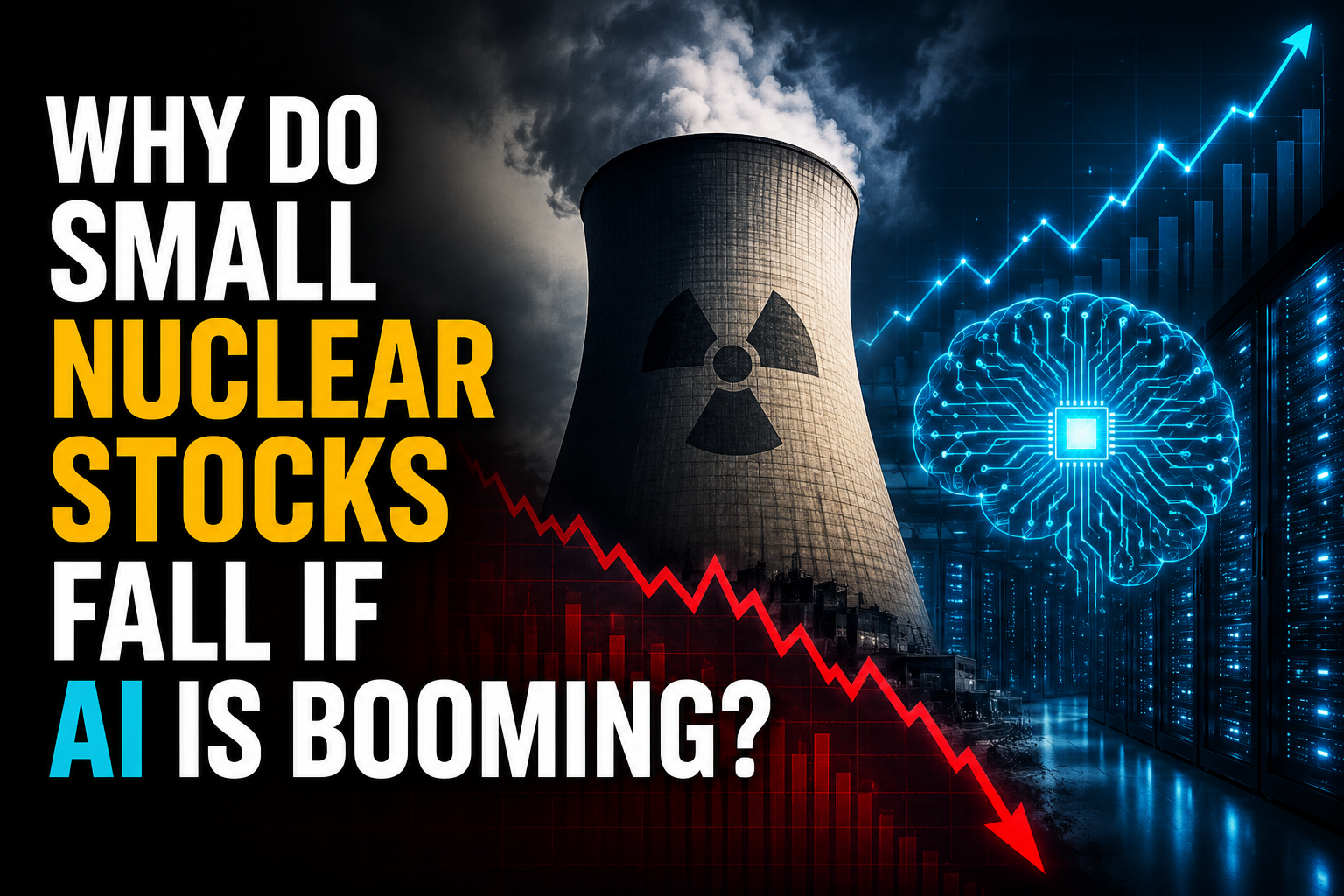
AI data-centre electricity demand is still growing rapidly, so the sell-off does not mean the long-term power-demand story has disappeared.
Small nuclear stocks had already priced in years of future growth before many projects reached commercial operation.
Customer agreements show genuine demand, but financing, development, construction and operation still stand between an agreement and recurring reactor revenue.
Stronger evidence would come from funded projects, construction progress, clearer costs and timelines, and eventually operating reactors.
The AI power story has not weakened enough to explain the collapse in these stocks. The IEA expects global data-centre electricity consumption to rise from 485 terawatt-hours in 2025 to about 950 TWh by 2030. Electricity use from AI-focused data centres is projected to triple over the same period.
Nuclear is attracting attention because data centres need dependable, around-the-clock power. That interest is already visible in commercial discussions: the IEA says conditional offtake agreements between data-centre operators and small modular reactor projects increased from 25 GW at the end of 2024 to 45 GW in 2026.
The problem is timing. The power shortage is developing faster than new small reactors can be deployed. The IEA expects renewables and natural gas to provide much of the nearer-term increase in data-centre supply, while new U.S. SMR capacity is currently expected just beyond its 2026–2030 forecast period.
So demand for nuclear power remains credible. That alone, however, cannot determine what an early-stage reactor company should be worth today.
The stocks became vulnerable because their prices moved ahead of what the businesses had commercially delivered. The investment story was easy to extend far into the future:
AI expands → data centres need more power → nuclear demand grows → small reactors get built → developers earn more money.
NuScale, Oklo and Nano Nuclear are still working toward wider commercial deployment, so much of their value depends on future projects and cash flows rather than established commercial reactor revenue. That makes their valuations highly sensitive to project timing, construction costs and future funding needs. Recent company updates show projects and regulatory work continuing, but the scale of commercial deployment the bullish thesis anticipates remains further out.
This creates a basic valuation problem. When a stock already assumes substantial future success, investors have less reason to pay the same price if that success appears further away, more expensive, or harder to finance.
The underlying electricity forecast does not have to collapse. Expectations about how quickly a particular company can benefit from it only have to become less optimistic.
That helps explain how roughly $30.3 billion could disappear from the three companies’ combined peak market values even while AI electricity demand continued rising.
A data-centre operator wanting nuclear power sits near the beginning of the commercial process. A reactor developer still has to turn that interest into a project that can be financed, built and operated.
Stage |
What it means |
What still needs to happen |
AI power demand rises |
More customers need reliable electricity |
A developer must win that demand |
Nuclear agreement is signed |
Customer interest becomes more concrete |
Financing and development still follow |
Project enters construction |
Commercial plans are advancing |
The reactor must be completed and commissioned |
Reactor starts operating |
Electricity can generate revenue |
Costs and performance determine the economics |
The timelines also differ sharply. The IEA says a data centre can become operational in roughly two to three years, while the wider energy infrastructure needed to supply it often requires longer planning and construction periods.
Customer announcements therefore need context. The IEA specifically describes today’s 45 GW SMR/data-centre pipeline as conditional on offtake agreements. They provide meaningful evidence that customers are interested, but they should not be read as 45 GW of guaranteed future reactor revenue.
That gap has an outsized effect on early-stage stocks. Established power companies can be valued partly on electricity they already sell. New reactor developers depend much more heavily on assumptions about projects and earnings that may still be years away.
If a reactor is expected to arrive later, cost more or require additional financing, the present value investors assign to those future earnings can fall substantially even when the AI demand outlook barely changes.
The demand forecast is already large. Small-reactor developers now need more evidence that they can convert that demand into commercial projects.
Stronger customer commitments: Agreements becoming firmer and giving developers clearer visibility over future demand.
Financing secured: Evidence that proposed projects have sufficient capital to move forward.
Construction progress: Projects advancing from plans and approvals into physical development.
Clearer costs and timelines: Greater certainty over when reactors can begin operating and what deployment will cost.
Operating reactor revenue: Commercial electricity sales that reduce reliance on long-range assumptions.
These steps would let markets judge companies more on delivery than on the size of the AI opportunity alone.
AI demand supports the long-term nuclear opportunity, but these stocks had already priced in substantial future growth. Long project timelines, uncertain costs and funding needs can reduce valuations even while electricity demand rises.
AI data centres need large amounts of reliable electricity around the clock. Small modular reactors could eventually provide steady power near major loads, although financing, construction and commercial deployment still take considerable time.
The IEA expects the first commercial SMR projects globally around 2030. Its newer Electricity 2026 outlook places new U.S. SMR capacity just beyond 2030, although individual project schedules can differ.
AI can increase the need for reliable electricity without justifying every nuclear developer at any valuation. The next test is delivery: funded projects, construction progress, and eventually operating reactors that convert customer demand into recurring revenue.