Published on: 2025-03-27
Updated on: 2026-07-06
Trading often looks easier after the chart has already moved. It feels very different when a trader must decide where to enter, where to exit, how much to risk and whether to stay calm when price moves against the plan.
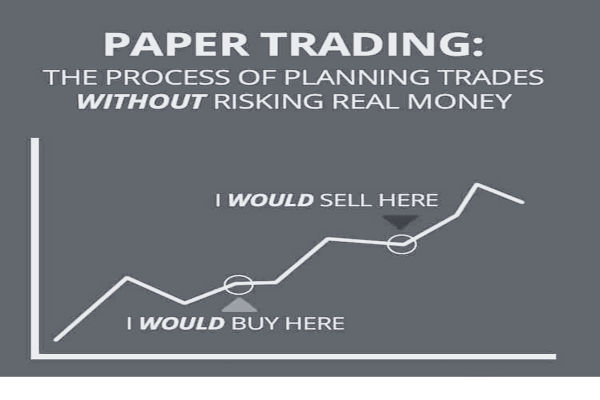
That is why paper trading gives beginners a safer place to practise these trading decisions before real money is involved. It is simulated trading using virtual funds instead of live capital. It allows traders to practise buying and selling financial instruments, test strategies, learn platform tools and build discipline in a risk-free environment.
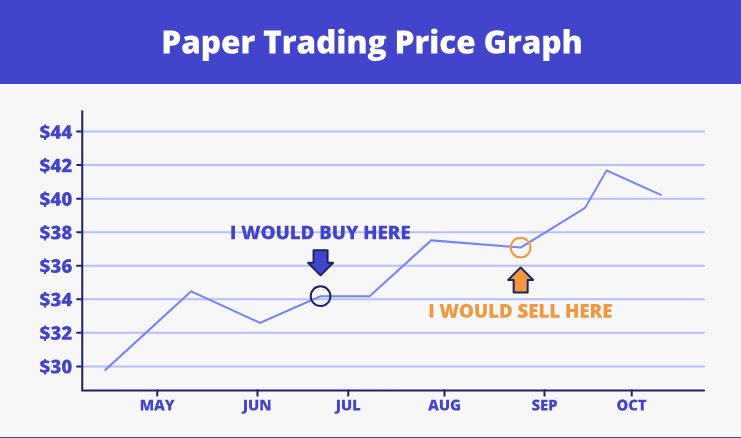
Paper trading means placing simulated trades without using real money. The term comes from the older practice of writing trade ideas on paper and tracking whether they would have made or lost money. Today, paper trading usually happens through demo accounts or trading simulators that provide charts, prices, order tickets and virtual balances.
A paper trading account may allow users to practise forex, commodities, indices, shares, ETFs or CFDs, depending on the platform. The trader chooses a market, analyses price movement, places a buy or sell order and monitors the result as the market changes. The experience can look similar to live trading, but profits and losses remain simulated.
Paper trading usually starts with a demo account or simulator. The trader receives a virtual account balance, selects an instrument, and places simulated trades using market prices. Many platforms also show profit and loss, Margin usage, open positions, closed trades and trading history.
A typical paper trading routine includes:
Choose a market
Select an instrument such as a forex pair, gold, oil, an index, a share, an ETF or a CFD.
Analyse the chart
Look at trend direction, support and resistance, volatility, price patterns or indicators.
Set an entry level
Decide where the trade idea becomes valid before placing the order.
Place a stop-loss
Define the price level where the trade idea is wrong.
Choose a take-profit target.
Decide where to exit if the trade moves in the expected direction.
Record the result
Review whether the trade followed the plan, not only whether it made virtual profit.
This routine helps traders practise the full trade process, from planning to execution to review. In real trading, the harder questions are usually practical:
Where should the trade be invalidated?
This helps traders avoid holding a losing position with no clear exit plan.
How much should be risked?
This teaches position sizing and prevents one bad trade from damaging the account.
Should the trade still be taken if price has already moved?
This helps traders avoid chasing late entries after the best entry point has passed.
Was the trade taken because of a plan or emotion?
This helps traders separate structured decisions from impulse trades.
Paper trading gives traders a place to answer these questions repeatedly before live money is involved.
A good paper trading platform should help traders practise in a structured and realistic way. The goal is not only to watch charts, but to understand how analysis, order placement, risk control and review work together.
Useful platform features include:
Clear charts
Traders should be able to view candlesticks, timeframes, price history, trendlines, support and resistance levels, and technical indicators. Clear charts help traders understand market structure before placing a simulated trade.
Market and limit orders
Market orders help traders practise entering at the current price, while limit orders help them practise waiting for a specific price level. This teaches the difference between immediate execution and planned entry.
Stop-loss tools
A stop-loss allows traders to define where the trade idea is wrong. Practising this in a demo account helps beginners understand risk before they move to live trading.
Take-profit tools
A take-profit order helps traders plan their exit before emotion takes over. This is useful for learning reward-to-risk planning and avoiding random exits.
Trade history
Trade history allows traders to review entries, exits, profits, losses, and holding times. Without this record, it is difficult to know whether results came from a repeatable process or random decisions.
Access to relevant markets
The platform should include the markets the trader wants to study, such as forex, commodities, indices, shares, ETFs or CFDs. A trader preparing for forex trading needs a different practice environment from someone studying only stock charts.
Margin and account information
For leveraged products, traders should be able to see margin usage, available balance and open exposure. This helps them understand how position size affects account risk.
Many brokers offer demo accounts that replicate parts of their live trading environment. Traders who want to practise in a simulated environment can start with an EBC demo account, which allows users to explore platform functions, test trading ideas and practise order placement with virtual funds before moving to live markets.
Paper trading usually fails for one reason: traders behave differently when nothing is at stake. A virtual loss does not create the same pressure as a real loss. Because of that, some traders take trades in a demo account that they would never take with real money.
A trader may move a stop-loss because the loss is only simulated. They may increase position size after a losing trade because there is no real damage. They may hold a losing trade too long because the account can be reset. These habits can make demo results look better than the trader’s actual discipline.
Some traders discover that losing $20 of real money feels worse than losing $20,000 in a demo account. This psychological gap is one of the main reasons why profitable paper traders sometimes struggle when they move to live markets.
The danger is using paper trading to practise behaviour that would fail in live markets. A trader who ignores risk rules in a demo account is not really testing a strategy. They are rehearsing poor discipline.
This is why paper trading should be treated as behaviour training. A trader planning to risk 1% per trade on a $2,000 live account should follow the same rule in the demo account. The goal is to practise decisions that can survive when losses start to hurt.
Paper trading is useful because it gives traders a place to practise without turning every mistake into a real financial loss. Its strongest benefits are:
Practise without risking real money.
Beginners can learn how trades work, how prices move and how trading platforms function before live capital is involved.
Build repeatable trading habits.
Paper trading forces traders to repeat the same process many times. Over time, the habit of waiting for setups, defining risk and reviewing mistakes helps traders become less reactive because live trading often punishes impulsive decisions more than bad market views.
Test strategies in current market conditions
Traders can practise a breakout setup, a trend-following approach, or a range-trading plan while prices are moving. The goal is not only to see whether the strategy makes virtual profit, but whether the trader can follow the rules consistently.
Learn platform tools before trading live.
A demo account helps traders practise market orders, limit orders, stop-losses, take-profit levels, margin display and trade history. This reduces the chance of basic execution mistakes when real money is involved.
Observe how different markets behave.
Different markets behave differently, and paper trading allows traders to observe those differences without financial risk. Forex pairs may react quickly to interest rate expectations; gold may move on inflation or risk headlines; oil can respond to supply news; and indices can shift on earnings or technology-sector momentum.
Paper trading is helpful, but it can also mislead traders if they treat it like a game. The main limitations are:
No real emotional pressure
A trader may feel calm when losing virtual money but react very differently when real capital is involved. Some traders discover that losing $20 of real money feels worse than losing $20,000 in a demo account.
Bad habits can hide inside good demo results.
Traders may move stop-losses, increase position size after losses or hold losing trades too long because no real capital is at risk. These habits can make paper trading results look better than the trader’s actual discipline.
Execution may differ from live trading.
Simulated orders may appear smooth, while live markets can involve slippage, wider spreads, rejected orders or lower liquidity during fast-moving conditions. These differences can become more noticeable during news releases, central bank decisions or sudden market shocks.
Demo balances can be unrealistic.
Many demo accounts start with large virtual balances. A trader planning to trade live with $1,000 or $2,000 may develop poor habits if they practise with a much larger simulated account.
False confidence can build quickly.
A trader may double a demo account by taking oversized positions, then believe the strategy is strong. In reality, the result may come from risk-taking that would be difficult to tolerate in a live account. Paper trading results should be judged by process first and profit second.
Paper trading, backtesting and live trading are connected, but they are not the same. Each one tests a different part of the trading process.
Backtesting uses historical price data to check how a strategy would have performed in the past. It is useful for studying whether a setup had potential, but it does not fully test real-time decision-making. The trader can already see how the chart developed, which can make entries and exits look easier than they felt at the time.
Paper trading is more active. The trader must make decisions while the market is moving, without knowing the final result in advance. This makes paper trading better for practising execution, patience, risk control and trade management.
Paper trading uses virtual funds, so mistakes do not create real financial losses. This makes it useful for learning platform tools, testing strategies and building routine. However, it cannot fully reproduce the emotional pressure of live trading.
Live trading uses real capital. That means every decision has a financial consequence. A strategy that looks easy in a demo account may feel harder when the trader sees real profit and loss changing on the screen. This is why paper trading should be used as preparation, not proof that live trading will feel the same.
| Type | What It Means | What It Is Useful For | Main Limitation |
|---|---|---|---|
| Backtesting | Testing a strategy using historical price data | Studying whether a setup worked in past market conditions | It does not test real-time decision-making because the trader can already see how the chart developed |
| Paper Trading | Practising trades in a simulated live or near-live environment using virtual funds | Testing execution, discipline, risk rules and platform use without risking real money | It cannot fully reproduce the emotional pressure of live trading |
| Live Trading | Trading with real capital in live market conditions | Applying a strategy with real profit, loss, execution and emotional pressure | Mistakes become financially expensive, especially if risk management is weak |
The best way to use paper trading is to make the demo account feel as close as possible to the live account you plan to trade.
Start with a realistic virtual balance.
If the plan is to trade live with $1,000 or $2,000, practising on a much larger demo balance can lead to careless habits. The demo account should reflect the size and risk level the trader expects to use later.
Set risk rules before the first trade.
A trader may decide to risk only 1% per trade, use a stop-loss every time and avoid increasing position size after losses. These rules should be followed even though the money is virtual. The purpose of paper trading is to practise discipline, not to maximise virtual returns.
Use a trading journal.
Each entry should include the market, timeframe, entry, stop-loss, take-profit, reason for the trade, result and lesson learned. Screenshots are helpful because they show what the trader saw before the outcome became obvious.
Test the strategy in different market conditions.
Traders should avoid testing a strategy only during favourable conditions. A setup that works during calm sessions may struggle during high-volatility news events. Paper trading lets traders study how their plan reacts to sharp moves, failed breakouts and changing momentum before risking money.
Review behaviour, not only profit.
A profitable demo trade is not useful if the trader broke every rule to get it. Review whether the trade followed the plan, respected risk and matched the strategy. Good paper trading should build habits that can be repeated in live markets.
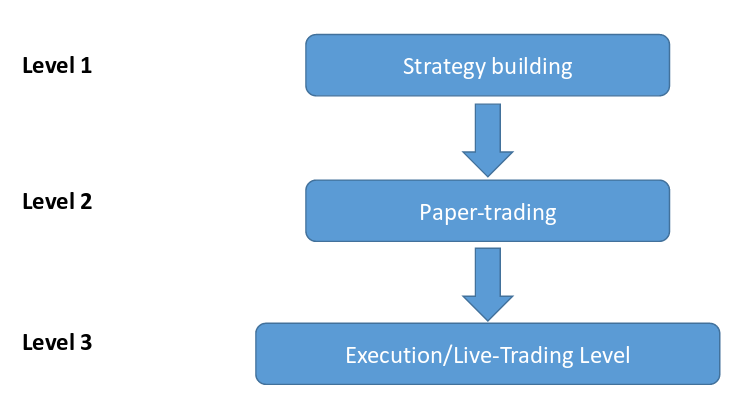
Traders should not move from paper trading to live trading just because they had a few winning trades. A better sign is consistency. The trader should be able to follow rules, control risk, and review mistakes over a meaningful period.
Before going live, ask:
Did I use a realistic demo balance?
Did I follow the same risk rules I plan to use live?
Did I avoid moving stop-losses without a valid reason?
Do I understand why my winning trades worked?
Do I know what caused my losing trades?
Can I accept losses without revenge trading?
If the answer is no, more practice may be useful. If the answer is yes, the first live step should still be small. Early live trading is not only about profit. It is about learning how real money affects patience, confidence and discipline.
For traders with demo accounts on EBC that are ready to move from a demo account to live trading, here is a step-by-step guide to switch from a demo account to live trading.
Register with EBC Financial Group
Go to the EBC Financial Group website and create a client portal account. Use accurate personal details, as they will be needed for account verification.
Complete account verification
Submit the required identity and verification documents through the EBC client portal. Verification is needed before a trader can fully access live trading and funding features.
Open or select a live trading account
After verification, choose the live account type and trading platform that match the trader’s needs, such as MT4 or MT5.
Fund the live account
Deposit funds through the EBC client portal using the available funding options. The live account should be funded responsibly, with an amount the trader can afford to risk.
Link the account to the trading platform
Use the live account login details provided by EBC to connect the account to the chosen platform, such as MetaTrader 4 or MetaTrader 5.
In most modern trading contexts, yes. Both refer to simulated trading using virtual funds. Some platforms call it paper trading, while brokers often call it demo trading.
No. Paper trading uses virtual funds, so profits and losses are simulated. The value comes from the practice, strategy testing and discipline it can help develop.
There is no fixed timeline. Beginners should focus on consistency, risk control and rule-following before moving to live trading. A few lucky trades are not enough.
The biggest weakness is that traders may behave differently when no real money is at risk. If they ignore rules in a demo account, those habits can become costly in live trading.
Paper trading is valuable because it allows traders to practise decisions before those decisions become expensive. It cannot reproduce the emotional pressure of live markets, but it can teach the habits, routines and risk controls that traders rely on when real money is involved.
The goal is not to become profitable in a simulation. The goal is to build behaviour that remains profitable at the end of the simulation.
Disclaimer: This material is for general information purposes only and is not intended as (and should not be considered to be) financial, investment or other advice on which reliance should be placed. No opinion given in the material constitutes a recommendation by EBC or the author that any particular investment, security, transaction or investment strategy is suitable for any specific person.