Published on: 2026-08-13
Updated on: 2026-08-13
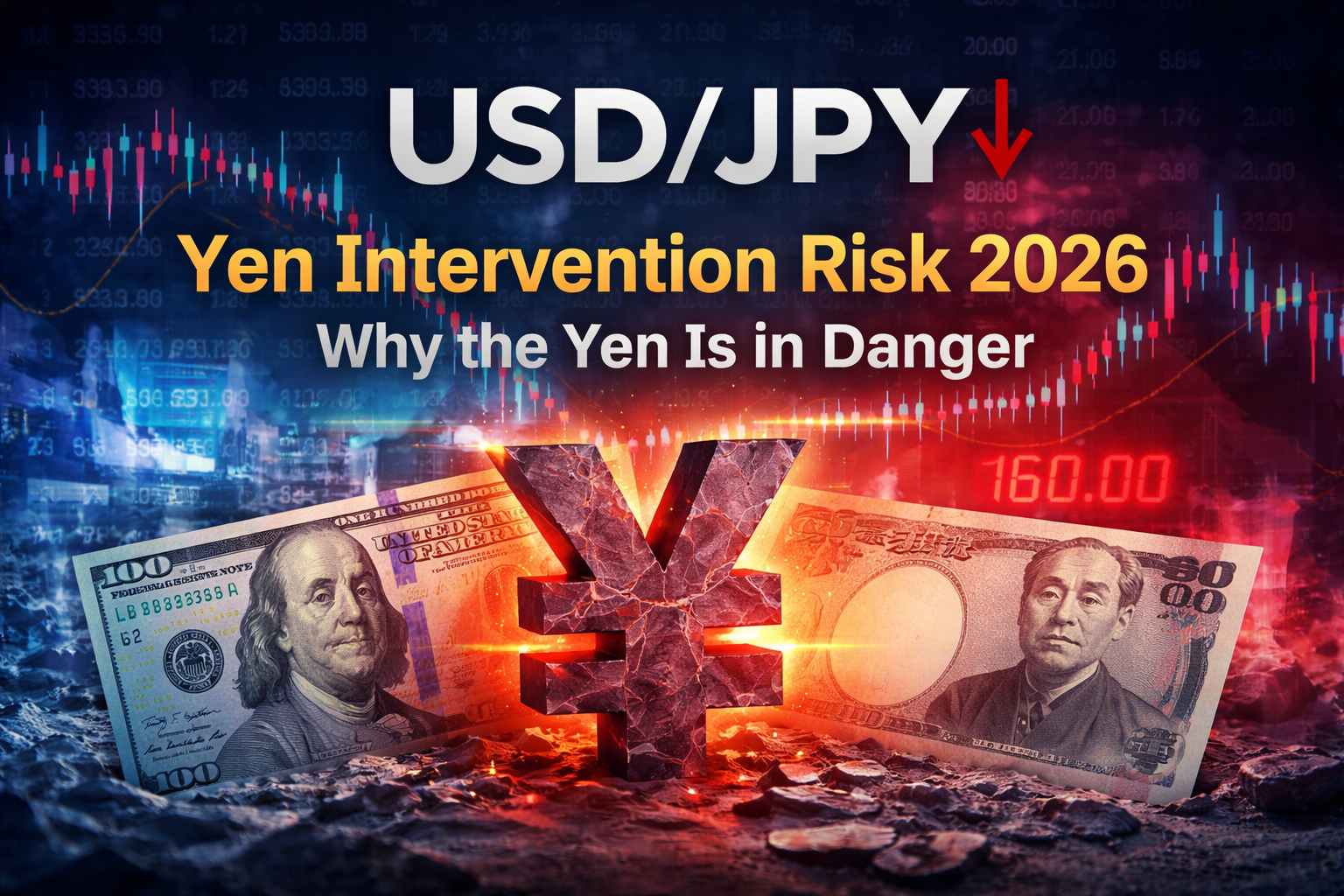
Japan deployed an estimated $53 billion in late-July yen buying as USD/JPY approached 164, before coordinated U.S.-Japan intervention followed on July 31. About two weeks later, the pair is back near 159.3 after falling toward 155.
The currency intervention moved the market, while the U.S.-Japan rate gap kept the incentive behind dollar demand largely intact.

USD/JPY has recovered roughly half of its intervention-driven decline after falling from almost 164 toward 155 and returning near 159.3.
The U.S.-Japan policy-rate gap remains 250–275 basis points, preserving the dollar’s yield advantage and giving USD/JPY room to rebound after official yen buying fades.
Japan held $1.287 trillion in official reserves at the end of July, leaving ample financial capacity for another intervention.
September 17–18 is the next major test, when BOJ policy could narrow the rate gap that has repeatedly weakened intervention’s staying power.
Japan strengthens the yen by selling foreign currency and buying yen directly in the market. When those purchases arrive in size, positions betting on further yen weakness can be forced to unwind quickly, amplifying the initial move. Japan’s Ministry of Finance decides when to intervene, while the BOJ executes the transactions on its behalf.
USD/JPY fell from a four-decade high near 164 toward 155 during the late-July intervention sequence. Coordinated U.S.-Japan buying on July 31 raised the risk that further official action could arrive without warning, making large bets against the yen more dangerous. Japan’s Finance Ministry said the joint operation targeted excessive volatility and disorderly yen movements.
The fall toward 155 proved that intervention can change price quickly. The rebound toward 160 exposed the harder problem. Official buying ended while the forces favouring the dollar remained.
The Bank of Japan’s 1.0% policy rate remains well below the Federal Reserve’s 3.50%–3.75% range. The resulting 250–275 basis-point gap leaves dollar assets offering substantially higher short-term yields than comparable yen exposure.
Once official yen buying fades, that rate advantage gives capital a reason to move back toward dollars. Japan can force bets against the yen to unwind during intervention, but it cannot remove the yield advantage that encourages those positions to return afterward.
USD/JPY’s rebound toward 160 therefore reflects a problem larger than intervention size. A lasting yen recovery becomes more likely when Japanese rates rise, U.S. rates fall, or both narrow the gap.
Japan is nowhere near exhausting its intervention capacity. Official reserves stood at $1.287 trillion at the end of July, leaving ample resources for another large yen purchase.
The harder constraint is not how many dollars Japan can deploy, but how long official demand can outweigh private market flows. Recent intervention campaigns show that large purchases can force an immediate yen rally without permanently resetting USD/JPY.
Past interventions make the difference between size and durability clear. Japan officially spent ¥9.79 trillion in April-May 2024, ¥5.53 trillion in July 2024 and ¥11.73 trillion between April 28 and May 27, 2026.
| Episode | Amount | Initial USD/JPY Move | Durability |
|---|---|---|---|
| Apr–May 2024 | ¥9.79tn | ~160 → below 155 | Yen later weakened |
| Jul 2024 | ¥5.53tn | 161.8 → 157.3 | Gains later faded |
| Apr–May 2026 | ¥11.73tn | 160.7 → 155.5 | Above 163 by July |
| Late Jul 2026 | ~$53bn* | ~164 → ~155 | Back near 159–160 |
The 2024 and 2026 moves repeatedly produced sharp initial yen rallies. Reuters recorded the July 2024 move from 161.76 to 157.30 and the April 2026 jump from 160.72 to 155.5.
Large reserves give Japan repeated chances to intervene. They cannot buy a permanent exchange rate.
The late-July 2026 $53 billion figure is an estimate. Japan’s Ministry of Finance will publish the official total for the July 30 to August 26 reporting period on August 28.
A return toward 160 does not automatically mean the intervention failed. Japan does not need to establish a permanent exchange rate for official buying to have value.
Intervention can slow a disorderly decline, break one-way positioning and make further bets against the yen considerably riskier. Japan’s own framework describes intervention as a tool for containing excessive fluctuations and stabilising unstable currency movements rather than defending a fixed USD/JPY level.
The late-July operation achieved those shorter-term effects even though much of the exchange-rate move later reversed. Its limitation is narrower. Intervention can reset market behaviour and buy time, while lasting appreciation remains difficult when the policy incentives behind yen weakness stay largely unchanged.
A BOJ rate hike would narrow the gap that has repeatedly drawn demand back toward the dollar after intervention ends. The BOJ kept its policy rate at 1.0% in July, while its latest policy discussion highlighted greater upside inflation risks and the case for continued monetary tightening.
Its next scheduled decision comes on September 17–18. Higher Japanese rates would improve the return on yen and make short-yen positions more expensive. Fed rate cuts would also narrow the gap by reducing the dollar’s yield advantage.
The real test comes after intervention stops. If USD/JPY remains lower without continuous official buying, monetary policy rather than temporary order flow is beginning to support the yen.
No. Japan has not declared 160 as an official USD/JPY defence line. Authorities focus on excessive volatility and disorderly currency movements rather than defending a predetermined exchange rate, although repeated intervention around extreme yen weakness has made 160 an important market reference for intervention risk.
A weaker yen raises Japan’s cost of imported energy, food and raw materials, adding pressure to domestic prices. Intervention can slow a rapid decline and make one-way bets against the yen more dangerous.
Because intervention creates temporary demand for yen, while the U.S.-Japan interest-rate gap continues after the buying stops. With U.S. rates still materially above Japanese rates, dollar assets retain a yield advantage that can pull capital back toward the dollar and push USD/JPY higher again.
Yes. Another intervention could push USD/JPY sharply lower without creating a permanent ceiling at 160. If the U.S.-Japan rate gap remains wide, dollar demand can return after official yen buying ends.
Japan’s August 28 disclosure will reveal the official intervention total for the July 30 to August 26 reporting period. The BOJ’s September 17–18 meeting will provide the more important test of whether monetary policy is beginning to support the direction sought through intervention.
Another intervention could knock USD/JPY lower again. A narrower U.S.-Japan rate gap would give the yen a stronger reason to stay there after the buying stops.