Published on: 2026-09-03
Updated on: 2026-09-03
A single Bangkok-listed name now accounts for close to a fifth of the Thai market by value. Its earnings, its Taiwanese parent and its violent price swings shape the returns of investors who have never bought a share of it.
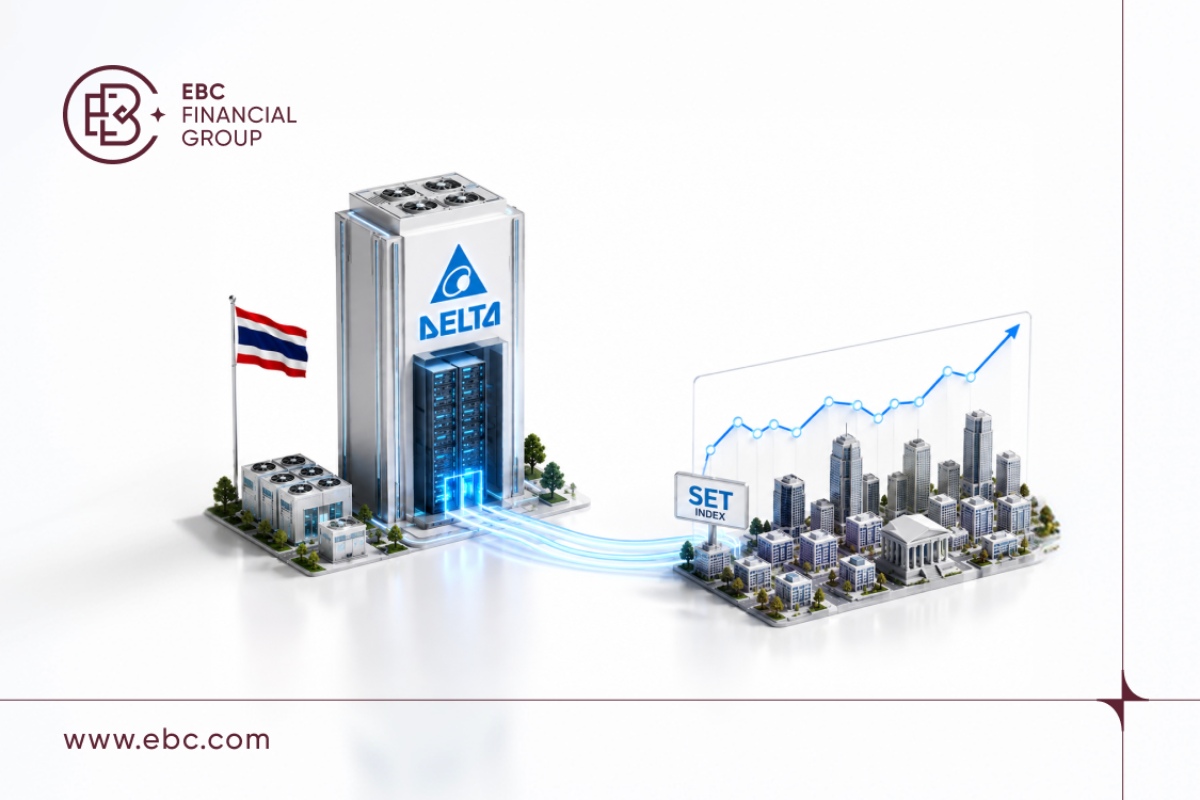
So, you're wondering why your stock portfolio in the Stock Exchange of Thailand (SET) Index is flat, while the SET is climbing? Do you hold any DELTA shares?
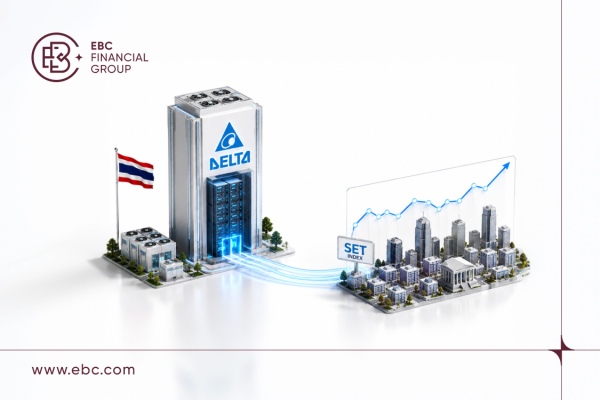
Delta Electronics Thailand (DELTA) carries a market value of roughly ฿4.07 trillion, about 21% of the entire Thai stock market. Strip DELTA out and the SET Index would have barely moved across several recent stretches; a point brokerage research desks have made more than once.
The maths is plain. Every ฿1 move in DELTA shifts the SET Index by about one point. When the second-quarter results disappointed and the stock fell ฿22, the index dropped almost 20 points in a single session. When DELTA later rebounded ฿17, it pulled the whole index into positive territory while the rest of the market drifted.
The company started life on 16 June 1988 with registered capital of ฿40 million, a subsidiary of Taiwan's Delta Electronics Inc., founded by Bruce CH Cheng in 1971. The Thai enterprise went public in 1994 and listed on the SET on 24 July 1995, and over three decades it grew from a parts factory into the group's regional headquarters for Southeast Asia, Oceania and India.
The story runs through Taipei, which reported global revenue of US$17.9 billion in 2025 as it moved from industrial fans and power switching into data-centre infrastructure, EV charging, factory automation and renewable energy.
DELTA itself makes power management systems and components such as DC fans, EMI filters and solenoids, with plants across Asia and Europe, growth over the past two to three years came from AI and data-centre products, which now make up more of revenue and earn better margins than the older lines.
Investors should note how tightly the Thai company remains bound to its parent. Analysts read Delta Taiwan's monthly sales as a leading signal for DELTA Thailand, and the Thai company pays its parent a royalty based on sales volume. That cost has climbed with revenue and became one of the clearest pressures on margins last quarter.
DELTA reported second-quarter net profit of ฿6,075 million, up 31.3% on the year. The headline looked strong. It still came in below estimates by 23% to 30%, well short of the ฿8,500 to ฿8,800 million some brokers had pencilled in. Core profit, stripping out one-off items, was just ฿5,527 million, a miss of as much as 36%. The stock fell between 5.86% and 7.17% on the day and dragged the SET down nearly 20 points.
Several forces drove the miss. Gross margin fell to between 26.8% and 27%, down from 31.7% the previous quarter, as raw-material costs and chip shortages pushed the company to buy from second-tier suppliers and pre-order stock. Selling and administrative expenses ran higher than expected, led by the royalty to the Taiwan parent, and the company also booked inventory write-downs during the quarter. The price had already run up on high expectations, so the miss triggered heavy selling on the fact. Krungsri Securities cut its rating to Reduce after the results and lowered its target price to ฿244 from ฿265, citing weaker profit forecasts for 2026 and 2027 as raw-material pressure persists.
2026 has been one of DELTA's most volatile years since listing. The 52-week range runs from ฿140.50 to ฿372.00, a swing of more than 2.6 times, and the year has followed a clear rhythm. In February the fourth-quarter 2025 results showed core profit up 194% on the year and beat expectations, which fuelled a sharp rally. By May the trailing P/E had spiked as high as 159 times before easing to about 130 after the first-quarter numbers. Between 16 and 30 April the exchange placed DELTA and ADVANC under a Cash Balance measure after heavy speculative trading drove excessive volatility. On 27 July the second-quarter miss knocked the stock down as much as 7% and pulled the SET down almost 20 points. Two weeks later, on 10 August, strong July sales from Delta Taiwan sent the stock up 6.49% and lifted the index by more than 12 points. The pattern held all year. DELTA rallies ahead of earnings on expectation, sells off hard when the numbers disappoint, then recovers on fresh news from the parent or the wider AI story.
DELTA's rise as the flagship AI stock on the Thai market is no accident. Data centres running large-scale AI need far more efficient power and cooling than standard sites, because AI chips draw more power and throw off more heat, which plays to the Delta group's strengths in power management and to the liquid-cooling technology it is developing. The market groups DELTA with global AI-infrastructure names such as Vertiv and the wider field of data-centre power-equipment makers listed in the United States and Taiwan. DELTA is far smaller on a global scale, but within a Thai market that offers few globally relevant technology names it has become the main way local investors gain direct exposure to the AI data-centre theme on their own exchange. That is a large part of why so much capital has flowed in, at times pushing the price well past fundamentals.
Two weeks after the disappointing results, DELTA led the market again. On 10 August it rose 6.49% to close at ฿279 on turnover above ฿8,405 million, lifting the SET by 12.36 points on its own. The trigger was July sales from parent Delta Electronics Inc., which came in at NT$67,073 million, up 47.8% on the year, the second-strongest monthly reading in months behind June's 55.4%. Krungsri read the strong Taiwan figure as a sign that DELTA Thailand's own sales should follow, supporting stronger year-on-year profit in the third quarter, and set support at ฿270 and ฿262, resistance at ฿290 and ฿300, and a stop-loss below ฿258 for short-term trades. Several points support the recovery case. New liquid-cooling products are due to enter mass production in the second half of 2026, a higher-margin line, management has guided for 20% sales growth in US-dollar terms for 2026 though baht strength will offset part of that, and full-year gross margin could recover toward 30% to 31% if the data-centre share of sales rises as planned.
DELTA is one of the hardest calls on the market, and the spread of target prices shows why. Before the second-quarter results, Bualuang carried a target as high as ฿440, a measure of how bullish the market had become, and when the numbers missed by a wide margin several houses cut both earnings forecasts and targets in short order.
| Broker | Rating | Target (฿) | Key view |
| Bualuang (pre-Q2) | Bullish | 440.00 | Expected a supply-chain-led beat |
| Kasikorn | Hold | 320.00 | Limited upside to the target |
| InnovestX | Neutral | 220.00 | Valuation stretched vs the 5-year average P/E |
| Krungsri (post-Q2) | Reduce | 244.00 | Cut from ฿265 on margin pressure |
| Tisco | Risk warning | Not set | Price ahead of fundamentals, market fragile |
The range tells the story. Kasikorn holds the stock with a ฿320 target and sees limited upside. InnovestX is neutral at ฿220 on a stretched valuation against the five-year average P/E. Krungsri moved to Reduce at ฿244 after the results. Tisco issued a risk warning without a set target, arguing the price has run ahead of fundamentals and left the wider market fragile. When results disappoint, the correction tends to be as sharp as the rally before it.
DELTA's risk does not stop at its own shareholders. Because it carries close to 21% of total market value, that risk extends to the stability of the whole Thai market. Tisco warned that much of the SET's recent gains have come from DELTA alone, which leaves the broader market fragile even as, in the broker's view, the stock's own price has run past its fundamentals. Several structural issues sit behind that warning. The market's concentration in one stock makes the SET Index an overly faithful mirror of DELTA, and the exchange has already stepped in once with the April Cash Balance measure. Reports put algorithmic trading at as much as 48% of trading value on some days, so technical flows can move the price with little link to fundamentals. The trailing P/E above 100 times sits several multiples over the market average, so any earnings disappointment can cut deep. And both sales direction and royalty costs depend on the parent, outside the Thai company's control.
The takeaway is direct. Watching DELTA is not only a question of whether to buy or sell one stock. It is a question of how much risk any SET-benchmarked portfolio already carries. Index funds and portfolios that track the SET hold far more DELTA exposure than most investors realise, and the stock's volatility flows straight through into their returns.
Several catalysts will shape the stock from here. Delta Taiwan's monthly sales remain the clearest near-term signal. US inflation data and the Fed's rate path in September will move sentiment across global tech, DELTA included. The third-quarter results will test whether the expected recovery arrives, or the company disappoints for a second quarter running. The ramp of liquid-cooling products in the second half will show whether margins lift, a stronger baht would erode dollar revenue, and the exchange's stance on speculative trading will return to focus if volatility spikes again.
DELTA pairs a real growth story in AI, data centres and liquid cooling with real structural risk, and there is no single answer to whether to buy it. The sensible approach is to match the decision to your own horizon and risk tolerance.
Short-term traders have clear levels to work with. Krungsri marks support at ฿270 and ฿262, resistance at ฿290 and ฿300, and a stop-loss below ฿258, which suit anyone trading around Delta Taiwan's monthly sales. The condition is discipline, since volatility is high and algorithmic flows can move the price with little link to fundamentals over short periods.
Long-term investors face one core question. Do you believe in the three-to-five-year growth story in AI and data centres? If you do, sharp corrections after weak earnings may offer chances to accumulate, though you will still carry a valuation well above the market average and will need to watch whether gross margin recovers to 30% or more in the coming quarters. That single figure separates quality growth from growth bought at an ever-rising price.
Index and SET-benchmarked investors should recognise a simple fact. Even if you never buy DELTA directly, your portfolio already carries heavy automatic exposure to it, so following DELTA news matters as much as tracking the wider Thai economy. The swings in this one name can set the short-term direction of your whole portfolio.
DELTA's 2026 raises a question larger than any one stock. How much should the Thai market depend on a handful of growth names? The AI story is real and well supported, but the current price already reflects a great deal of that optimism, which makes every quarterly result carry far more weight than it would for an ordinary stock, both for DELTA's own shareholders and for the stability of the Thai market as a whole.