Published on: 2026-01-07
Updated on: 2026-01-07
The stock market and share market are related but distinct. The stock market is the system for issuing and trading equity, while the share market refers to the ownership units within that system.
Many people believe they understand the stock market, but few can explain it precisely or distinguish it clearly from the share market.
This confusion affects how people think about ownership, risk, and wealth creation. When the language is vague, understanding becomes shallow. And shallow understanding leads to poor financial decisions.
The stock market is the broader financial ecosystem where ownership interests in companies, along with related financial instruments, are issued, traded, valued, and regulated.

The stock market performs three essential economic functions:
Enables companies to raise long-term capital by issuing ownership stakes to public investors.
Continuously determines the value of businesses through market expectations of growth, profitability, and risk.
Allows investors to buy and sell ownership efficiently without direct negotiation with the issuing company.
The stock market is not a single location. It is a network of exchanges, clearing systems, brokers, institutional investors, regulators, and supporting technologies.
Major global stock markets include organized exchanges like the New York Stock Exchange and NASDAQ, as well as electronic trading venues that operate primarily through digital infrastructure.
The stock market includes more than just shares. It also covers instruments such as:
Equity derivatives
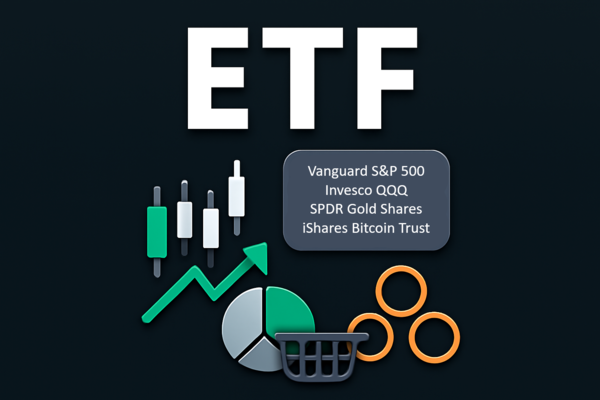
Exchange-traded funds (ETFs)
Preferred stock
Index-linked securities
In summary, the stock market represents the full range of equity-related trading activity.
The share market is a subset of the stock market, referring specifically to the marketplace where company shares, or units of equity ownership, are bought and sold.
 A share represents a fractional claim on:
A company’s assets
Its future earnings
In many cases, it has voting rights.
When investors say they are “investing in shares,” they are purchasing direct ownership in a business. The share market focuses on this transaction: the exchange of company ownership between buyers and sellers.
The term “share market” is more commonly used in:
The United Kingdom
India
Australia
Other Commonwealth and emerging-market financial systems
Functionally, the share market operates like equity trading in any market. The distinction is linguistic, not economic.
| Aspect | Stock Market | Share Market |
|---|---|---|
| Scope | Broad, inclusive ecosystem | Narrow, ownership-focused |
| Instruments | Shares, ETFs, derivatives, and equity-linked products | Shares only |
| Conceptual role | Entire equity trading system | Direct ownership exchange |
| Usage | More common in the United States | More common in the United Kingdom and Asia |
The share market operates within the broader stock market. While all share trading occurs in the stock market, the stock market also includes other equity-related activities beyond buying and selling shares.
This distinction matters most when analysing:
Market structure
Investment strategies
Regulatory frameworks
Financial journalism and education
When precision is needed, professionals use 'shares' to discuss ownership and 'stocks' to refer to the broader trading system.
The distinction between the stock market and share market is historical rather than functional.
Originally, 'stock' referred to a company’s total ownership capital, while individual portions became known as shares. As financial markets evolved, the terminology diverged to reflect different analytical perspectives.
“Stock market” evolved to describe the entire trading environment and valuation system.
“Share market” remained focused on the buying and selling of ownership units.
Different financial cultures maintained different emphases. Anglo-American markets adopted system-level terminology, while others retained language emphasizing direct ownership.
Neither approach is incorrect; each reflects a different perspective on the same economic structure.
For investors, participation occurs in both markets simultaneously:
When purchasing company shares, an investor operates in the share market and acquires direct ownership. Trading on exchanges, in indices, through ETFs, or via derivatives involves the stock market as a broader system for pricing, liquidity, and risk distribution.
Long-term investors often focus on ownership, dividends, and voting rights, thinking in share-market terms. Institutional and professional investors prioritize liquidity, correlations, systemic risk, and macroeconomic exposure, thinking in stock-market terms.
If the question is ownership, you are dealing with the share market.
If the question is valuation, liquidity, or market behaviour, you are dealing with the stock market.
Confusing the two rarely causes practical issues, but clarity enhances analytical precision, especially when interpreting market movements or financial commentary.
They are closely related but not identical. The share market refers specifically to the buying and selling of ownership units in companies, while the stock market encompasses the broader system in which those shares trade.
Yes. Investors can gain exposure through instruments such as ETFs, index funds, and derivatives, which track equity markets without requiring direct share ownership.
The difference is largely historical and linguistic. Some financial systems retained ownership-focused terminology, while others adopted system-level language. The underlying market function is the same.
In everyday usage, the terms are often interchangeable. Technically, a share is an individual unit of stock ownership in a company.
The distinction between the stock market and the share market is subtle but important. One describes the system; the other describes ownership within it. Together, they form the foundation through which modern economies fund innovation, allocate capital, and distribute wealth.
Understanding this relationship is essential for anyone seeking to interpret markets intelligently, invest rationally, or understand how financial power moves through the global economy.
Disclaimer: This material is for general information purposes only and is not intended as (and should not be considered to be) financial, investment or other advice on which reliance should be placed. No opinion given in the material constitutes a recommendation by EBC or the author that any particular investment, security, transaction or investment strategy is suitable for any specific person.