Published on: 2026-06-12
A limit entry is an order to open a trade, but only if the price reaches a level you choose. This order does not open right away. It waits until the market hits your chosen price before starting the trade.
If you are new to trading, you can think of a limit entry as letting the price come to you instead of chasing the market.
For example, if EUR/USD is at 1.0900 but you want to buy only at 1.0850, you can set a buy limit entry at 1.0850. If the price drops to that level, your trade might open. If not, the trade stays closed.
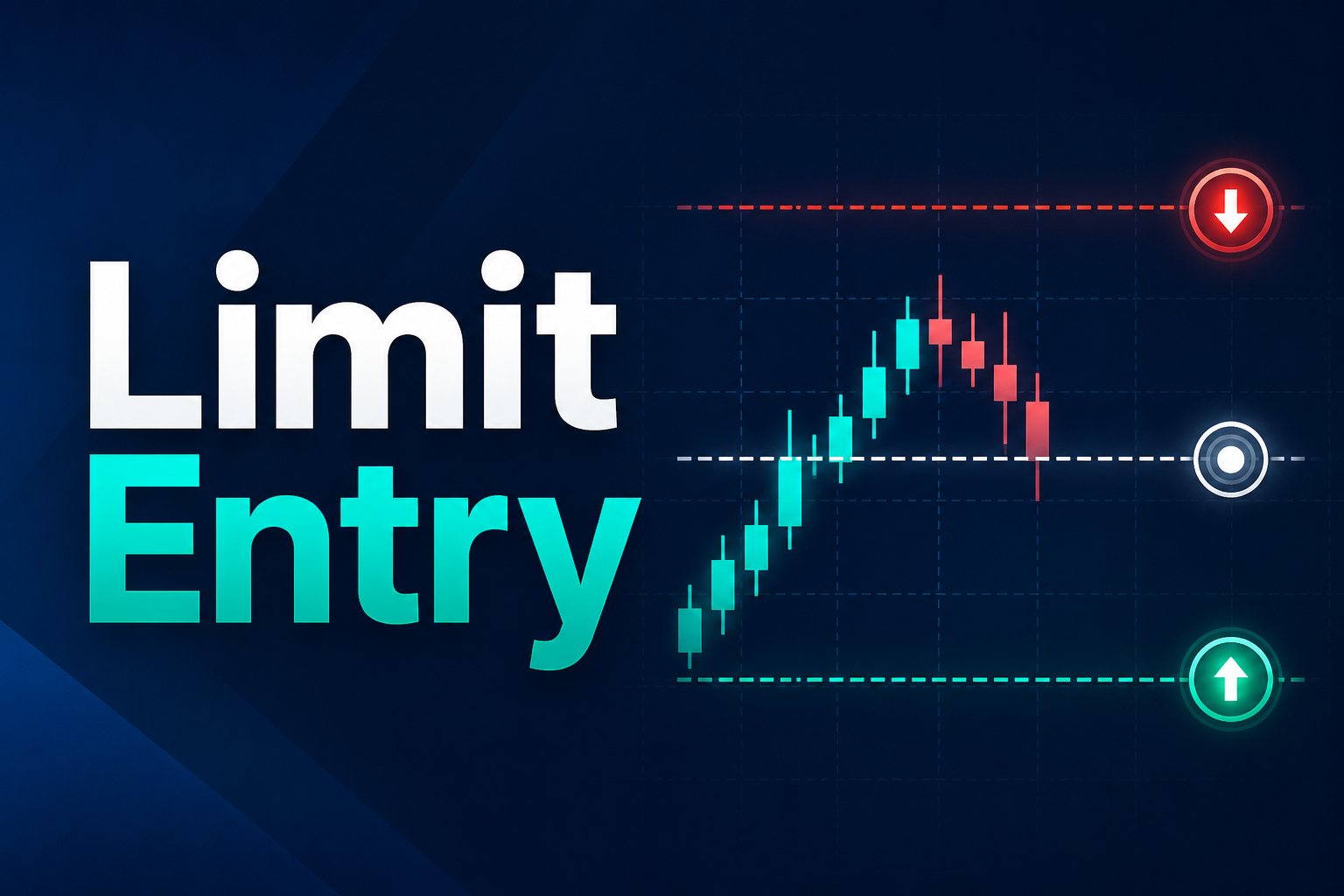
A limit entry lets you control the price at which you enter a trade. Here's how it works:
You choose the market you want to trade.
You set your preferred entry price.
The order stays on your trading platform and waits for the right price.
If the price reaches your chosen level, the trade may go through.
If the price does not reach that level, the trade stays pending or may expire, depending on your settings.
This helps if you do not want to enter a trade right away. It lets you plan your entry before the market reaches your chosen price.
There are two main types of limit entry orders: buy limit and sell limit. A buy limit is set below the current market price. You use it when you want to buy at a lower price than the market is currently trading.
For example, if gold is trading at $2,350 and you want to buy only at $2,320, you can place a buy limit at $2,320.
A sell limit is placed above the current market price. Traders use it when they want to sell at a higher price than the market is currently trading.
For example, if gold is trading at $2,350 and a trader wants to sell only at $2,380, they can place a sell limit at $2,380.
The main idea is that a limit entry waits for a better price before entering the trade.
Traders use limit entries to avoid emotional entries and improve price control. A limit entry may help traders enter near planned support or resistance levels. It can also help them wait for a pullback rather than buy or sell after the price has already moved too far.
Limiting entries can also improve risk-to-reward planning. If the entry price is better, the distance between the entry, stop-loss, and target may become more attractive.
However, the trade-off is that the order may not be filled. Price may move close to the limit level but turn away before reaching it.
A market order enters a trade immediately at the best available price. A limit entry waits for the chosen price. The difference is:
Market Order: Enter now.
Limit Entry: Enter only at the selected price or better.
A market order gives speed. A limit entry gives price control. Neither order type is always better. The right choice depends on the trader’s strategy, timing, and market conditions.
A limit entry is different from a stop entry. A limit entry is usually used when traders expect the price to pull back first. A stop entry is usually used when traders want to enter after the price breaks through a key level.
For example, if the current price is 100:
A buy limit may be placed at 95 because the trader wants to buy more cheaply.
A buy stop may be placed at 105 because the trader wants to buy after a breakout.
In simple terms, a limit entry waits for a better price. A stop entry waits for confirmation.
A limit entry can help with planning, but it does not guarantee profit. Price may reach the entry level, open the trade, and then continue moving against the trader. This is why a stop loss, position size, and risk plan are still important.
Another risk is missing the trade. If the price does not reach the chosen level, the trade will not open. This can be frustrating, but it is part of using a limit entry.
The key is a limit entry controls where the trade starts, not what the market does next.
Limit Order: An order to buy or sell at a selected price or better.
Market Order: An order that enters the market immediately at the best available price.
Stop Loss: An order used to close a trade when the price reaches a chosen loss level.
Spread: The difference between the bid price and ask price.
Slippage: The difference between the expected order price and the actual execution price.
Risk Management: The process of controlling possible losses before and during a trade.
A limit entry is a type of limit order used to enter a trade. It tells the platform to open a position only if the price reaches the trader’s chosen level or better.
No. A limit entry executes only if the price reaches the selected level and the order can be filled. If the price does not reach the level, the trade may never open.
A buy limit is placed below the current market price. Traders use it when they want to buy at a lower price instead of entering immediately at the current price.
A limit entry can improve price control and help traders plan their entries more effectively. However, it does not remove risk. Traders still need stop losses, position sizing, and a clear trading plan.
A limit entry is a pending order that opens a trade only when the price reaches the trader’s chosen level. It allows traders to wait for a better entry instead of entering immediately.
For beginner traders, the main value of a limit entry is planning. It can help reduce emotional trading and improve price control. However, it may not always be filled, and it does not guarantee profit. Traders should still use risk management before entering any trade.