Published on: 2025-06-12
Updated on: 2026-04-23
TikTok remains one of the most closely watched private technology platforms in the world, so it is no surprise that investors keep asking the same question: Is TikTok publicly traded?
The short answer is no. TikTok is not listed on any public stock exchange, and there is still no TikTok stock ticker that retail investors can buy through a standard brokerage account.
Its parent company, ByteDance, also remains privately held. What has changed in 2026 is not an IPO launch, but the regulatory and ownership structure around TikTok’s U.S. business.
TikTok is owned by ByteDance Ltd., a privately held technology company incorporated in the Cayman Islands. While ByteDance is often described in shorthand as a Chinese company, the ownership and management picture is more global than that label suggests.
TikTok has said it has established Los Angeles and Singapore as its headquarters for business purposes, and that ByteDance does not have a single global headquarters.
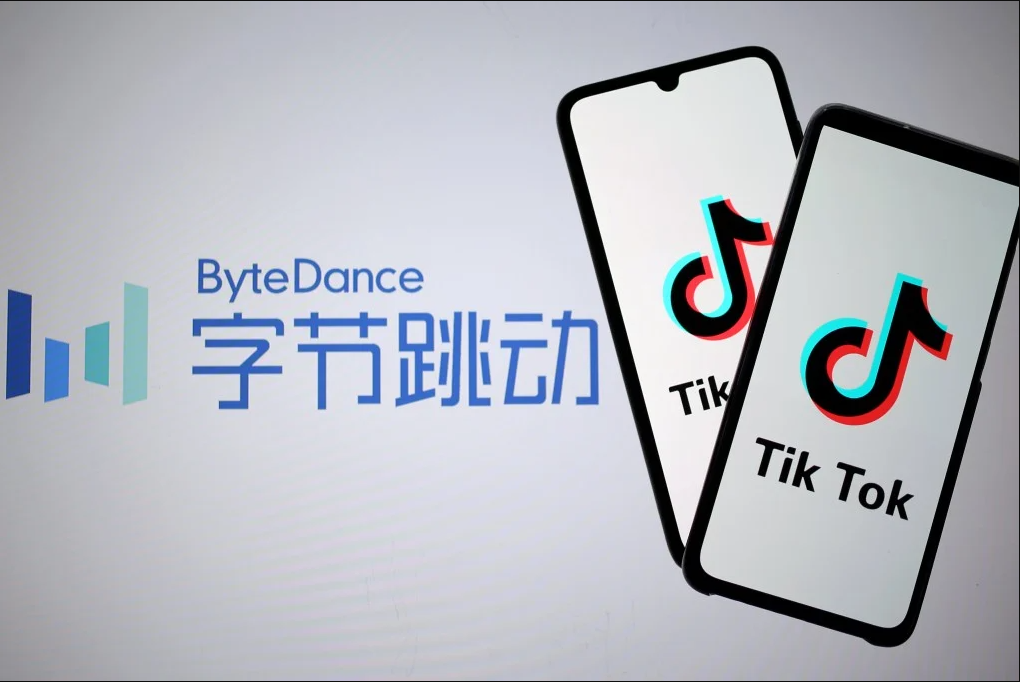
ByteDance also remains private rather than publicly traded. According to TikTok’s newsroom, the company is roughly 60% beneficially owned by global institutional investors, 20% by employees, and 20% by its founder.
That helps explain why TikTok attracts recurring IPO speculation, while also making clear that speculation is not the same thing as a public listing.
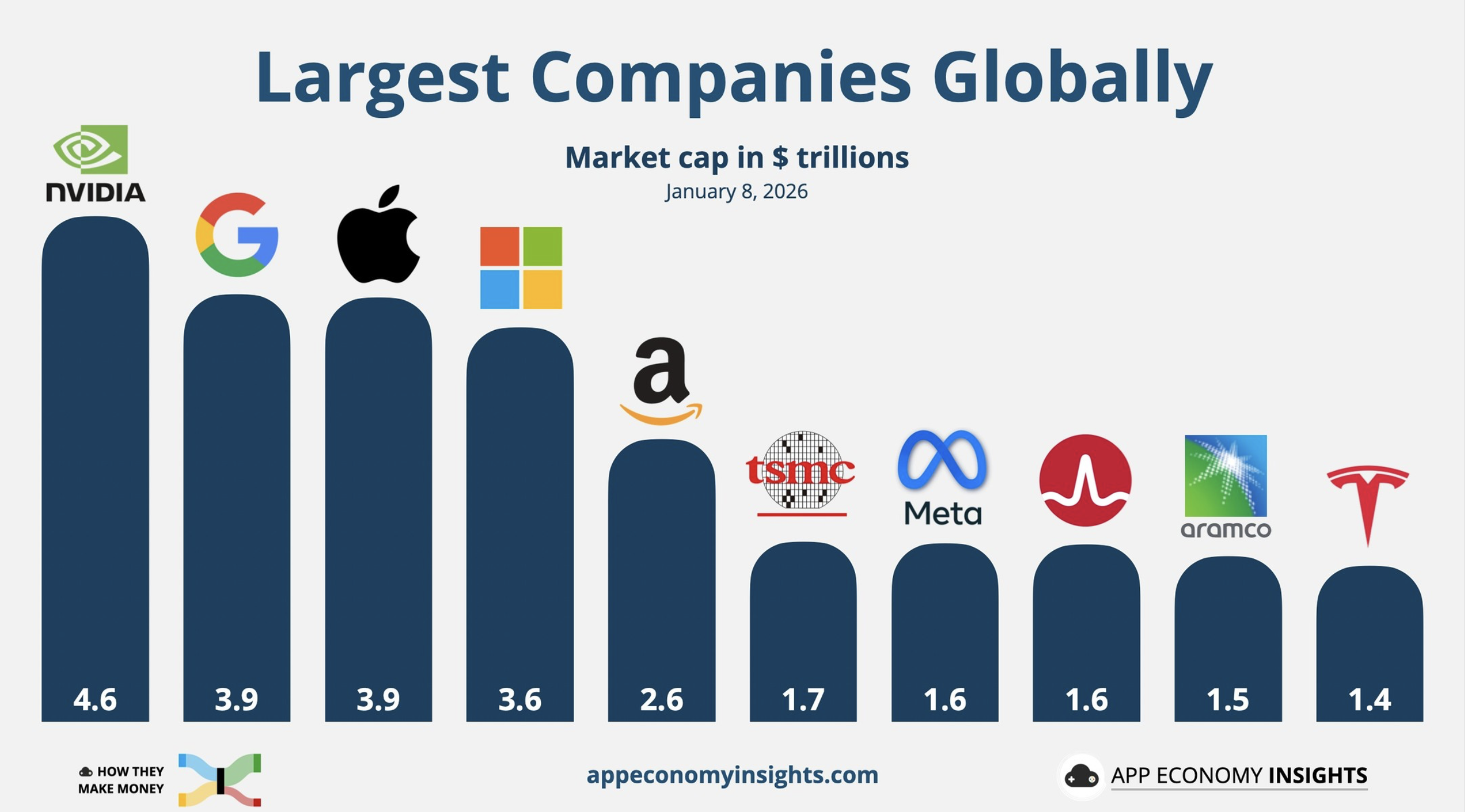
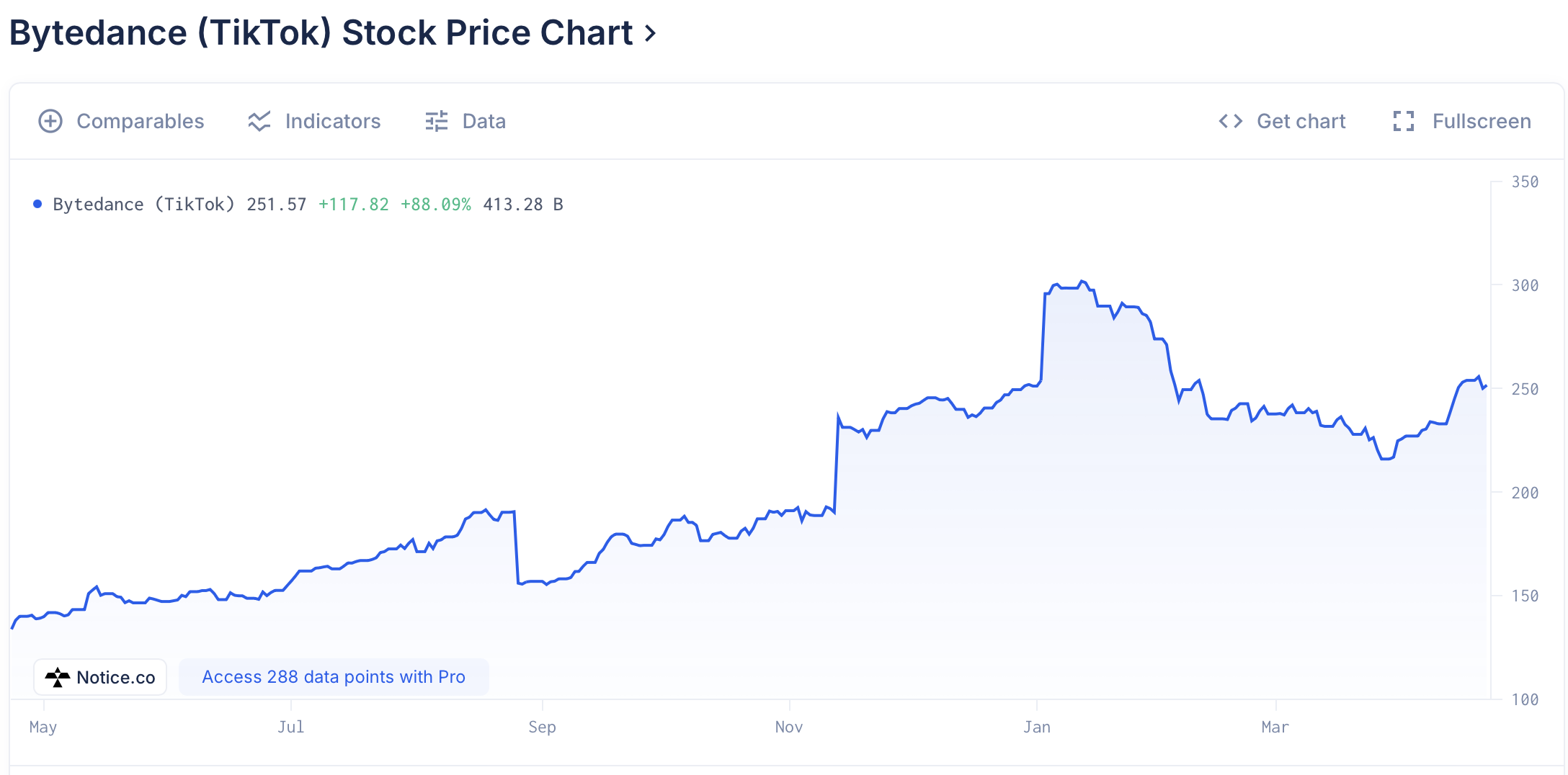
Private-market estimates cited in late 2025 placed ByteDance at around $330 billion, making it one of the world’s most valuable private technology companies.
That figure should be treated as an estimate rather than a fixed market price, because private-company valuations can shift with deal activity, investor sentiment, and regulatory developments.
Source: App Economy Insights
This reflects sustained ad revenue growth, improved profitability in Douyin, and expanding monetization through TikTok Shop and global e-commerce integrations.
To put this into perspective, ByteDance now ranks among the world’s top five privately held technology firms by market value.
Despite its private status, ByteDance’s influence on digital advertising rivals that of Meta Platforms and Alphabet in terms of user engagement metrics and ad conversion rates.
Speculation around a ByteDance IPO has circulated for years. Reports in earlier periods linked the company to potential listing discussions, including Hong Kong, but no confirmed public-market timetable has emerged.
The core answer remains unchanged: TikTok is not publicly traded through its parent company, because ByteDance itself is still private.
There are still several reasons TikTok has not gone public.
TikTok has spent years under scrutiny in the United States over data security, governance, and potential foreign influence. In January 2026, TikTok announced that TikTok USDS Joint Venture LLC had been established in compliance with U.S. regulatory requirements.
The joint venture’s three managing investors are Silver Lake, Oracle, and MGX, each holding 15%, while ByteDance retains a 19.9% stake. That is a major structural development, but it is not the same thing as a public listing.
TikTok’s global operations, U.S. operations, and ByteDance’s broader assets do not fit neatly into a simple single-market listing story. Any future IPO would likely require a clearer separation of governance, reporting, and operating responsibilities.
Large private technology firms often stay private longer when they have strong internal cash generation, institutional backing, and access to private liquidity. In other words, there has been no obvious financial pressure forcing an immediate IPO.
While the market continues to speculate about a future TikTok or ByteDance listing, no confirmed IPO timeline has been announced. The more realistic question is not whether investors want a listing, but whether the company’s structure is simple and stable enough to support one.
At this stage, any eventual public-market route would likely depend on clearer regulatory conditions, cleaner corporate separation, and more certainty around how TikTok’s U.S. and international operations are governed.
Yes, but investors should be clear about what “indirect exposure” really means. Because TikTok is not publicly traded, there is no direct way for retail investors to buy TikTok shares on an exchange.
The alternatives are indirect routes, such as private-market vehicles with ByteDance exposure for eligible investors, listed companies tied to digital advertising or cloud infrastructure, and broader technology baskets that may benefit from the growth of short-form video and creator-led commerce.
The important distinction is that these are read-through trades, not direct ownership. Buying a related company is more like investing in the roads, toll booths, and rival shops around a stadium rather than owning the stadium itself. The opportunity may still be real, but the thesis is different.
Until any formal IPO process begins, investors are better off focusing on what is actionable now.
That means watching for official listing steps, changes in regulatory conditions, and the broader market effects of TikTok’s influence on short-form video, advertising budgets, and creator-commerce trends.
For most traders, those secondary effects are more practical than trying to position around unconfirmed IPO rumours.
No. TikTok is not publicly traded, and there is no public TikTok stock ticker available to retail investors. ByteDance also remains private.
Not currently. There is no ticker symbol or public equity available.
There is still no confirmed IPO timeline for TikTok or ByteDance. The most important recent development has been the creation of TikTok USDS Joint Venture LLC in January 2026, which relates to U.S. governance and compliance rather than a public stock-market listing.
No. ByteDance, TikTok’s parent, remains privately held.
Not directly through public markets. The main routes today are indirect ones, such as private-market exposure for eligible investors or listed companies that may benefit from TikTok-related trends in advertising, infrastructure, and short-form video.
So, is TikTok publicly traded? No. That remains the clearest answer in 2026. What has changed is the context around that answer. TikTok’s U.S. structure has evolved through the creation of TikTok USDS Joint Venture LLC, but that is a regulatory and governance development, not a public-market debut.
For investors, the more useful takeaway is that TikTok can still move markets without having a ticker of its own. Until any official IPO filing appears, the smarter approach is to treat TikTok as a market force to monitor rather than a stock you can already buy.
Disclaimer: This material is for general information purposes only and is not intended as (and should not be considered to be) financial, investment or other advice on which reliance should be placed. No opinion given in the material constitutes a recommendation by EBC or the author that any particular investment, security, transaction or investment strategy is suitable for any specific person.