Published on: 2026-02-24
Updated on: 2026-02-24
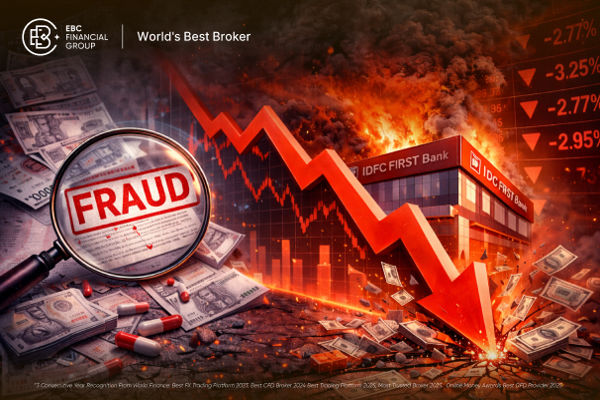
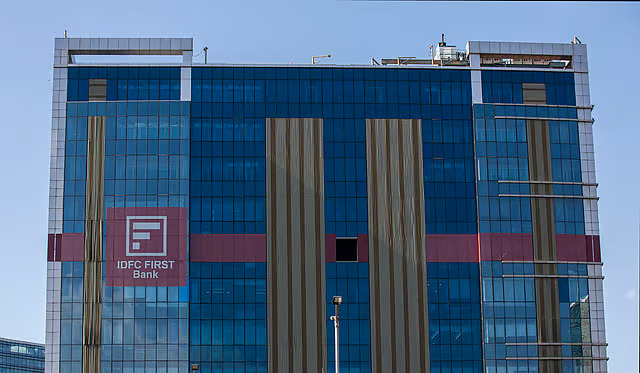
IDFC First Bank's share price slid sharply after the lender disclosed a suspected fraud of about ₹590 crore, linked to a specific cluster of Haryana government-linked accounts handled through its Chandigarh branch.
On Monday, February 23, 2026, the share price of IDFC First Bank traded around ₹70.04 (approximately $70.04), down about 16% for the day. It fluctuated within a wide intraday range of roughly ₹66.85 (approximately $66.85) to ₹75.21 (approximately $75.21).
That kind of one-day move tells you the market is not only pricing the direct financial hit. It is also repricing trust, controls, and the risk that low-cost deposits could shift if government entities decide to move balances elsewhere.
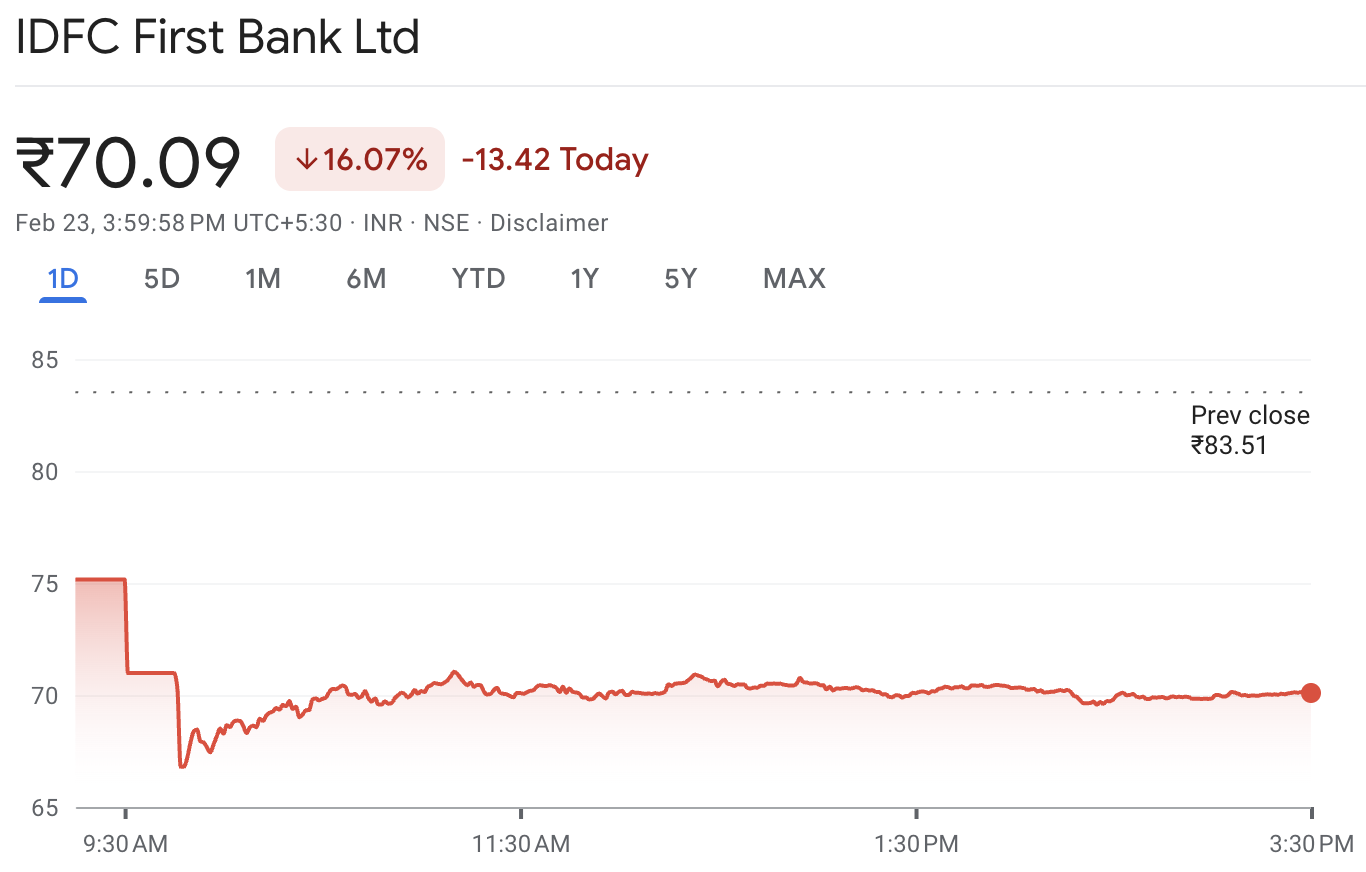
The market reaction was swift and significant, driven by risk aversion rather than a gradual re-rating.
| Item | Value |
|---|---|
| Previous close | ₹83.51 |
| Intraday low (lower circuit) | ~₹66.80 |
| Close (Feb 23) | ₹70.09 |
| Close-to-close change | about -16% |
Investors sold first because fraud headlines change the near-term story for any bank. Even when a bank claims that the issue is under control, markets typically wait for evidence before reacting.
According to the bank's disclosure, the suspected fraud relates to:
A specific set of Haryana government-linked accounts operated through the Chandigarh branch.
"Unauthorised and fraudulent activities" were carried out by certain employees, potentially involving other individuals or entities.
An aggregate amount of approximately ₹590 crore is under reconciliation, with the final figure dependent on the validation of claims and recoveries.
The bank emphasized that its preliminary review indicates the issue is limited to this group of accounts and does not affect other customers at the Chandigarh branch.
The bank stated that a Haryana government department requested the closure of its account and transfer of balances to another bank. During processing, the bank observed discrepancies between the amount mentioned and the balance reflected.
Similar issues were then observed in other Haryana government-linked accounts as engagement continued from February 18 onward.
That pattern is typical of fraud cases that come to light during routine account actions, such as closures, confirmations, or reconciliations, when someone is forced to put numbers side by side.
From the bank's latest quarterly release (quarter ended December 31, 2025), IDFC First Bank reported:
Loans and advances of $2,79,428 crore (₹2,79,428 crore)
Customer deposits of $2,82,662 crore (₹2,82,662 crore)
Net profit of $503 crore (₹503 crore) for the quarter
Capital adequacy ratio of 16.22%
| Comparison | Math | What it means |
|---|---|---|
| Fraud amount as % of loans | ₹590 / ₹2,79,428 ≈ 0.21% | It is not a balance-sheet threat by itself. |
| Fraud amount as % of deposits | ₹590 / ₹2,82,662 ≈ 0.21% | It is not a liquidity event by size alone. |
| Fraud amount as % of total customer business | ₹590 / ₹5,62,090 ≈ 0.10% | The issue is reputational and governance-driven more than scale-driven. |
| Fraud amount vs last quarter profit | ₹590 / ₹503 ≈ 117% | The provision can wipe out more than one quarter of profit if taken in one go. |
| Insurance cover vs fraud amount | ₹35 / ₹590 ≈ 6% | Insurance is helpful, but it is not a meaningful offset to the headline amount. |
In short, the market's real fear is not that ₹590 crore sinks the bank.
The market's real fear is that the incident changes the narrative around controls and governance, and that the response triggers deposit behaviour that raises funding costs.
The bank has listed several immediate steps, and those steps are now the market's checklist.
Four employees suspended pending investigation.
Filed a police complaint, and they disclosed the matter to the banking regulator.
Initiated an independent forensic audit with an external agency appointed for the review.
Recall requests and lien marking: The bank said it has sent requests to beneficiary banks to lien-mark balances in suspicious beneficiary accounts to support recovery efforts.
Board-level oversight: The matter was referred to a special committee for monitoring and follow-up of fraud cases, and the audit committee and the board were informed.
In a conference call covered by The Indian Express and other outlets, the CEO described the incident as isolated to one branch and one client group, with both internal and external collusion.
The drop looks emotional, but there is a clear logic behind it. When a bank flags a suspected fraud, investors quickly assess three factors: potential earnings loss, decline in confidence, and duration of the issue.
The bank has provided an estimate, but it has also said the final figure will depend on reconciliation, claims validation, and recoveries.
That uncertainty alone is enough to keep the stock under pressure until the forensic audit and recovery updates bring clarity.
Market coverage cited analyst estimates that the ₹590 crore amount is roughly 0.9% of the bank's net worth and about 20% of its FY2026 pre-tax profit.
Even if the balance sheet can absorb it, the profit and sentiment hit can still hurt the share price.
The CEO said controls existed, but collusion "cut through" those controls, according to the conference call coverage.
Investors usually respond by asking: Is this truly isolated, or could more issues surface?
Haryana's finance department de-empanelled the bank for government business, according to reports, and instructed departments to move funds away.
That adds reputational risk, even if the direct revenue impact is small.
It is now a "newsflow stock" for a few weeks. Traders should focus on a short checklist, because the next move will likely come from clarity, not from rumour.
The bank has indicated that findings could take about 4–5 weeks.
Any credible recovery path can reduce the assumed loss.
The RBI has indicated that there is no systemic risk; however, stock-specific supervisory follow-ups continue to play a crucial role in influencing market sentiment.
The market will watch whether balances remain stable or shift.
The bank has said it will tighten controls on high-value transactions, requiring additional customer confirmations via verified digital channels.
After the sell-off, the chart is not "weak." The chart is washed out.
As of late February 23 readings, the stock's daily technical indicators signalled Strong Sell, with momentum in deeply oversold territory.
| Indicator | Latest value | Interpretation |
|---|---|---|
| RSI (14) | 17.043 | Deeply oversold, but oversold can persist after a shock. |
| MACD (12,26) | -3.42 | Downtrend momentum is dominant. |
| ADX (14) | 36.696 | Trend strength is meaningful, so bounces can fail quickly. |
| ATR (14) | 1.8571 | Volatility is high, so position sizing matters more than usual. |
| Williams %R | -80.941 | Oversold conditions remain in place. |
| Moving average | Simple | Signal |
|---|---|---|
| MA5 | 70.09 | Sell |
| MA10 | 74.54 | Sell |
| MA20 | 79.18 | Sell |
| MA50 | 81.14 | Sell |
| MA100 | 82.63 | Sell |
| MA200 | 82.69 | Sell |
Key Takeaway: The price collapsed far below all key moving averages, creating heavy overhead supply between the low-$70s and low-$80s. A bounce can occur, but it typically requires a new catalyst to develop into a sustained trend.
| Level type | Key levels |
|---|---|
| Support zone | S1: 69.39, S2: 68.98, S3: 68.43 |
| Pivot | 69.94 |
| Resistance zone | R1: 70.35, R2: 70.90, R3: 71.31 |
Shares fell after the bank disclosed a suspected ₹590 crore fraud linked to certain Haryana government-related accounts handled at its Chandigarh branch.
No. The bank stated that the figure is under reconciliation, and the final impact depends on validation of claims and recoveries, including lien marking on beneficiary accounts.
The RBI stated that it does not perceive any systemic risk arising from this incident and is closely monitoring developments.
The bank has suspended four employees, filed a police complaint, informed the regulator, and initiated an independent forensic audit.
In conclusion, IDFC First Bank's share price slide is the market's way of pricing uncertainty.
The suspected amount is significant enough to impact near-term earnings, and the situation now hinges on two factors: how much can be recovered and how quickly the bank can demonstrate that the issue has been contained.
In the next few weeks, the market will trade headlines, not spreadsheets. The fastest way for sentiment to improve is a clean forensic outcome, visible control upgrades, and stability in deposit behaviour.
Disclaimer: This material is for general information purposes only and is not intended as (and should not be considered to be) financial, investment or other advice on which reliance should be placed. No opinion given in the material constitutes a recommendation by EBC or the author that any particular investment, security, transaction or investment strategy is suitable for any specific person.