Published on: 2026-06-10
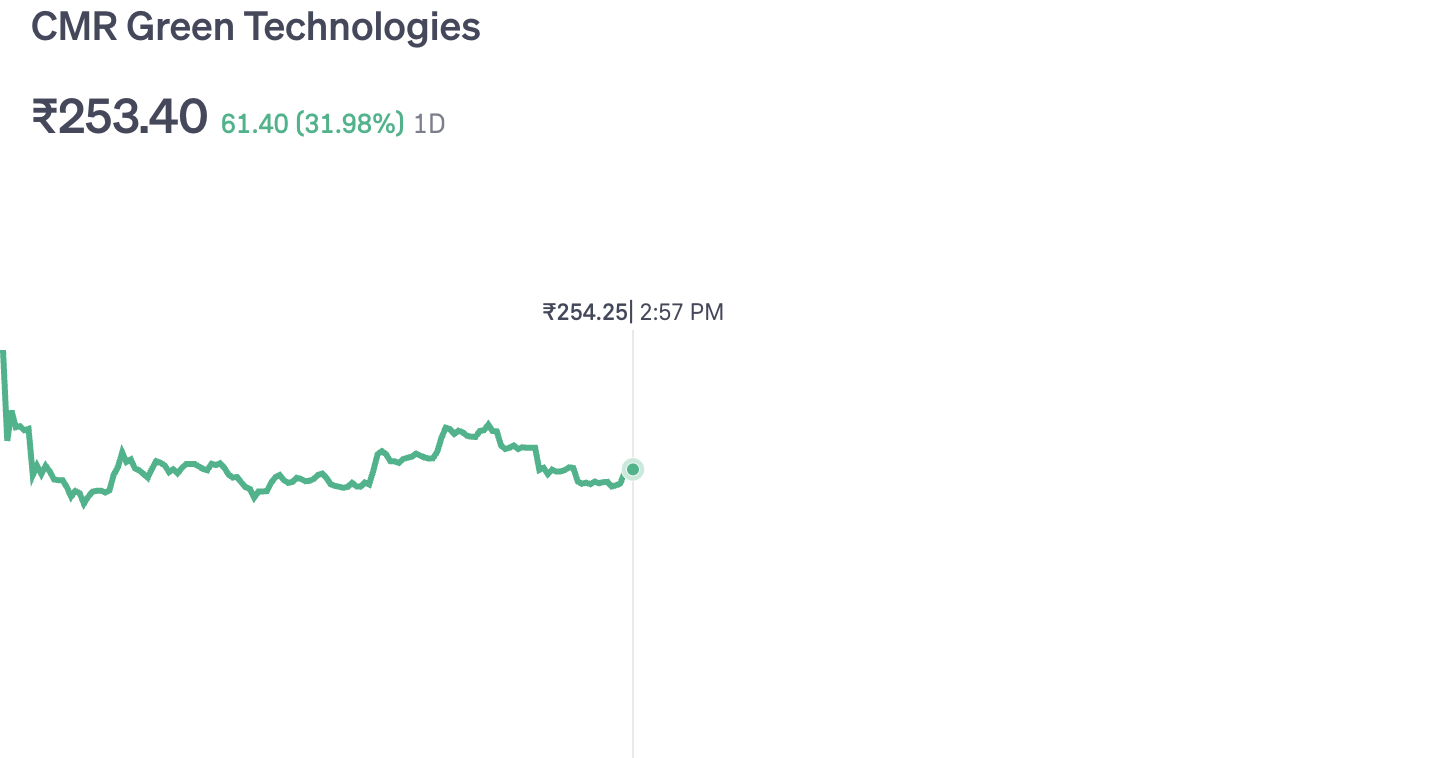
CMR Green Technologies delivered one of the stronger mainboard debuts of June, listing at ₹275.40 on the BSE, a 43.44% premium over its ₹192 issue price.
The NSE opening at ₹268 marked a 39.58% gain, while the BSE listing price handed allotted retail investors about ₹6,505 per lot of 78 shares. The debut exceeded the mid-30% grey-market signal that had already priced in a strong first-day move.
The listing sets up a more difficult question than the opening premium suggests. CMR Green Technologies is India’s largest non-ferrous metal recycler by installed capacity, with a dominant position in automotive cast alloys.
Yet it remains a high-volume, thin-margin industrial business, and the IPO raised no fresh capital for the company. The premium therefore reflects not only financial performance, but also scarcity value in India’s circular-economy theme.
CMR Green Technologies listed on June 10, 2026, at ₹275.40 on the BSE and ₹268 on the NSE, delivering a 43.44% and 39.58% premium respectively over the ₹192 issue price.
The ₹630.88 crore IPO was entirely an offer for sale, so proceeds went to selling shareholders rather than funding expansion, debt reduction or technology investment.
The issue was subscribed 127.04 times overall, led by QIB demand of 270.46 times and NII demand of 172.35 times.
CMR Green operates 13 recycling facilities with total capacity of 615,150 MTPA as of March 31, 2026, including 470,300 MTPA of aluminium alloys.
FY25 revenue from operations stood at about ₹6,666 crore, while consolidated profit after tax was ₹155 crore and EBITDA margin was 4.6%.
The stock’s post-listing valuation now embeds continued market leadership, margin improvement and higher capacity utilisation.
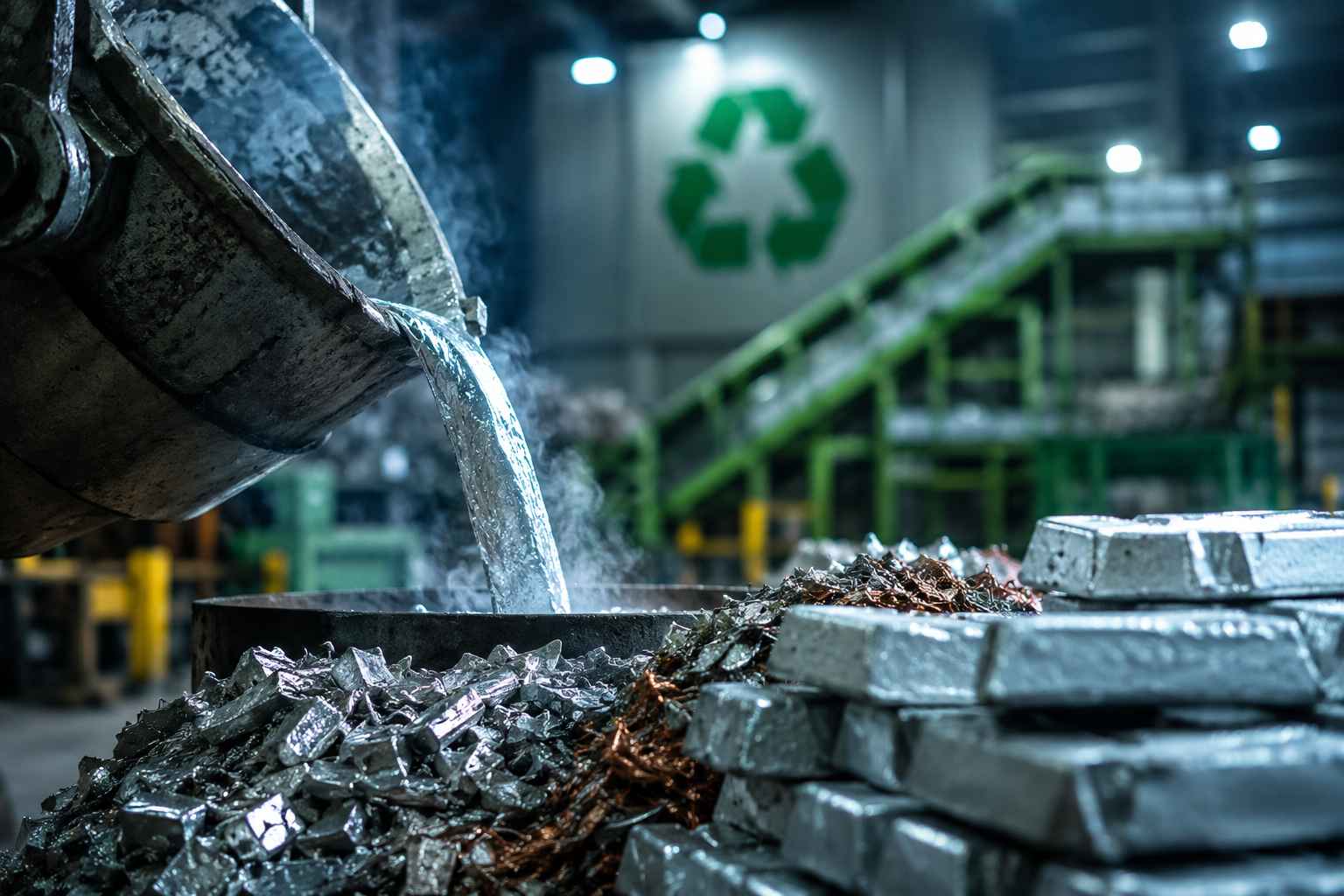
Incorporated in 2005 as Grand Metal Industries Private Limited, the company was later renamed CMR Green Technologies Limited. It recycles non-ferrous metals into value-added industrial products. Its core outputs include recycled aluminium alloys in ingot and liquid form, zinc alloy ingots, aluminium billets and furnace-ready scrap. The company also handles copper, brass, stainless steel, lead and magnesium scrap, giving it a broader recycling base than a pure aluminium processor.
The company’s customer base is anchored in automotive manufacturing and industrial supply chains. Its public customer list includes Bajaj Auto, Craftsman Automation, Endurance Technologies, Yamaha Motor, Hero MotoCorp, Hindalco, Honda Cars India, Royal Enfield Motors, Samvardhana Motherson and Toyota Industries Engine India.
That customer profile is important because recycled metal supply for automotive applications requires chemistry consistency, delivery reliability and process integration.
CMR Green also has a logistical advantage. It has supplied liquid aluminium since 2008 and operates plants near customer facilities, supporting just-in-time delivery of molten metal. That reduces remelting costs for customers and creates operational stickiness that is difficult for smaller recyclers to replicate.
As of March 31, 2026, the company operated 13 facilities across India, with combined capacity of 615,150 MTPA. Its aluminium alloy capacity stood at 470,300 MTPA, zinc alloy capacity at 8,400 MTPA and other metals capacity at 136,450 MTPA.
It also has strategic joint-venture arrangements and subsidiaries linked to Japanese partners including Toyota Tsusho, Nikkei MC Aluminium and Nippon Light Metal.
The IPO was structured entirely as a sale of existing shares. The company offered 3,28,58,323 equity shares with a face value of ₹2, within a price band of ₹182 to ₹192. The lot size was 78 shares, placing the minimum retail application near ₹14,976 at the upper end.
Investor demand was unusually strong. The issue closed with 127.04 times subscription, with QIBs subscribing 270.46 times, NIIs 172.35 times and retail investors 27.03 times.
The anchor book raised ₹188.44 crore before the issue opened, with shares allotted at ₹192 to institutional investors including domestic mutual funds and global names such as Goldman Sachs Funds, BNP Paribas and Citigroup Global Markets Mauritius.
The key caveat is the offer-for-sale structure. Since there was no fresh issue component, CMR Green itself received no IPO proceeds. The listing improves visibility and creates a public market for the shares, but it does not directly strengthen the balance sheet or fund new capacity. That distinction matters when valuing a capital-intensive recycler at a premium.
CMR Green’s financial profile is typical of a scaled industrial recycler: large revenue base, low operating margin and meaningful sensitivity to scrap procurement spreads, energy costs and metal prices. FY25 marked a return to profitability after FY24 was distorted by an exceptional item.
| Metric | FY23 | FY24 | FY25 | 9M FY26 |
|---|---|---|---|---|
| Revenue from operations | ₹5,868.5 crore | ₹5,952.4 crore | ₹6,666.5 crore | ₹6,275.5 crore |
| EBITDA | ₹207.0 crore | ₹217.4 crore | ₹303.7 crore | ₹324.4 crore |
| EBITDA margin | 3.5% | 3.7% | 4.6% | 5.2% |
| Consolidated PAT | ₹104.5 crore | -₹838.6 crore | ₹155.0 crore | ₹162.4 crore |
| PAT margin | 1.8% | -14.1% | 2.3% | 2.6% |
| EPS | ₹4.41 | -₹38.32 | ₹6.50 | ₹6.76 |
The margin trajectory is encouraging, but not yet conclusive. EBITDA margin improved from 3.5% in FY23 to 4.6% in FY25 and 5.2% in 9M FY26. That signals better operating leverage, but recycled metals remain a spread business. Earnings can move sharply if scrap costs rise faster than alloy realisations, or if customer contracts limit pass-through.
The FY24 loss was not a normal operating loss. It reflected an exceptional item of ₹1,239.6 crore, which drove consolidated PAT to a loss of ₹838.6 crore. FY25 profit of ₹155 crore and 9M FY26 profit of ₹162.4 crore show recovery, but the market will now demand evidence that the recent margin expansion is sustainable.
The premium is not irrational. CMR Green has scale, customer stickiness and exposure to India’s aluminium recycling growth cycle. Its installed capacity is nearly four times that of its nearest domestic competitor, while its FY25 share of the automotive cast-alloy segment was estimated at 42% to 45%.
That leadership matters in a business where customers require consistent alloy chemistry, reliable supply and plant proximity. India’s recycled aluminium market reached 2.16 million tonnes in FY25, with the cast-alloy segment at 1.01 million tonnes, and is projected to grow at an 11.2% CAGR through FY30.
Recycled aluminium also carries a much lower emissions profile than primary aluminium, making CMR Green relevant to manufacturers seeking lower-carbon inputs.
The valuation now leaves less room for disappointment. At the issue price, CMR Green was valued at about ₹4,205.9 crore and 19.42 times annualised earnings. The BSE listing price raised the implied market capitalisation to about ₹6,032.8 crore, materially reducing the margin for execution disappointment.
The company is also not asset-light. Recycling requires plants, logistics, working capital and global scrap sourcing. CMR Green sourced scrap from about 198 suppliers across 73 countries in FY25, which improves supply depth but adds exposure to freight, currency and scrap-price volatility.
Customer concentration is another watchpoint, with the top 10 customers contributing 52.8% of FY25 revenue and 50.0% of 9M FY26 revenue.
Margin fragility: CMR Green’s EBITDA margin is improving but remains close to 5%. A small adverse move in scrap spreads, energy prices or product mix can materially affect earnings.
Commodity exposure: Aluminium and zinc prices are cyclical. Recycled-metal spreads can compress when raw-material costs rise faster than finished-product pricing.
IPO structure: The IPO was a 100% offer for sale. That does not weaken the business, but it means public-market investors are not funding a new growth phase.
Capital needs: Future expansion must be funded through internal cash flows, debt capacity or later capital raising rather than IPO proceeds.
Valuation discipline: A strong listing can attract momentum capital, but the stock will eventually trade on earnings delivery, not the circular-economy narrative alone.
Investors should track whether EBITDA margin sustains above 5% or mean-reverts toward the FY23 to FY25 range. Volume growth across the 13 plants will matter as much as revenue growth, because metal prices can inflate the top line without improving profitability.
Capacity utilisation is the second signal. Higher utilisation should improve operating leverage if scrap procurement remains disciplined. New product contribution from billets, extrusion and rolled aluminium applications will also indicate whether CMR Green can reduce reliance on automotive cast alloys.
Customer diversification is the third marker. The top 10 customer share should gradually decline if the company expands into broader industrial and non-automotive demand. If concentration remains near 50%, valuation risk rises because a premium multiple would still depend heavily on a narrow set of buyers.
CMR Green Technologies listed on June 10, 2026, at ₹275.40 on the BSE and ₹268 on the NSE. Those prices represented premiums of 43.44% and 39.58% respectively over the ₹192 issue price.
No. The IPO was entirely an offer for sale. Proceeds went to selling shareholders, while the company received no fresh capital for capacity expansion, debt reduction or technology investment.
Yes, but margins are thin. FY25 consolidated PAT stood at ₹155 crore on revenue from operations of about ₹6,666 crore. EBITDA margin was 4.6% in FY25 and improved to 5.2% in 9M FY26.
The IPO valuation was already 19.42 times annualised earnings. The 43.44% BSE listing premium raised the implied market capitalisation to about ₹6,032.8 crore, so the stock now prices in sustained leadership, margin gains and higher capacity utilisation.
CMR Green Technologies has listed as a clear leader in a structurally attractive market. Its scale, OEM relationships, Japanese partnerships and role in lower-carbon aluminium supply chains justify a premium over smaller industrial recyclers.
The harder question is whether the first-day premium already capitalises too much of that advantage. This is still a thin-margin, spread-sensitive and capital-intensive business. The IPO brought visibility, not fresh capital.
At debut levels, the investment case now depends on margin durability, capacity utilisation and customer diversification. The leadership story is real, but the premium must now be earned through operating delivery rather than listing-day demand.