Published on: 2026-01-16
Updated on: 2026-01-16
ASTS just did what every momentum stock eventually has to do to keep the story alive. It cleared the round number, held it into the close, and drew a lot of eyes back to the tape.
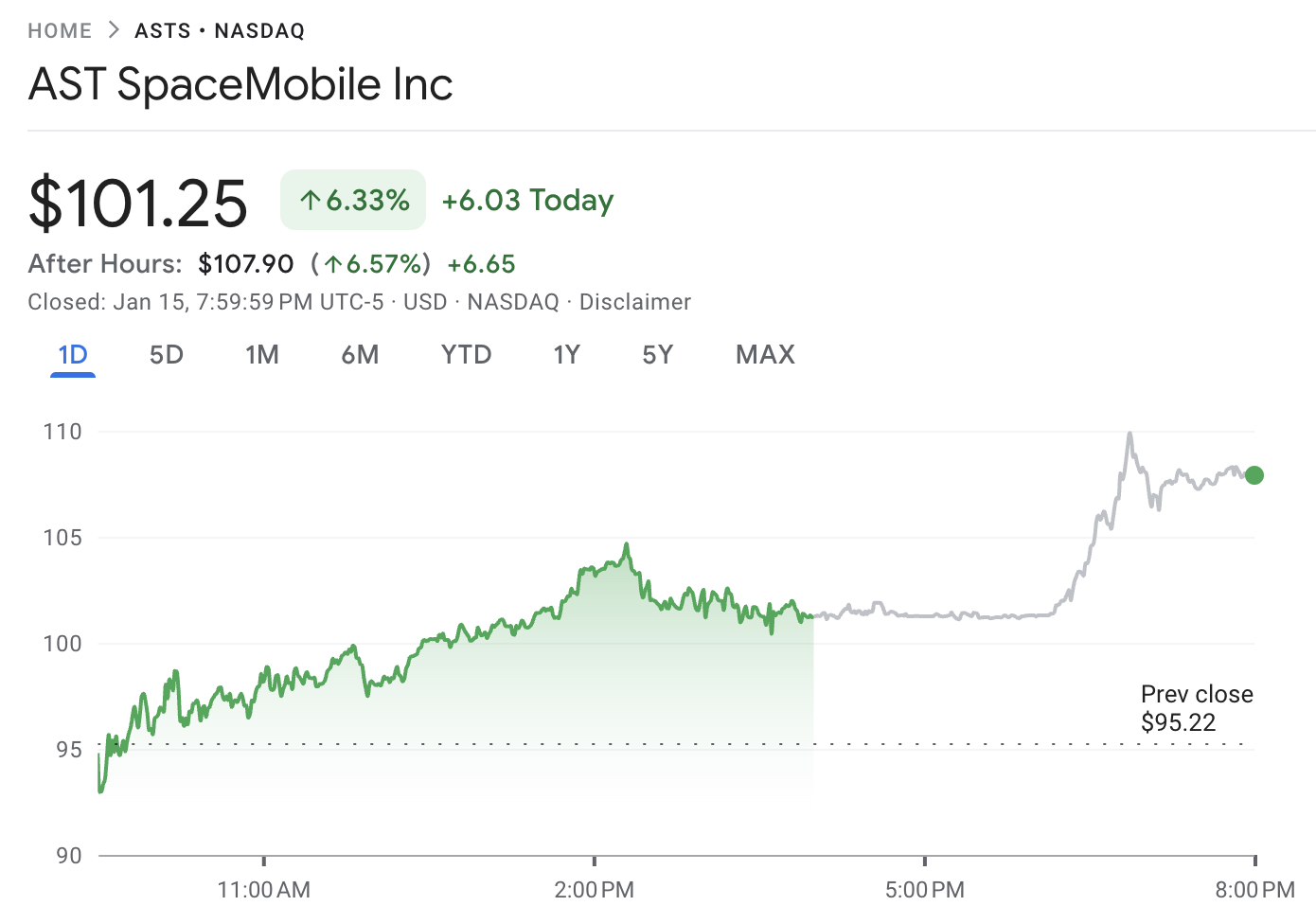
On Thursday, January 15, 2026, ASTS closed at $101.25, up approximately 6.4% on the day, after trading within a wide band that ranged from a high of $109.90 to a low of $92.09. Volume was heavy at roughly 17.6 million shares.
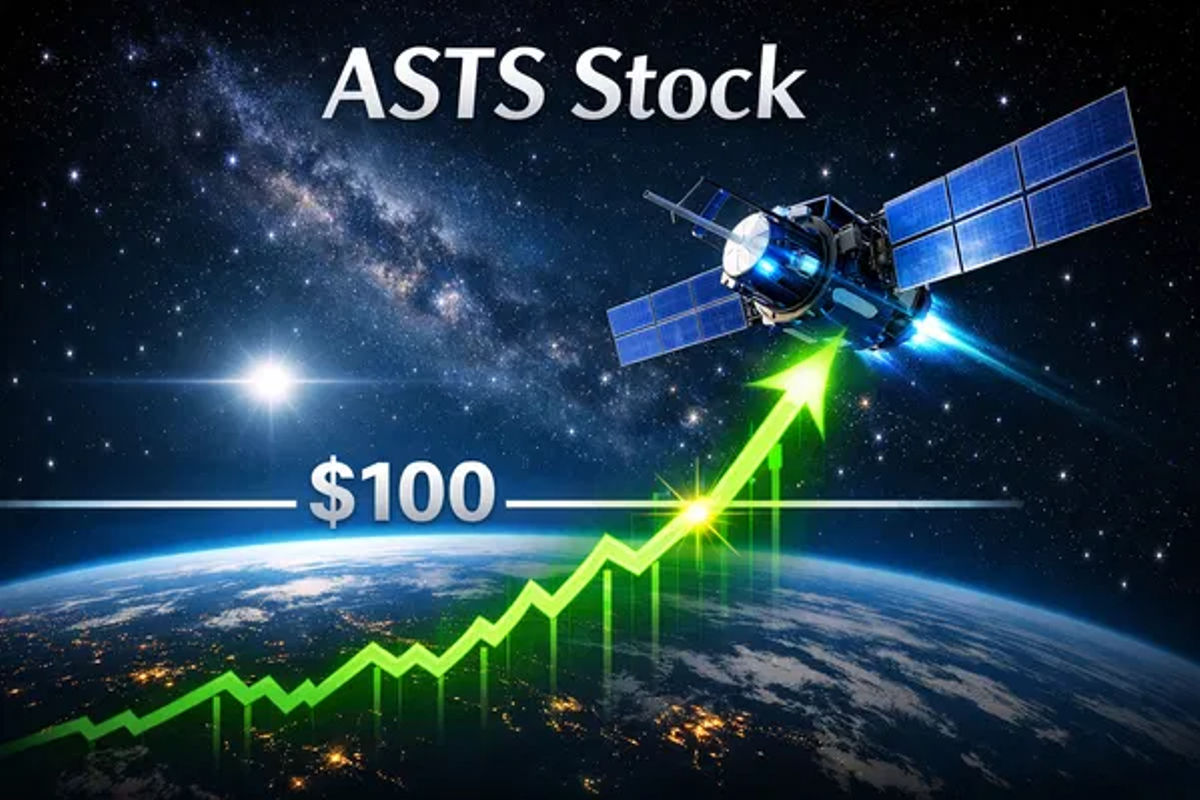
ASTS has touched triple digits before on an intraday basis. However, the market treats a close above $100 as a different level of confirmation because it reflects where real money is willing to hold risk overnight.
| Metric | Latest read (breakout session) | Why it matters |
|---|---|---|
| Close | $101.25 | First confirmed close above $100. |
| High | $109.90 | Shows how aggressive the chase got in a single session. |
| Low | $92.09 | Highlights volatility and weak hands getting shaken out. |
| Open | $94.61 | Gap-and-go behavior became visible early. |
| Volume | ~17.6M | Confirms this was not a "quiet" breakout. |
This move did not come out of nowhere. It is the market reacting to AST SpaceMobile moving from "proof of concept" headlines toward "scaled deployment" planning, and investors are paying up for that transition.
A major psychological shift happened in late December, when BlueBird 6 was launched into low Earth orbit. Reporting around the launch highlighted that it was a record-setting payload from India and a key milestone for the program.
That matters because the market has been valuing ASTS like an execution story, not a steady cash-flow story. When a company is still building, investors pay more for milestones that reduce "unknowns."
Early January coverage pointed to the next satellite (BlueBird 7) arriving ahead of integration, and to a stated plan to have 45 to 60 satellites launched by the end of 2026, with launches roughly every one to two months.
That kind of schedule turns a dream narrative into a calendar narrative, and calendars are tradable.
ASTS had two forms of fuel sitting under the price:
Meaningful short interest (enough to create covering pressure when price gaps higher).
Heavy options activity around $100, which can amplify upside moves when dealers hedge. For example, exchange-listed options data showed significant activity and open interest around $100 strike prices in January expiries.
This is why the move felt "fast" even though the core fundamental catalyst was weeks in the making. Once the price reached $100, the market structure took over.
The core bet in ASTS is straightforward: a direct-to-device connectivity concept that scales into commercial service, with deployment milestones that traders can track QoQ.
The December launch gave the story fresh credibility because it was not another slide deck update. It was hardware in orbit, with coverage describing BlueBird 6 as a large communications array and a step into scaled deployment.
A separate January update reinforced that 2026 is expected to be an active year for launches, which is precisely the kind of operational rhythm momentum markets reward.
The majority of stocks react to earnings, outlook, and macroeconomic influences. ASTS is different right now. It then proceeds to "Did it ship?", "Did it launch?", and "Did the next unit show up?"
That creates a pattern:
Milestone hits (launch, integration, deployment update).
Price jumps because uncertainty drops.
Positioning amplifies the jump because shorts and options hedging react to the move.
The valuation debate returns until the next milestone.
If you truly want to understand and invest in ASTS stock, you mustfollow both the engineering calendar and the market structure.
| Indicator / Level | Value | Read |
|---|---|---|
| Last close | $101.25 | Breakout confirmed by close. |
| 14-day RSI | 63.704 | Bullish momentum, not yet “blow-off.” |
| MACD | 2.125 | Positive trend momentum. |
| MA (5) | $101.174 | Price is riding short-term trend support. |
| MA (50) | $94.646 | First major “trend support” if momentum cools. |
| MA (200) | $80.858 | Long-term trend line that defines "bull market vs. reset." |
| Fibonacci pivot performance value | 102.902 | Nearby "decision" zone above $100. |
The technical picture is bullish, but it is also stretched, so risk control matters.
Daily indicators point to a constructive setup with bullish momentum signals. The RSI is in "buy" territory but not at an extreme that automatically signals a reversal, while the MACD remains positive.
| Zone | Level | Why traders watch it |
|---|---|---|
| Resistance | $110 | Today's intraday high zone, and a natural "first target" after a breakout. |
| Resistance | $105 | A common stop and option strike area above $100 in fast rallies. |
| Pivot | $100 | The breakout line that bulls want to defend on dips. |
| Support | $92 | Today's intraday low zone, and the first place buyers already stepped in. |
| Support | $85–$86 | A recent "panic" zone after a sharp drop tied to valuation concerns. |
Launching and managing a vast satellite network is a challenging endeavour. A setback, an unsuccessful deployment phase, or a service quality problem can undermine trust rapidly.
ASTS is still capital-intensive. In October 2025, the firm announced an $850 million convertible note offering, along with an associated equity action tied to repurchasing existing notes, emphasising that the funding plan remains integral to the narrative.
When a stock trades at a very high revenue multiple, the market is demanding a near-perfect timeline.
For example, valuation concerns have already driven sharp drops when sceptical analyst notes hit the tape.
Direct-to-cell is increasingly competitive, and regulatory approvals frequently have limitations.
AST has received FCC-related permissions for testing and development in the past, but the path to full commercial scale still depends on approvals and coordination across partners.
No. The TradingView chart shows ASTS reaching an all-time high of around $102.79 in mid-October 2025. However, this is the first triple close for the stock.
The move combined operational progress, a clearer 2026 deployment narrative, and positioning.
Investors are watching for consistent launches and progress toward commercial service in 2026, as the stock valuation depends heavily on the execution timeline.
In conclusion, ASTS stock surpassing $100 is a significant technical milestone, but it also conveys a message regarding expectations. The market is investing in the belief that AST SpaceMobile can transition from successful flagship launches to consistent deployment and genuine commercial operations.
The bullish scenario gains new backing from the successful launch of BlueBird 6 and the company's declared intention to expand to 45–60 satellites by the end of 2026.
The bearish scenario is equally evident: valuations are elevated, execution poses challenges, and funding news can swiftly alter sentiment.
Disclaimer: This material is for general information purposes only and is not intended as (and should not be considered to be) financial, investment or other advice on which reliance should be placed. No opinion given in the material constitutes a recommendation by EBC or the author that any particular investment, security, transaction or investment strategy is suitable for any specific person.