Published on: 2026-03-23
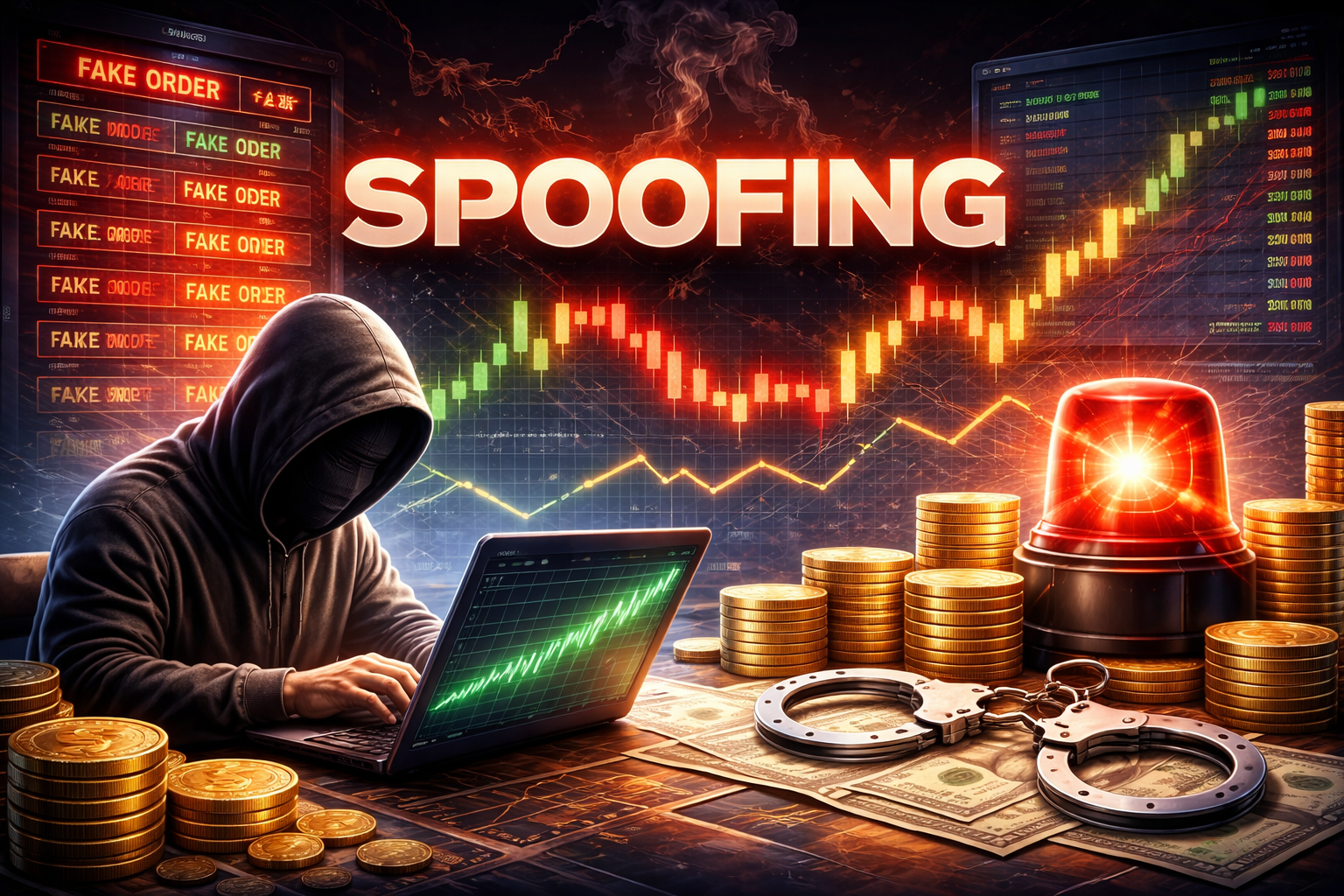
Spoofing in trading is the practice of placing orders to buy or sell financial instruments with no intention of executing them, and instead cancelling them before they are filled to deceive other market participants and influence the price of a security. This deceptive action creates a false impression of demand or supply, leading other traders to react as though there were real interest at those price levels.
Spoofing is illegal in most regulated financial markets because it undermines the integrity of fair price discovery and misleads investors, dealers, and market makers about supply and demand conditions. In the United States and many other jurisdictions, regulators have explicit laws and rules prohibiting spoofing and imposing severe penalties on those who engage in this manipulative conduct.
Spoofing is a deceptive and manipulative practice used to create a false impression of market interest.
Placing fake orders with the intention to cancel them before execution is the hallmark of spoofing.
Spoofing is illegal in the United States and many global markets because it distorts price discovery.
Regulatory enforcement agencies such as the CFTC and SEC prosecute spoofing with criminal and civil penalties.
Detecting and proving spoofing requires demonstrating deceptive intent and patterns of rapid order placement and cancellation.
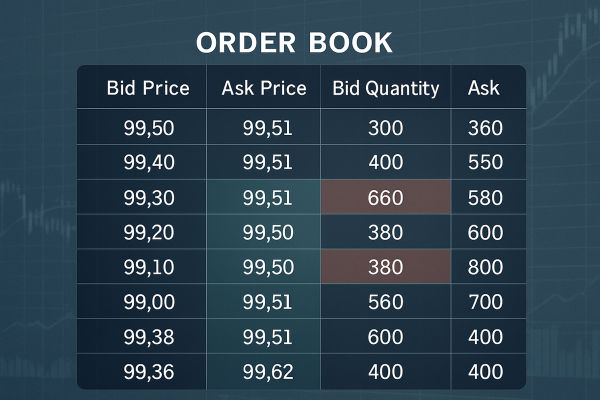
Spoofing refers to the act of placing orders on an exchange with the specific intent of cancelling them before they are executed. The purpose of these orders is to create a false signal of demand or supply, so that other traders, including algorithmic systems, adjust their trading strategies in response. Spoofing exploits the transparency of electronic limit order books by making it appear that there is genuine interest at certain price levels, when in fact there is none.
The mechanics of spoofing typically involve the following steps:
Placing Large Fake Orders: A trader submits large orders that are never intended to be filled.
Inducing Market Reaction: Other traders or automated systems react to the apparent supply or demand.
Executing Genuine Orders: The spoofer places a real order on the opposite side of the book to benefit from the induced price movement.
Cancelling Fake Orders: The large fake orders are cancelled before they can be executed.
Spoofing often uses algorithmic and high‑frequency trading systems to place and cancel orders within fractions of a second, making it difficult for other participants to detect and respond to the manipulation in time.
A trader may place a very large buy order at a price just above the current market level to create the appearance of strong buying interest. Other participants may respond by bidding up the price. Once the price rises, the spoofer cancels the large buy order and executes a sell order at the inflated price. Cancellation and deceptive intent differentiate spoofing from legitimate trading adjustments.
Financial markets rely on the assumption that orders placed on exchanges reflect genuine trading interest. Spoofing distorts price discovery by misrepresenting the true supply and demand for a security, leading other participants to make decisions based on false information. This undermines market efficiency, harms investors, and erodes confidence in market fairness.
In the United States, spoofing is expressly prohibited under the Dodd‑Frank Wall Street Reform and Consumer Protection Act of 2010. This law amended the Commodity Exchange Act (CEA) to make it unlawful to engage in trading practices that are commonly known or recognised as spoofing. Regulators such as the Commodity Futures Trading Commission (CFTC) and the Securities and Exchange Commission (SEC) enforce these prohibitions.
Under the legal definition, placing a bid or offer with the intent to cancel it before execution is illegal, and regulatory agencies view such conduct as market manipulation that carries significant consequences.
Violators of anti‑spoofing laws face severe consequences, which can include:
Substantial civil fines that can reach tens or even hundreds of millions of dollars for firms.
Disgorgement of illegal profits obtained through manipulative trading.
Trading bans prevent individuals from participating in regulated markets.
Criminal prosecution by the Department of Justice (DOJ) can result in imprisonment for significant manipulation cases.
These penalties reflect the seriousness with which regulators treat spoofing and other forms of deceptive market conduct.
Proving that a trader engaged in spoofing requires regulators to demonstrate deceptive intent at the time the order was placed. This is often the most difficult element to prove, especially in markets dominated by high‑frequency trading, where orders are placed and cancelled rapidly as part of legitimate strategies. Market surveillance technologies analyse patterns such as unusually high cancellation rates, repetitive order placements, and rapid execution timing to identify potential spoofing behaviour.
Not all cancellations or quick changes to orders constitute spoofing. Traders regularly modify orders for legitimate reasons, such as reacting to new market information, adjusting to risk limits, or managing execution strategy. Regulators focus on intent and pattern recognition to distinguish lawful trading activity from manipulative conduct intended to mislead the market.
While the details of spoofing laws vary by jurisdiction, many major financial markets worldwide treat it as illegal. For example:
United States: Explicitly illegal under Dodd‑Frank and enforced by CFTC and SEC.
European Union and United Kingdom: Spoofing is prohibited under the Market Abuse Regulation and equivalent rules enforced by national regulators.
Asia: Several markets, such as Japan and Singapore, have anti‑manipulation regulations that encompass spoofing behaviour, though enforcement and definitions may vary.
These global frameworks share a common goal of maintaining fair, transparent, and efficient financial markets for all participants.
This table illustrates how the key differentiator between legal and illegal practices is intent and the effect on market integrity.
Yes. Spoofing is illegal in the United States under the anti‑spoofing provisions of the Dodd‑Frank Act and the Commodity Exchange Act, which are enforced by the CFTC and the SEC.
The primary enforcement agencies are the Commodity Futures Trading Commission (CFTC) for futures and commodities and the Securities and Exchange Commission (SEC) for securities.
Yes. Individuals found guilty of spoofing can face substantial fines, disgorgement, trading bans, and imprisonment depending on the severity of the violation.
No. Cancelling orders can be part of normal trading; spoofing is specifically about placing orders with the pre‑intention of cancellation to deceive others.
Yes. Many countries, including those in the European Union and major Asian markets, have rules against market manipulation that make spoofing illegal.
Spoofing is a form of market manipulation where traders place fake orders to mislead others and move prices. It is illegal in the United States and many global markets because it undermines fair trading.
Regulators enforce strict penalties, including fines, bans, and even prison time. Understanding spoofing helps traders stay compliant and trade fairly.
Disclaimer: This material is for general information purposes only and is not intended as (and should not be considered to be) financial, investment or other advice on which reliance should be placed. No opinion given in the material constitutes a recommendation by EBC or the author that any particular investment, security, transaction or investment strategy is suitable for any specific person.