Published on: 2026-06-17
Updated on: 2026-06-17
If you had asked anyone on Wall Street six months ago about Rackspace Technology, the consensus would have been grim. The cloud pioneer was practically left for dead, languishing in penny-stock territory after years of being crushed by tech titans like Amazon and Microsoft. But 2026 has a way of surprising us. In one of the most stunning tech turnarounds we've seen in years, Rackspace stock (NASDAQ: RXT) has staged a massive comeback.
Shares of the San Antonio-based company are currently trading at $6.21, marking a jaw-dropping rally of over 540% from its rock-bottom lows earlier this year.
So, what changed? It turns out Rackspace found its saving grace in a massive, multi-year definitive agreement with Advanced Micro Devices (AMD). Instead of trying to beat the tech giants at their own game, Rackspace is pivoting hard to become the go-to provider for specialized, highly secure artificial intelligence infrastructure. For anyone holding RXT shares, this partnership has completely flipped the script.
To understand why this rally is catching so much attention, you have to look at how bad things had gotten. Back in February, Rackspace stock was practically trading for couch change, hitting a dismal low of just $0.39. The company was bleeding money, bleeding market share, and a rough Q1 earnings report—featuring a painful EPS miss of negative $0.06—had investors throwing in the towel.
The turning point came when a preliminary handshake deal in May officially turned into a signed, sealed, and delivered contract. The moment the news hit the wires, Wall Street woke up. The Rackspace stock price immediately spiked, easily clearing the $6.00 mark as trading volume exploded.
Now, let's be realistic: the company is still a long way off from its original $21 IPO price from 2020. But watching its market cap bounce back to $1.54 billion tells us one thing—investors are genuinely buying into this new AI-driven chapter.
This isn't just a flashy press release meant to pump the stock; there is serious muscle behind this agreement. Rackspace and AMD are committing to a massive 30-megawatt (MW) computing footprint across Rackspace’s global data centers, set to roll out through 2028.
Instead of offering generic cloud space, Rackspace is using AMD's heaviest-hitting silicon to build what they call a "governed enterprise AI cloud." This is specifically designed for industries like healthcare, finance, and government—places where data privacy is a legal minefield and data leaks simply cannot happen.
Here is what the rollout actually looks like on the ground:
Next-Gen Hardware: The data centers are being loaded up with AMD’s highly anticipated Instinct GPUs (including the MI350P and MI355X) along with their high-performance EPYC processors.
A Full-Service AI Stack: Rackspace isn't just renting out servers; they are offering everything from raw bare-metal computing power to specialized inference engines that companies can use to run their AI models smoothly.
By targeting companies that are terrified of putting their data into a public cloud, Rackspace has carved out a brilliant niche. Early interest is already bubbling up from hospitals wanting to use clinical AI models without violating patient privacy laws.
As exciting as the AI pivot is, this resurgence required some painful housecleaning. Right alongside the AMD announcement, Rackspace management dropped another major bomb: they are cutting 15% of their workforce.
It’s always a tough pill to swallow, and the human cost of corporate downsizing shouldn't be glossed over. However, from a purely financial perspective, Wall Street cheered the move. Investors saw a company aggressively cutting the fat from its legacy web-hosting business and immediately reinvesting those dollars into high-margin AI engineering. This combination of strict cost-cutting and high-tech growth is exactly why institutional money has been pouring back into RXT shares.
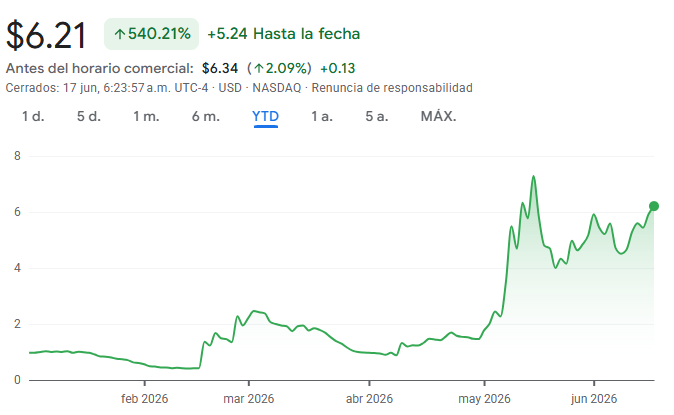
If you look at the charts, the momentum behind Rackspace stock looks incredibly healthy. Trading right around $6.21, the stock is flying high way above its 200-day moving average of $1.81.
The RSI Factor: Normally, when a stock shoots up over 1.000% from its absolute low, it’s dangerously overbought. Yet, Rackspace’s Relative Strength Index (RSI) is sitting comfortably in the low 60s. This suggests that while people are buying aggressively, the stock isn’t entirely overheated just yet.
Cautious Analysts: Interestingly, Wall Street analysts are playing catch-up. The consensus target price is still sitting around $4.33 with a collective "Hold" rating. It seems the suddenness of the AMD deal caught many firms flat-footed, forcing analysts to completely rewrite their old financial models.
The real tailwind here is a massive shift in how businesses use artificial intelligence. We are moving into the era of "agentic AI"—systems that don't just chat, but actually execute complex tasks using a company's inner-most proprietary secrets.
Executives are realizing that feeding their crown jewels into generalized public AI models is a compliance nightmare. They want private, secure environments. Because Rackspace specializes in managed private clouds, they are perfectly positioned to capture this wave. As these 30 MW data centers go live, the actual revenue hitting the books will likely dictate where the stock goes as we head into 2027.
The wild ride of Rackspace stock is a textbook example of how quickly the AI boom can breathe life into a struggling tech legacy. By tying its wagon to AMD and focusing on secure, sovereign enterprise AI, Rackspace managed to save itself from obscurity.
They still have plenty of work to do. Transitioning a massive company, executing a painful layoff, and turning a hardware partnership into steady, long-term profits is no easy feat. But for now, the market has made up its mind. Rackspace is no longer yesterday's forgotten web host—it's a serious contender in the enterprise AI race.