Published on: 2026-03-20
Updated on: 2026-03-20
In recent years, market sentiment has become increasingly important in analysis and is a key factor driving breakout trends.
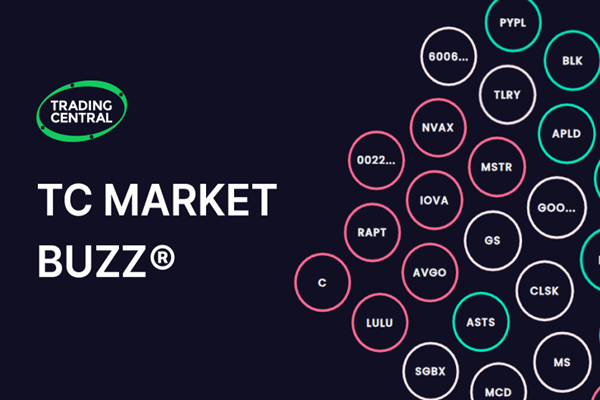
EBC has partnered with Trading Central to officially introduce the Market Buzz tool. Based on market sentiment and public opinion changes, it tracks major capital flows and serves as an important guide when the market lacks direction.
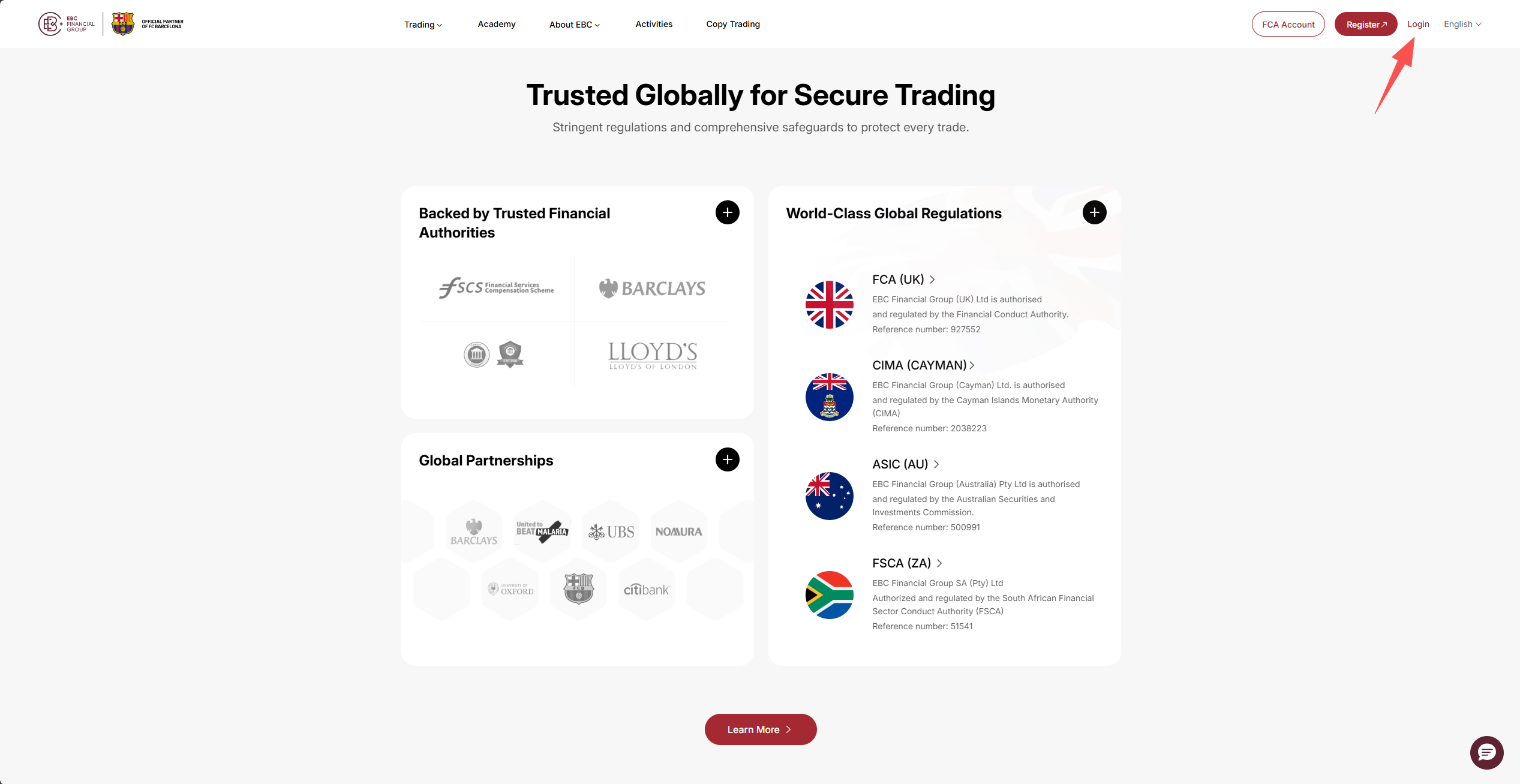
To unlock the full Market Buzz features on EBC, you first need to log in to the official EBC website.
In the "Market Tools" section, find "Market Analysis", then locate the "Market Heatmap".
After accessing Market Buzz, you can configure the page. As shown below, you can choose from four major asset classes:
Stocks
Currencies
Commodities
Indices
Because each asset class differs significantly, the available options also vary. Stocks have the most options and are relatively more complex. You can filter by country, industry, and market capitalization, covering 36 countries/regions and 55 industries.
Market capitalization can be categorized into:
Large-cap
Mid-cap
Small-cap
Micro-cap
These three filters can be combined to precisely narrow your search range.
In addition to asset-specific options, there are also general settings.
Firstly, regarding the presentation format, you can choose between table view and bubble view.
The table view focuses on numerical presentation and provides more comprehensive information. The bubble view emphasizes visualization and is more intuitive.
Secondly, dimensions.
Since EBC Market Buzz tracks market sentiment and public opinion, data is presented in two main dimensions:
Market Analysis – based on mainstream analysis, providing clear bullish or bearish views
News Sentiment – tracks public opinion from market news
In table view, you can switch between "News Sentiment" and "Trend Analysis" under indicators.
News Sentiment shows the number of reports and whether they are positive or negative, reflecting the mainstream market view.
Trend Analysis displays the number of mentions and trend direction.
In bubble mode, you can select News Sentiment or Trend Analysis through bubble colors.
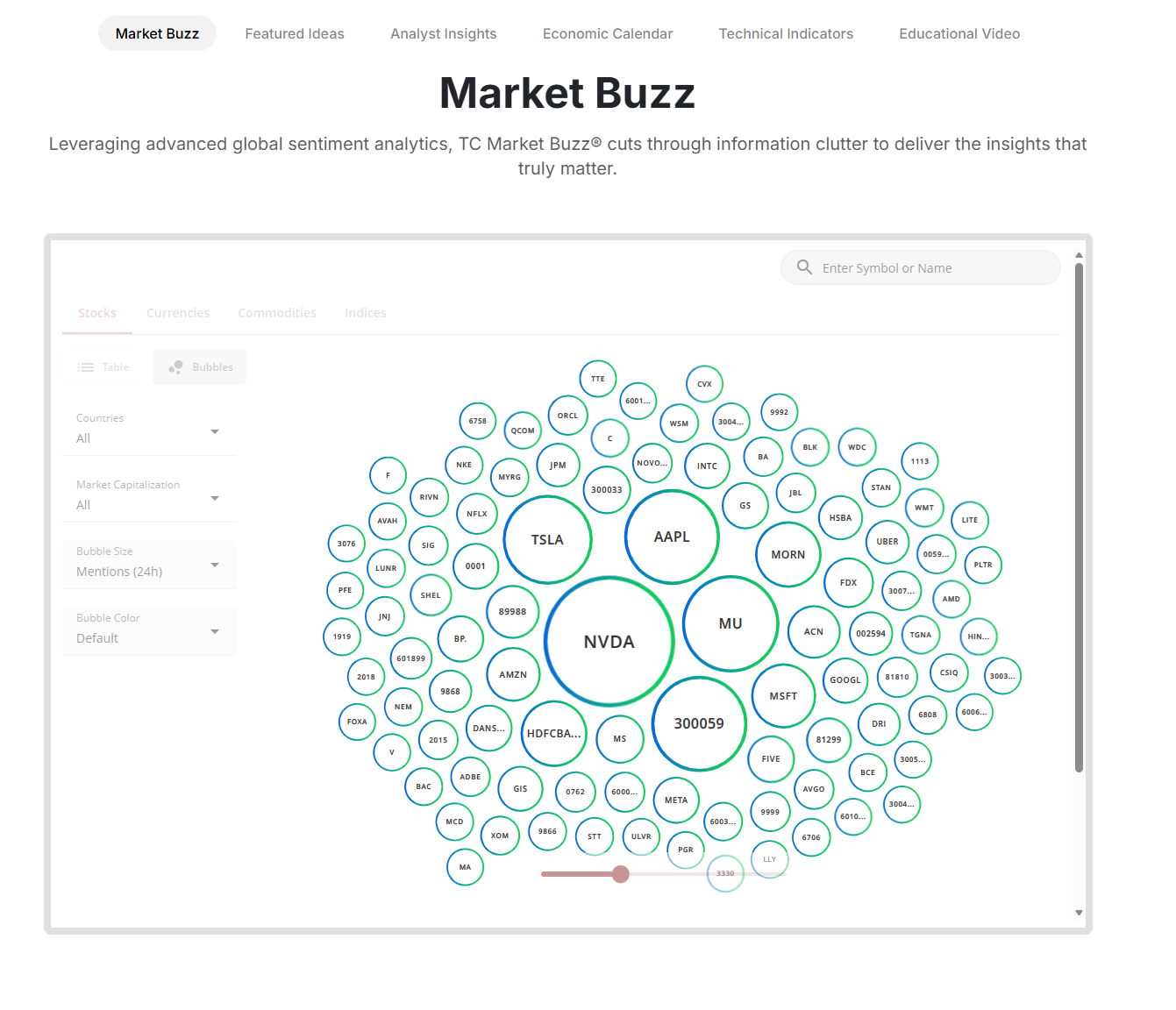
The data is largely consistent with table mode. However:
Bubble size represents asset popularity
Bubble color represents market sentiment
This makes it easier to quickly understand market conditions.
Hovering over a bubble shows detailed information, and clicking it will take you directly to the asset's page.
Sorting refers to selecting the data time period: 1 day, 7 days, 30 days, 90 days. Switching between short and long timeframes helps you better grasp overall trend changes.
If you are looking for a specific asset or ticker, you can enter it directly into the search bar for precise results.
With these settings, you can conduct precise analysis of assets within a specific scope and across selected analytical dimensions.
After completing the EBC Market Buzz setup, the next step is tracking and analyzing data.
Click on any asset to enter its analysis page, which is divided into two sections:
News Analysis
Sentiment
This section gathers market opinions and trending topics and includes six components.
News Heat reflects market attention. Generally, higher heat means more significant price movements. When heat declines continuously, the influence of news on the asset weakens.
Trend Analysis shows the asset's technical structure and provides a clear technical direction. Clicking the arrow reveals the full analysis.
The Most Discussed Topics are one of the most important reference factors.
Each topic represents a market viewpoint and shows how many people support it:
If most are bullish → higher probability of price increase
If bullish and bearish views are balanced → short-term consolidation, making breakouts less likely
This is another key feature.
In recent years, market sentiment has often driven one-sided trends and has become an important reference for predicting turning points. It includes five sub-indicators.
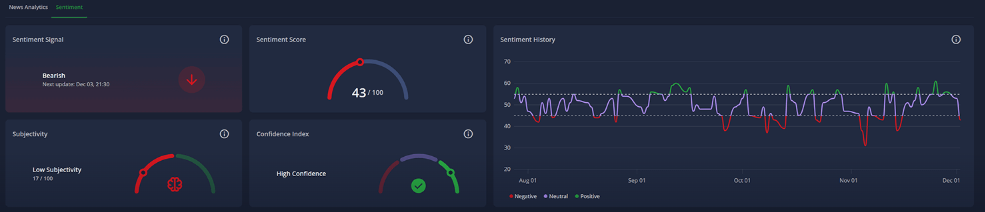
Market Sentiment Signal reflects the market's direct view of the asset.
If both news analysis and sentiment are bullish, it is a strong bullish signal.
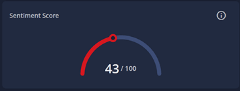
However, sometimes they diverge: News analysis is bullish, but sentiment is bearish.
In such cases, you should look at sentiment strength (sentiment score): A high score suggests investor sentiment may dominate the market and have a stronger impact
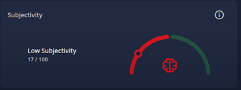
Market Buzz also includes a subjectivity compass.
When the market is more subjective → prices are more prone to irrational fluctuations and short-term volatility
When the market is more objective → even if sentiment drives movement, volatility tends to be more limited
By combining these sentiment indicators, you can clearly track market movements and better understand market direction.
The market is influenced by fundamentals, technical factors, and psychology. However, the psychological aspect is often not visible in traditional tools. EBC Market Buzz provides a new perspective through sentiment tracking.
Disclaimer: This material is for general information purposes only and is not intended as (and should not be considered to be) financial, investment or other advice on which reliance should be placed. No opinion given in the material constitutes a recommendation by EBC or the author that any particular investment, security, transaction or investment strategy is suitable for any specific person.