Published on: 2026-09-01
Updated on: 2026-09-01
GoPro stock jumped 46.06% on August 31, yet its $0.8762 close still left GPRO below Nasdaq’s $1 minimum-bid threshold. Markiplier’s large Class A stake transformed attention around the stock, but it did not change GoPro’s listing status or strained financial position.
Roughly 148 million shares changed hands, confirming that the rally drew participation far beyond GoPro’s normal trading activity. The rally now has to prove that extraordinary attention can translate into the sustained $1-plus closes GoPro actually needs.
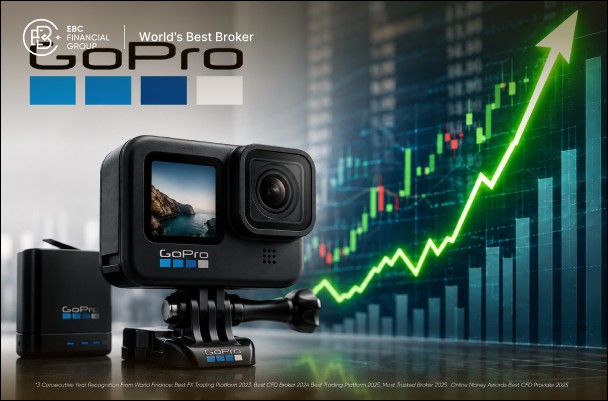
GPRO closed at $0.8762 after a 46.06% rally, leaving Nasdaq’s $1 compliance threshold unresolved despite extraordinary trading volume.
Markiplier owns 13.5 million Class A shares, or 8.5% of that class, but his SEC filing classifies the holding as passive.
Short interest stood at 24.88 million shares, or 16.46% of float, creating conditions in which renewed buying could force additional short covering.
Q2 revenue fell 31% to $104.9 million, while $27.3 million of cash against $87.2 million of principal debt keeps financial risk elevated.
MISSION 1 PRO ILS begins shipping September 2, while GoPro is separately evaluating a possible sale or merger, giving the stock two catalysts beyond the Markiplier narrative.
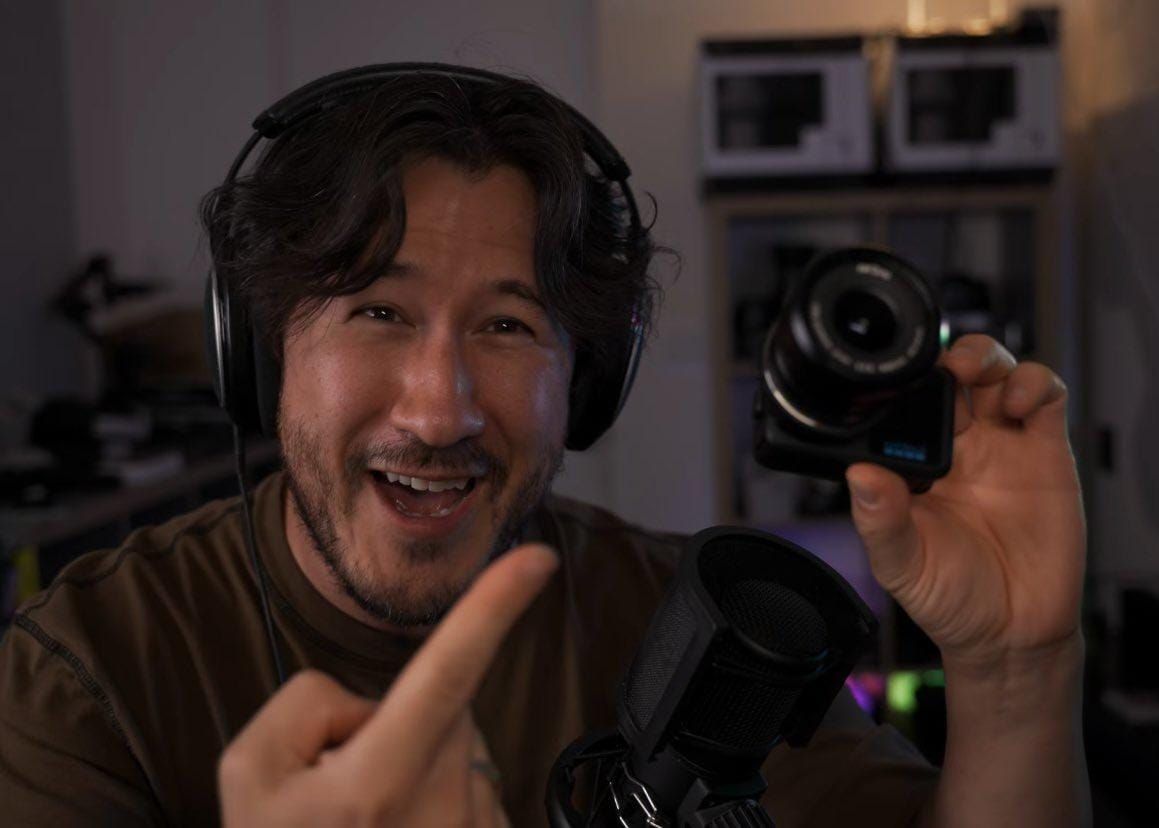
Markiplier’s 13.5 million-share position was not a new purchase on Monday. The SEC filing lists July 13 as the date of the event requiring disclosure, while the Schedule 13G was filed on August 20. What changed on August 31 was not the ownership itself, but how widely the story was being discovered across financial, technology and creator audiences.
The widely cited 8.5% figure refers specifically to GoPro’s Class A shares. Markiplier’s Schedule 13G also classifies the investment as passive rather than an effort to influence control. GoPro’s dual-class structure leaves founder Nicholas Woodman with about 60.3% of total voting power, so Markiplier holds a substantial economic position without controlling the company.
GoPro’s after-hours move above $1 did not resolve its Nasdaq deficiency. The company received a deficiency notice on July 21 after its Class A shares remained below $1 for 30 consecutive business days, and regaining compliance requires a closing bid of at least $1 for at least 10 consecutive business days during its initial 180-calendar-day cure period.
Monday’s official $0.8762 close means that compliance count remained at zero. Extended-hours trades above $1 do not begin the required sequence, so the next meaningful signal is a qualifying close followed by enough persistence to build the 10-day record. Monday therefore produced a dramatic price rally without advancing GoPro by even one day toward minimum-bid compliance.
GPRO has several characteristics associated with a short squeeze, but Monday’s rally was broader than short covering alone. Reported short interest stood at 24.88 million shares on August 14, equal to 16.46% of the public float, with 3.3 days to cover at the pre-rally trading pace. That is enough bearish positioning for short covering to amplify a rally when buying pressure accelerates.
Roughly 148 million shares traded on Monday, making the session far broader than a simple unwind of the reported short position. Momentum demand and Markiplier-driven attention expanded GPRO’s audience, while the volume points to a much wider trading event than short covering alone.
Even after Monday’s 46% surge, GPRO remained 71.27% below its $3.05 52-week high, showing how dramatic a one-day move can look without repairing the stock’s longer-term decline.
If unusually heavy volume survives the first pullback, short sellers remain vulnerable to further pressure. If turnover quickly normalizes, Monday increasingly looks like an attention shock rather than the start of a sustained squeeze.
No. Monday’s rally arrived without a new earnings release or operating update. GoPro generated $104.9 million of Q2 revenue, down 31% year over year, while camera units shipped fell 51.7%. The company also recorded a $51.0 million net loss and negative adjusted EBITDA of $29.5 million, leaving the share-price rally well ahead of any demonstrated recovery in demand or profitability.
Liquidity remains the more immediate constraint. GoPro ended June with $27.3 million of cash against $87.2 million of principal debt after using $47.4 million of operating cash during the first half of 2026. Its latest filing still cites substantial doubt about the company’s ability to remain a going concern within one year. The rally has not removed that balance-sheet risk.
Subscriptions remain GoPro’s clearest operating counterweight. Subscription and services revenue rose 10.6% to $29.0 million in Q2 even as hardware revenue contracted sharply, providing a growing recurring-revenue stream inside an otherwise weakening business.
Dilution remains another consideration for shareholders. Financing from entities affiliated with Nicholas Woodman included warrants exercisable for 25.7 million Class B shares at $0.778. Those warrants are not immediately exercisable in ordinary circumstances, but a sustained share-price recovery makes their eventual impact on the share count more relevant.
MISSION 1 PRO ILS begins shipping September 2, giving GoPro an immediate test of whether its new product cycle can generate demand beyond Monday’s stock-market attention. The interchangeable-lens camera extends GoPro beyond traditional action-camera use into compact cinema equipment for creators and professional filmmakers.
Markiplier has described GoPro as undervalued and linked his interest in the company to making filmmaking more accessible, while publicly praising MISSION 1. That gives the creator-camera connection more substance than audience overlap alone, although enthusiasm still has to translate into measurable product demand.
GoPro also has a corporate route to a higher valuation. The company began reviewing strategic alternatives in May, including a possible sale or merger, and retained Houlihan Lokey after disclosing unsolicited interest from parties across consumer, defense and financial sectors. No transaction has been announced. A credible offer could shift the valuation debate away from GoPro’s standalone cash burn toward what a buyer is willing to pay for its brand, technology, subscribers and intellectual property.
MISSION 1 still needs to prove it can generate new demand, while the strategic review needs to produce a credible transaction. Until either happens, neither development demonstrates that GoPro’s underlying fundamentals have already turned.
No. Nasdaq’s July 21 notice had no immediate effect on GPRO’s listing or trading. If GoPro does not regain compliance during the initial 180-day period, it may be eligible for another 180 days subject to Nasdaq requirements. GoPro has also disclosed that a reverse stock split is one option it could consider to cure the deficiency.
No. The PRO ILS model was announced on August 26, after the June quarter had ended, and begins shipping on September 2. GoPro’s Q2 results therefore contain no sales contribution from this specific model. Its commercial impact will have to emerge in later demand, revenue or average selling-price data.
Not under their ordinary timetable. The July 2026 warrants become exercisable six months after July 9 unless an earlier change-of-control announcement or definitive agreement triggers exercisability. If exercised, they would increase the Class B share count, further increase Woodman’s voting power, and reduce existing shareholders’ percentage ownership.
The next signal that matters isn't another viral post or an isolated overnight spike. GPRO first has to convert Monday’s attention into a qualifying close above $1, while MISSION 1 PRO ILS begins shipping September 2 and starts testing whether creator interest can translate into product demand. For GoPro, $1 is where speculation meets a measurable test.