Published on: 2025-12-26
Updated on: 2025-12-26
A floating exchange rate is a currency price that moves freely based on supply and demand in the foreign exchange market.
Governments and central banks do not fix the price at a set level. Instead, the rate changes all day as traders, companies, investors, and banks buy and sell currencies.
Most major global currencies today use a floating system. This approach became common after the collapse of the Bretton Woods fixed-rate system in the early 1970s, a shift supported by institutions such as the International Monetary Fund.
A floating exchange rate is a currency price that is set by the market, not by a government or central bank. It rises or falls based on supply and demand in the foreign exchange market.
When demand for a country’s currency increases, the exchange rate goes up. When demand falls, the exchange rate moves lower.
This continuous adjustment to trade flows, investment, and news is what makes the exchange rate “float.”
Floating exchange rates are not all the same. In real markets, there are two main types.
In a free float, the exchange rate is set almost entirely by the market. Prices move up or down based on supply and demand, news, and investor activity. Governments and central banks do not step in on a regular basis.
In a managed float, the exchange rate still moves with the market most of the time. However, authorities may step in occasionally if price moves become too sharp or unstable. The goal is to calm the market, not to fix the currency at a specific level.
This distinction helps explain why some floating currencies move freely every day, while others sometimes show signs of official support or control during stressful periods.
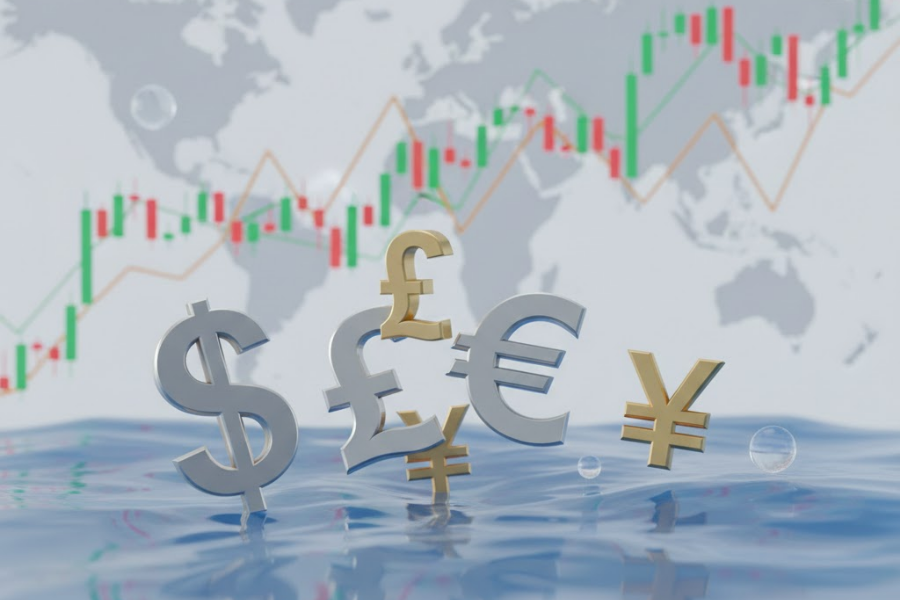
For traders, floating exchange rates create both opportunity and risk.
Prices move constantly, even outside major news events.
Economic reports, central bank comments, and geopolitical news can cause fast changes.
Volatility can increase sharply during data releases or crises.
This is why traders watch calendars, headlines, and market sentiment closely when trading floating currencies.
| Feature | Floating Exchange Rate | Fixed Exchange Rate |
|---|---|---|
| Who sets the price | Market supply and demand | Government or central bank |
| Daily movement | Constant | Limited or none |
| Central bank role | Indirect influence | Direct control |
| Examples | USD, EUR, JPY | Some pegged or managed currencies |
One defining feature of a floating exchange rate is how quickly it responds to new information. Prices adjust in real time as traders process news and change their expectations.
1. Economic Data: When economic data surprises the market, currencies often move within seconds. For example, if inflation data is higher than expected, traders may anticipate higher interest rates. This usually increases demand for that currency and pushes its exchange rate up.
2. Political Events: Political events also matter. Elections, policy changes, or geopolitical tension can raise uncertainty. When confidence falls, investors may move money out of one currency and into another they see as safer. This shift in demand causes fast price changes.
3. Global Shocks: Global shocks, such as financial crises or sudden changes in energy prices, can amplify these moves. In a floating system, the exchange rate acts as a pressure valve. Instead of governments defending a fixed price, the currency absorbs the shock by moving lower or higher.
For traders, this means floating exchange rates reflect current reality at all times. Prices may change quickly, but they also provide clear signals about how the market views risk, growth, and stability right now.
The US dollar floats against other currencies. When US inflation data comes in higher than expected, traders may expect higher interest rates. This often increases demand for the dollar, pushing its exchange rate higher within minutes.
The Japanese yen is also a floating currency. During global market stress, investors often buy yen as a perceived safe asset. Increased demand can strengthen the yen quickly, even without any action from Japan’s central bank.
Australia exports large amounts of iron ore and coal. When global commodity prices rise, demand for Australian exports increases. This can lift demand for the Australian dollar, causing it to appreciate under the floating system.
Supply and Demand: The core force that sets the price of a floating currency based on how much buyers and sellers want it.
Foreign Exchange Market (Forex): The global marketplace where floating exchange rates are formed through continuous trading.
Currency Appreciation: When a floating currency rises in value due to stronger demand.
Currency Depreciation: When a floating currency falls in value because demand weakens.
Exchange Rate Volatility: The speed and size of price changes in a floating currency system.
Floating rates allow economies to adjust naturally to changes in trade, capital flows, and economic growth. If demand for exports falls, the currency can weaken and help make exports more competitive. This flexibility reduces the need for constant government intervention.
Yes, but indirectly. Central banks can change interest rates, give policy guidance, or buy and sell assets. These actions affect investor behavior, which then influences currency demand. However, they do not promise a fixed price level in a floating system.
In daily trading, yes. Floating rates move continuously, while fixed rates stay near a target level. However, fixed systems can face sharp one-time moves if the peg breaks. Floating systems spread adjustments over time instead of delaying them.
When a currency strengthens, imports become cheaper but exports may become more expensive for foreign buyers. When a currency weakens, exports often become more competitive, while imports cost more. These shifts influence inflation, trade balances, and corporate profits.
It depends on risk control and timing. Floating rates create regular price movement, which traders can use. At the same time, sudden news can cause fast losses if risk is not managed. Understanding why prices move is essential.
In extreme cases, governments may step in temporarily during crises. This is usually short-term. The long-term structure still remains floating, with market forces doing most of the work.
A floating exchange rate is set by the market, not by decree. It rises and falls with economic data, interest rate expectations, global trade, and investor confidence.
For traders, this system creates constant movement and opportunity, but also demands discipline, preparation, and a clear understanding of what drives currency demand.
Disclaimer: This material is for general information purposes only and is not intended as (and should not be considered to be) financial, investment or other advice on which reliance should be placed. No opinion given in the material constitutes a recommendation by EBC or the author that any particular investment, security, transaction or investment strategy is suitable for any specific person.



World's Best Broker