Published on: 2026-01-02
Updated on: 2026-01-02
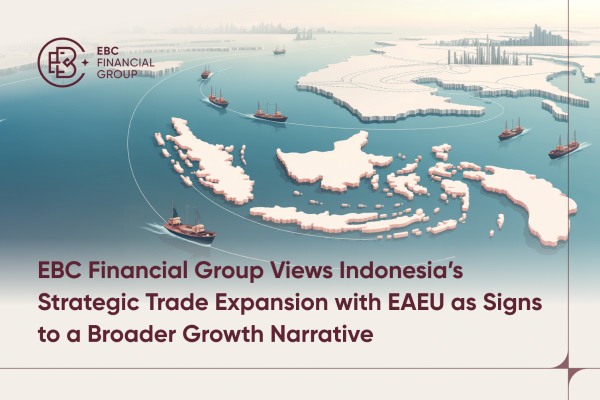
JAKARTA, 31 DECEMBER 2025 — Indonesia's newly formalised free trade agreement with the Eurasian Economic Union (EAEU) stands as a significant milestone in Jakarta's ongoing strategy to diversify export markets and fortify long-term economic resilience. EBC Financial Group ("EBC") views this event as one pivotal component in Indonesia's broader growth story for 2026 and beyond, marked by export diversification, improving investor confidence, and reinforcing strategic global partnerships.
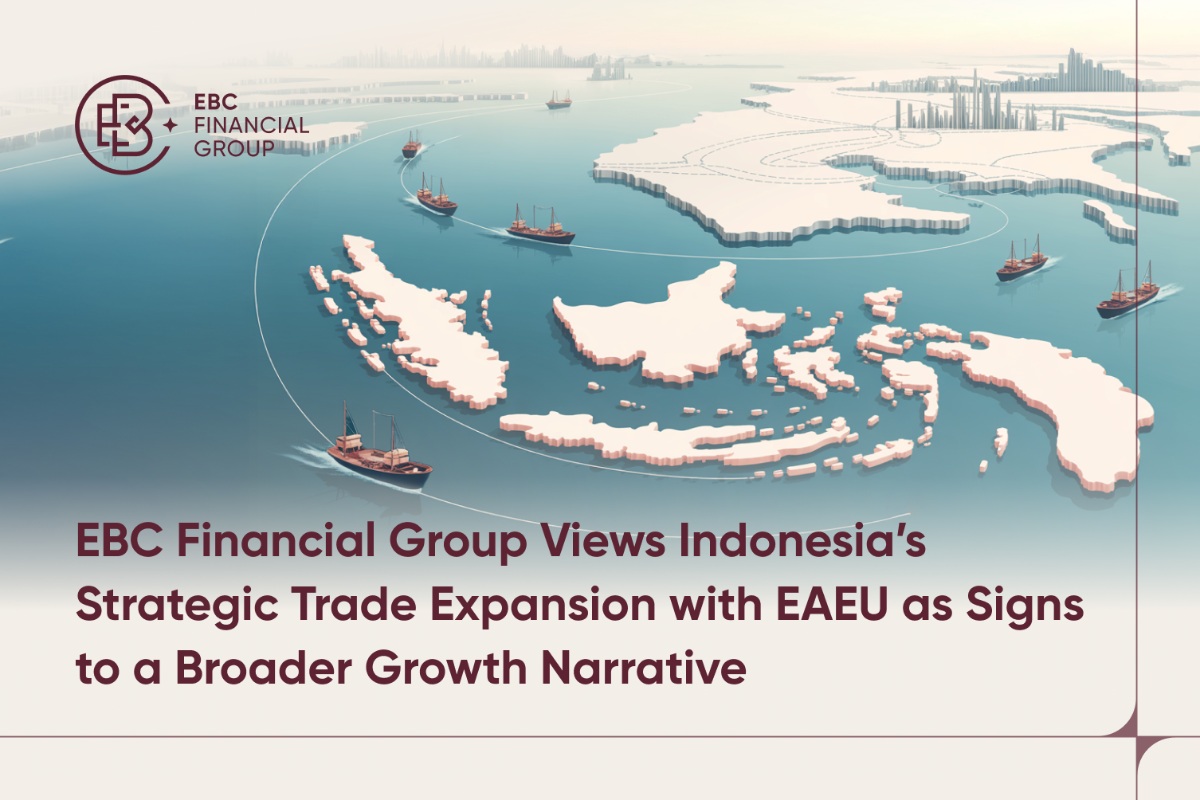
Signed during the Eurasian Economic Union (EAEU) Summit in St. Petersburg, the Indonesia–EAEU Free Trade Agreement unlocks preferential tariff access for Indonesian goods into a market of approximately 180 million consumers spread across Russia, Kazakhstan, Belarus, Armenia and Kyrgyzstan, with tariff preferences covering roughly 90.5% of total tariff lines.
"This agreement is more than a tariff schedule," said Samuel Hertz, Head of APAC at EBC. "It reflects Indonesia's strategic recalibration in a global economy where diversification and market access are crucial for sustainable growth."
Indonesia's trade with the EAEU has been growing robustly in recent years. Indonesia's trade engagement with the EAEU has already shown steady momentum. Between January and October 2025, two-way trade reached roughly $4.4 billion, with Indonesian exports accounting for about $1.76 billion.
The agreement enhances competitiveness for key export sectors including processed palm oil, rubber products, fisheries, furniture, textiles and selected electronics, while encouraging Indonesian exporters to move further up the value chain. At a time when traditional export markets face slower growth, EBC analysts see diversification into Eurasian markets as a stabilising factor for Indonesia's external sector.
Despite ongoing external uncertainty, Indonesia's underlying economic framework remains resilient. Global growth remains uneven, geopolitical tensions continue to disrupt trade flows and shifting interest-rate expectations among major central banks influence capital movements and currency conditions. These forces shape the external environment even for economies with sound fundamentals.
Against this backdrop, Indonesia's growth continues to be anchored by strong domestic consumption, a large and youthful labour force, and prudent fiscal management. EBC notes that these internal strengths help cushion the economy against global volatility and support stable expansion even as external conditions remain fluid.
While the trade agreement offers tangible opportunities such as preferential market access and export diversification, realising its full benefits would depend on effective implementation and private sector readiness. Indonesian Trade Minister Budi Santoso has emphasised the importance of harnessing the agreement through close collaboration between government, businesses and industry stakeholders so that newly opened markets are meaningfully accessed by exporters.
External headwinds, including global geopolitical tensions, fluctuating commodity prices, and logistical challenges, remain relevant risks. EBC highlights the importance of coordinated policy reform, investment in export logistics, and targeted support for small and medium enterprises to ensure supply-side readiness for expanded market access.
Indonesia's economic strategy is one that blends robust domestic demand with diversified external engagement. It reflects an adaptive approach to the evolving global trade landscape. The EAEU trade agreement underscores Jakarta's proactive stance in forging partnerships beyond traditional markets, reinforcing Indonesia's role as a pivotal player in global commerce while strengthening resilience against external shocks.
Disclaimer: This material is for information only and does not constitute a recommendation or advice from EBC Financial Group and all its entities ("EBC"). Trading Forex and Contracts for Difference (CFDs) on margin carries a high level of risk and may not be suitable for all investors. Losses can exceed your deposits. Before trading, you should carefully consider your trading objectives, level of experience, and risk appetite, and consult an independent financial advisor if necessary. Statistics or past investment performance are not a guarantee of future performance. EBC is not liable for any damages arising from reliance on this information.