Published on: 2026-02-12
Updated on: 2026-02-12
Global stock markets appear to regain footing following last week's wild swing, but shifts in broad landscape are drawing attention. The years started with Wall Street profit-taking from popular tech names.
Small caps go back to the radar, which are poised to benefit from an upswing in economic growth and falling interest rates. The Russell 2000 has gained 6.4% this year, while the Nasdaq 100 stayed in the red.
More exposed to local market, shareholders of those companies closely watch hiring gauges. US job growth significantly picked up in January, supported by fewer layoffs in some seasonal industries.
Economists said the Trump administration's trade and immigration policies have chilled the labour market, though tax cuts are seen to boost hiring this year. That may lead to acceleration of prices.
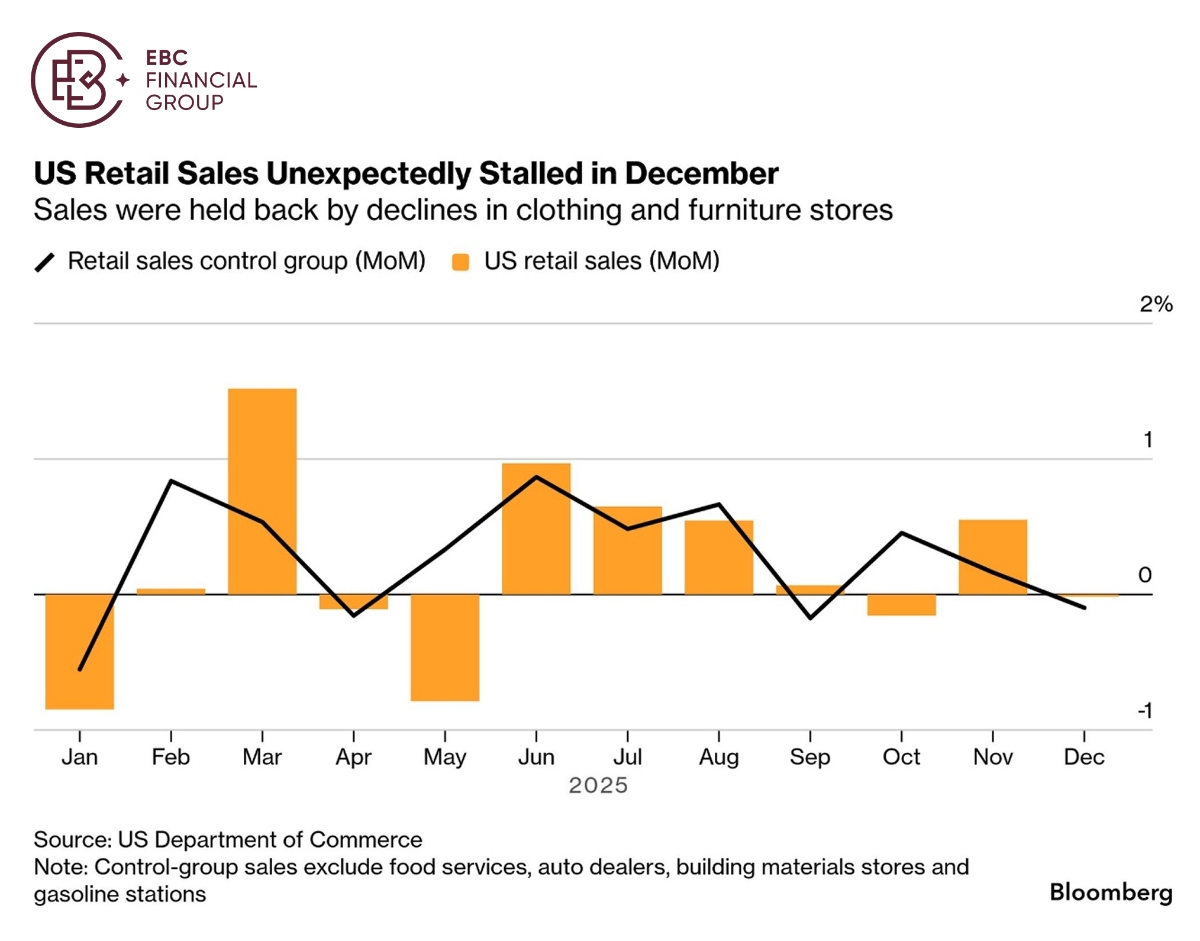
SMEs typically carry higher debt loads and hence more sensitive to interest rates. On Tuesday unexpectedly stagnant retails sales in December has bolstered the case for more monetary easing.
The Russell 2000 could see strong gains in early 2026, Goldman Sachs analyst Ben Snider said in December, noting that the index's return dispersion is more than twice that of the S&P 500.
But with a forward 12-month PE ratio of 23.25 as of 6 February, according to Birinyi Associates, it is already valued significantly higher than the S&P 500's21.8x, and close to the Nasdaq 100's 24.7x.
Fresh concerns are growing about how the hyperscalers will generate profits on their new capital spending plans, along with the extent of the damage these investments will wreak on legacy businesses AI might displace.
Big Tech have to choose between stemming capital returns to shareholders, raiding their cash reserves or tapping the bond and equity markets more than previously planned, analysts say.
BNPP said that free cash flows at Oracle, Alphabet, Amazon and Meta were starting to "plummet toward negative territory", with only Microsoft appearing "more resilient, at least for now".
Gigantic cash pile is largely what makes Big Tech safe-havens. Russ Mould, investment director at broker AJ Bell, noted the transition from "an asset-light business model to a more capital-intensive one."
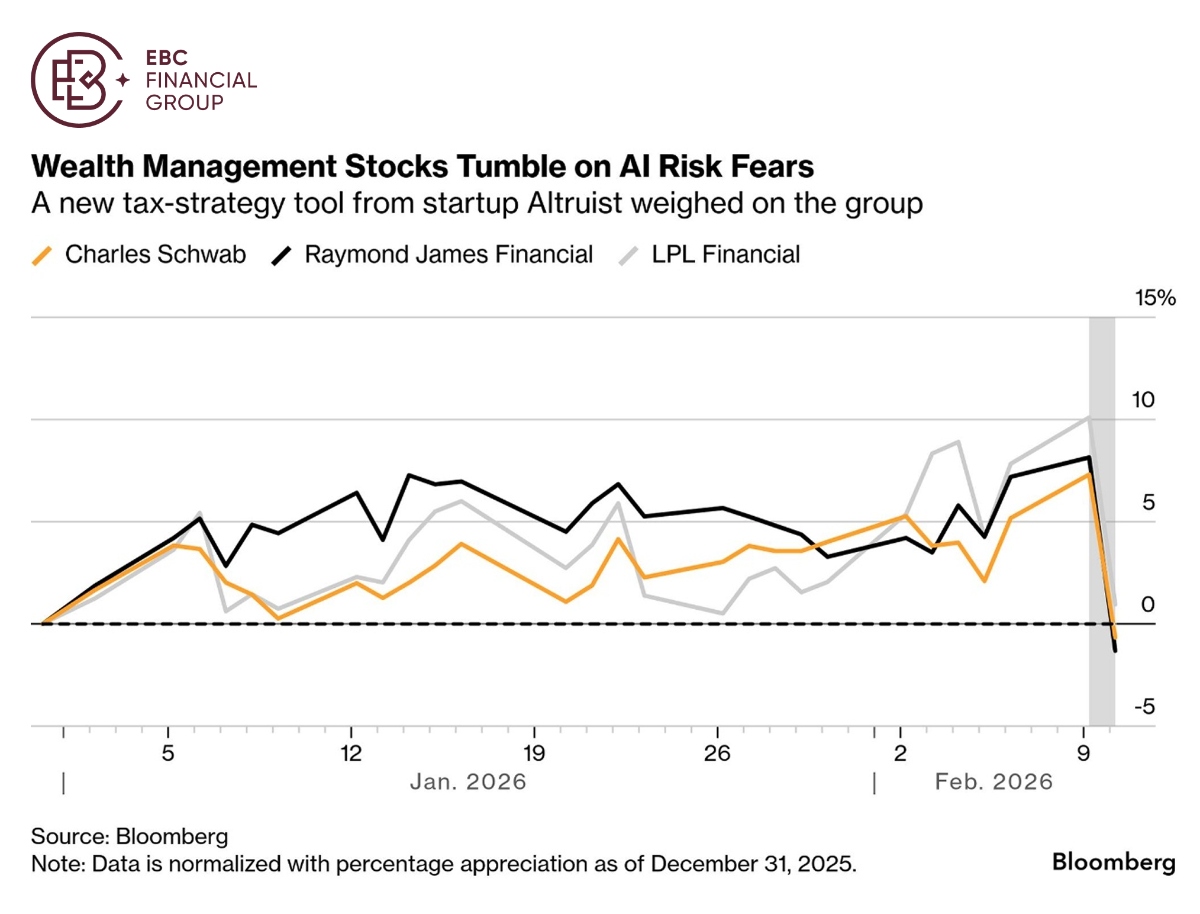
Investors are also weighing the losers in the wave of disruptive innovation. Those at risk of being caught off guard suffered sharp sell-off, from small software makers to big wealth-management firms.
In Europe, French software company Dassault Systemes tumbled 20% on Wednesday after it reported results that JPMorgan said were "worse than even the most negative had feared."
AI companies like OpenAI and Anthropic have made solid inroads into software engineering with products that help developers streamline the process of writing and debugging code and are moving into other industries.
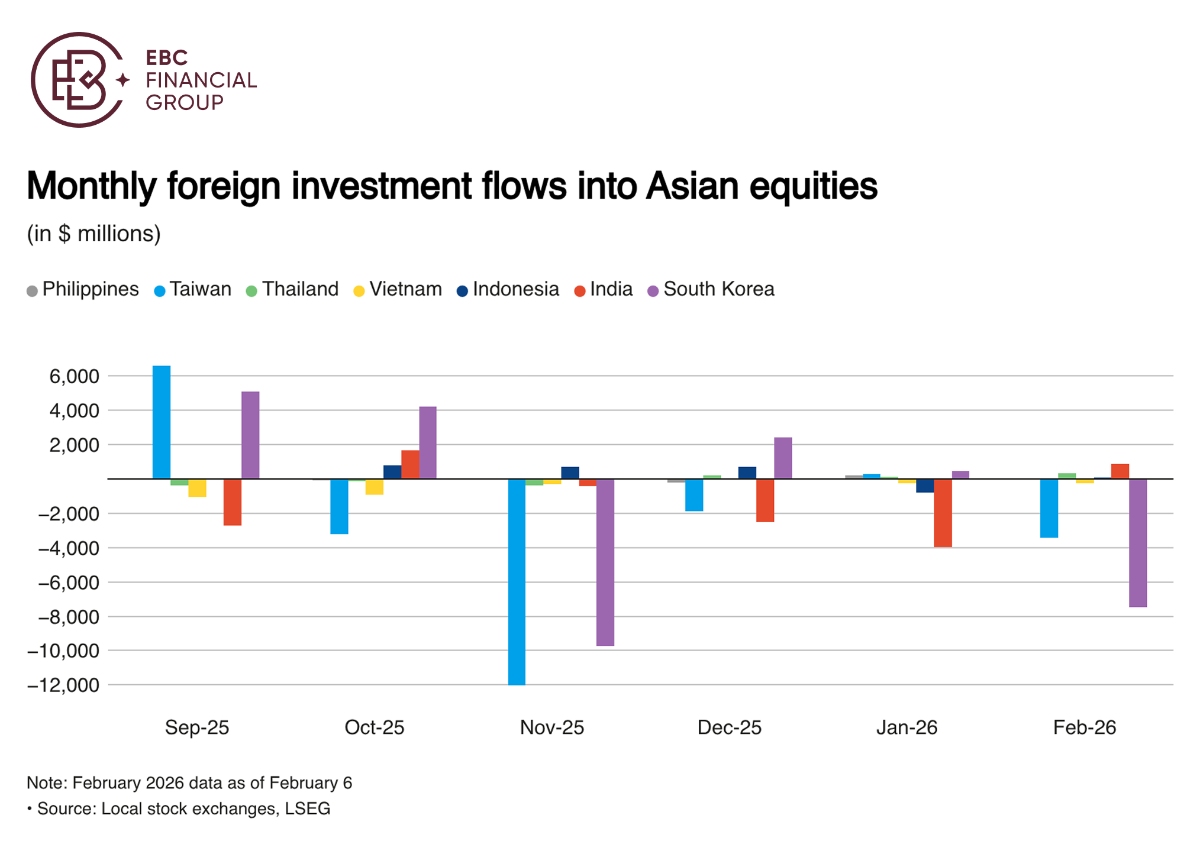
Foreign investors sold a net $9.79 billion worth of Asian stocks in the first week of February as South Korea came under the most pronounced pressure from the technology rout.
Meanwhile, they added a net $897 million worth of Indian stocks on optimism over a trade deal with the US. BNPP sees "the near-term risk/reward balance as now firmly skewed to the upside."
Most equity benchmarks in the region have risen in 2026, currencies have shown resilience. The IMF projected that China and India together are expected to contribute 43.6% of total global growth this year.
Asia supplies much of the hardware underpinning the AI build-out. Any disappointment in chip demand or pricing power would ripple across the markets that have been driven higher by fever pitch.
The greenback's persistent decline provides another tailwind by easing pressure on Asian currencies. It helps increase the return in US dollar terms and lower the costs to server dollar-denominated corporate debt.
Strategists at State Street say the dollar could slide as much as 10% this year if the Fed cuts interest rates more sharply than expected. Two rate cuts have been priced in, according to money market.
iShares MSCI All Country Asia ex Japan ETF offers balanced exposures to tech powerhouse (China and South Korea) and the fast growing EM economy (India) – effective supplement to US/European assets.
Disclaimer: This material is for general information purposes only and is not intended as (and should not be considered to be) financial, investment or other advice on which reliance should be placed. No opinion given in the material constitutes a recommendation by EBC or the author that any particular investment, security, transaction or investment strategy is suitable for any specific person.