Published on: 2023-06-22
Updated on: 2025-11-27
Over-the-Counter (OTC) trading has gained fresh attention as investors search for opportunities beyond traditional stock exchanges.
Whether you're exploring small-cap companies, bonds, or alternative assets, the OTC market offers access to securities that never make it onto the New York Stock Exchange (NYSE) or NASDAQ.
Understanding how OTC trading works, and the risks involved, can help you navigate this unique corner of the financial markets more confidently.

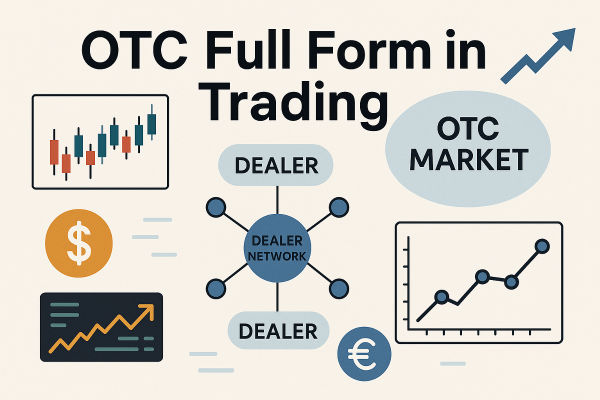
Over-the-Counter trading refers to buying and selling securities directly through a broker-dealer network rather than on a centralized exchange such as the NYSE.
These securities are not listed on major exchanges, but they can still be traded electronically through specialized OTC platforms.
OTC markets enable companies, especially smaller or early-stage firms, to raise capital even if they do not meet traditional exchange listing requirements.
Although non-listed, many OTC securities remain subject to oversight from the U.S. Securities and Exchange Commission (SEC).
Companies that cannot meet the financial, regulatory, or disclosure standards required by major exchanges often trade their shares over the counter. However, OTC trading extends beyond stocks and is widely used for:
Bonds
American Depositary Receipts (ADRs)
Currencies
Derivatives
Small-cap or micro-cap stocks
The OTC Markets Group provides three primary electronic trading tiers, each with different reporting and disclosure standards:
OTCQX – Highest quality, with strong financial reporting.
OTCQB – Venture-level companies with verified information but higher risk.
Pink Open Market (OTC Pink) – Minimal disclosure, highest uncertainty, often speculative.
| Pros | Cons |
|---|---|
| Access to companies that are too small or too new for major exchanges | Lower liquidity makes it harder to buy or sell shares quickly |
| Lower listing costs allow businesses to raise capital faster | Higher volatility and wider bid-ask spreads |
| Opportunity to invest in niche assets like foreign equities, bonds, and ADRs | Limited financial disclosure, especially in lower-tier OTC markets |
| Flexible option for early-stage and micro-cap companies | Considered speculative by most financial professionals |
Because transparency varies widely across OTC markets, investors need to conduct thorough research before trading.
Safety varies widely. Higher-tier platforms like OTCQX offer more transparency, but many OTC securities, especially in OTC Pink, carry significant risk due to limited disclosures.
Many companies cannot meet strict listing requirements or want to avoid the high costs and lengthy processes associated with major exchanges.
Yes. Some companies start on OTC markets and later qualify for NASDAQ or NYSE listings after strengthening their financials and compliance.
No. Large international companies may also trade OTC in the form of ADRs, and many bonds and derivatives trade exclusively over the counter.
Over-the-Counter (OTC) trading allows investors to buy and sell securities outside centralized exchanges through a broker-dealer network.
While the OTC market offers access to a wide range of assets, including stocks, bonds, derivatives, and foreign securities, it also comes with unique risks such as limited liquidity and lower transparency.
Understanding the structure of OTCQX, OTCQB, and the Pink Open Market can help investors evaluate opportunities more effectively and navigate this diverse marketplace with greater confidence.
Disclaimer: This material is for general information purposes only and is not intended as (and should not be considered to be) financial, investment or other advice on which reliance should be placed. No opinion given in the material constitutes a recommendation by EBC or the author that any particular investment, security, transaction or investment strategy is suitable for any specific person.



World's Best Broker