Published on: 2026-06-16
Updated on: 2026-06-16
Is the stock market open on Juneteenth 2026? No: NYSE and Nasdaq close on Friday, June 19, while the U.S. bond market, Federal Reserve payment rails and DTC settlement also pause. Futures follow CME holiday schedules rather than the normal Friday clock, with product hours and trade-date rules taking care of the rest.
The market signal comes earlier, on Thursday, June 18, as traders absorb the June 16–17 Fed meeting before stocks reopen on Monday, June 22.
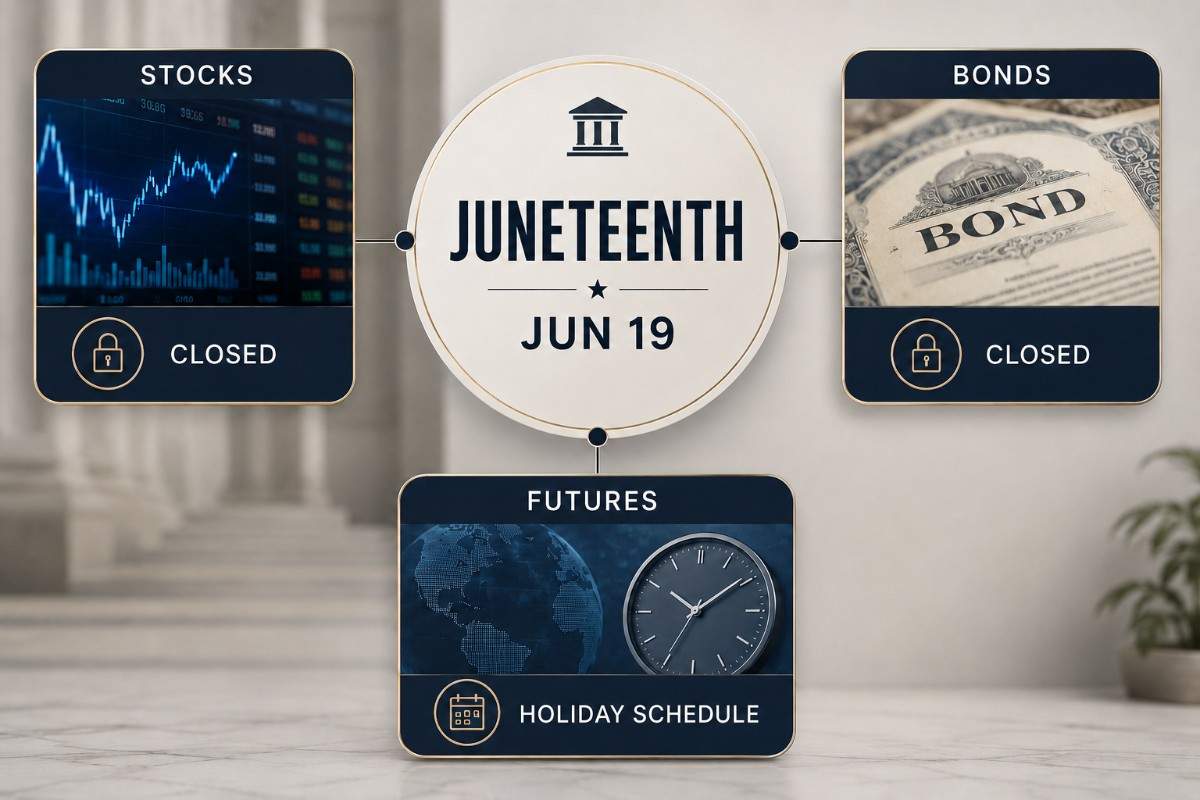
NYSE and Nasdaq close for the full Friday session on June 19, 2026.
The U.S. bond market also closes, including Treasurys, corporate bonds and municipal debt.
Fed payment rails and DTC settlement pause, making Monday, June 22, the key cash-date focus.
CME futures follow holiday-specific schedules, so traders need product-level confirmation.
Thursday, June 18, carries the real liquidity signal after the June 16–17 Fed meeting.
| Market or system | June 19 status | Practical takeaway |
|---|---|---|
| NYSE | Closed | No regular stock session |
| Nasdaq | Closed | Stocks, ETFs and options pause |
| U.S. bond market | Closed | Treasurys and credit markets shut |
| Fed payment rails | Closed | Cash movement timelines shift |
| DTC settlement | Closed | T+1 timing moves past Friday |
| CME futures | Holiday schedule | Check product hours and trade date |
For active traders, DTC settlement carries the sharpest practical consequence: Juneteenth breaks the T+1 chain and moves Thursday’s cash timing past Friday.
Thursday, June 18, is the last regular stock session before the long weekend. After that, the pressure shifts from prices to cash flows, settlement, and bond-market liquidity.
Treasury-market liquidity disappears for the day, removing a key reference point for rates, credit spreads and equity valuation. SIFMA (Securities Industry and Financial Markets Association) recommends a full close across major U.S. dollar fixed-income markets, including government securities, mortgage-backed securities, corporate bonds, municipal bonds and secondary money-market trading.
Federal Reserve holiday schedules also affect wire transfers, ACH processing and cash movement. Brokerage screens may still show balances and stale prices, but the machinery behind new U.S. trades, bond liquidity and settlement is offline.
Futures require a product-level check. CME’s Juneteenth schedule places Friday, June 19, under holiday handling, with relevant orders tied to the Monday, June 22, trade date rather than a normal Friday session.
Equity traders get a clear answer: no regular NYSE or Nasdaq session on June 19. Futures traders have to check the specific contract because holiday hours, session windows, and trade dates do not always align with the stock-market calendar.
T+1 settlement means most equity trades settle one business day after the trade date. A normal Thursday trade would point to Friday settlement, but Juneteenth removes Friday from the business-day chain.
DTC is closed on Friday, June 19, 2026, so Monday, June 22, becomes the date active traders need to watch. A trade may appear in a brokerage account before then, yet final settlement follows the market-infrastructure calendar
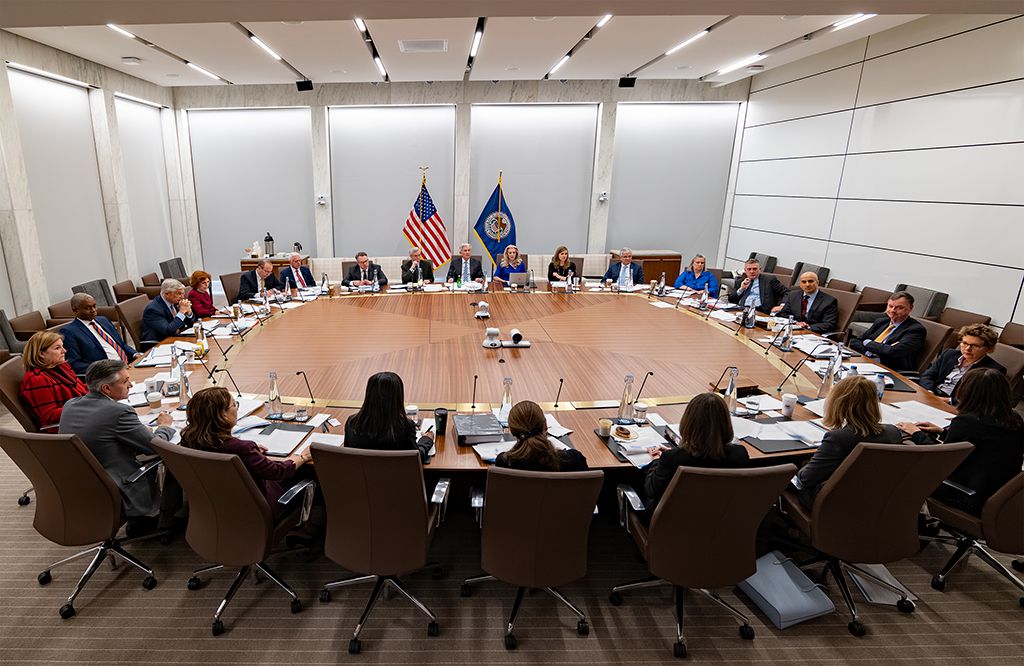
Thursday, June 18, is the decision window. The Federal Reserve’s June 2026 FOMC meeting falls on June 16–17, leaving one cash-equity session for traders to absorb rates, options hedging and long-weekend exposure.
A long weekend after a Fed decision can push desks to cut risk, roll hedges earlier, or widen bid-ask spreads. The market does not price Juneteenth on Juneteenth; it prices the closure before liquidity leaves.
A stable Thursday close would show investors absorbed the Fed event without forced de-risking. Wider spreads, heavy index futures hedging, or a weak close would point to risk being carried into Monday rather than resolved.
On Monday, June 22, cash equities reopen, bond liquidity returns and delayed settlement processing resumes. The first hour should show whether traders absorbed the long-weekend risk before Juneteenth or pushed it into the next session.
Monday’s open will be the first real check. If equities gap, Treasury yields move sharply, or ETFs trade away from fair value, Juneteenth did not remove risk; it only delayed price discovery.
No. NYSE and Nasdaq are closed on Friday, June 19, 2026, for Juneteenth National Independence Day. Regular U.S. stock, ETF and listed equity-options trading resumes on Monday, June 22.
No. The U.S. bond market follows a full-close recommendation covering Treasurys, corporate bonds, municipal bonds, mortgage-backed securities and secondary money-market trading.
No normal DTC settlement occurs on Friday, June 19, because DTC is closed for the holiday. Under T+1, Thursday trades push practical settlement attention into the next business day.
Futures require product-level checking. CME uses Juneteenth holiday handling, so traders should verify the specific contract’s session hours and trade-date treatment before assuming normal access.
The June 16–17 Fed meeting lands one day before the final regular stock session ahead of Juneteenth. That compresses rate repricing, hedging and long-weekend risk reduction into Thursday, June 18, making liquidity conditions more important than the closed Friday session itself.
June 19 gives traders a closed market, not a closed risk window. The important test arrives around the reopen, when cash equities, bond liquidity and settlement timing return to the same market clock.
June 22 will show whether Juneteenth closed the market or simply moved the risk.