Published on: 2025-10-31
Updated on: 2026-07-01
Every day, millions of people in Pakistan follow the dollar, gold, and global markets. Forex trading lets you take part in those price movements directly from your phone or laptop, across a market that runs 24 hours a day, five days a week. For beginners, the appeal is clear: low initial capital requirements, flexible hours, and access to the currencies and commodities that drive the world economy.
This guide gives you a clear starting point. You will learn how forex trading works, where it stands legally in Pakistan, how to open and fund an account, how to choose a well-regulated broker, and how tax and Islamic accounts fit in. The goal is to help you make informed decisions so you can begin with knowledge rather than guesswork.
Forex trading is open to residents of Pakistan, and most people trade through internationally regulated brokers.
The State Bank of Pakistan (SBP) oversees foreign exchange, and the Securities and Exchange Commission of Pakistan (SECP) oversees markets.
Choosing a broker regulated by a strong authority, such as the UK’s FCA or Australia’s ASIC, is the most important first step.
Trading profits are taxable and should be declared to the Federal Board of Revenue (FBR).
Swap-free (Islamic) accounts are widely available for traders who need them.
Forex, short for foreign exchange, is the buying and selling of one currency against another. Prices move as economies, interest rates, and news shift the relative value of currencies. A trader aims to profit from those movements, for example by buying the euro against the US dollar (the EUR/USD pair) if they expect the euro to strengthen.
Most retail traders access forex through contracts for difference (CFDs). A CFD lets you trade on the price movement of a currency pair, or of gold, oil, or an index, without owning the underlying asset. This is what makes it possible to start with modest capital and to trade both rising and falling markets. It also uses leverage, which we explain in more detail below.
Forex trading is not banned in Pakistan. Residents take part every day, and it is not a criminal act for an individual. What matters is understanding the framework around it.
Two bodies share oversight. The State Bank of Pakistan regulates foreign exchange and cross-border money movements under the Foreign Exchange Regulation Act. The Securities and Exchange Commission of Pakistan (SECP) regulates capital markets and brokers. For domestic futures, the Pakistan Mercantile Exchange (PMEX) is the SECP-licensed exchange that offers currency and commodity futures on the MetaTrader 5 platform.
Because Pakistan does not license local retail forex brokers, most traders use internationally regulated brokers. Both regulators advise dealing only with properly regulated firms and caution against unregulated platforms promising quick or guaranteed profits, as these are common fraud vehicles. Understanding foreign-exchange rules before funding an account and confirming your broker’s regulation are the two steps that protect you most. We cover how to verify a broker below.
Getting started is straightforward once you know the steps. Here is the path most beginners follow.
Learn the basics first. Understand what a currency pair is, how prices are quoted, and what moves them. A little study here saves a lot of money later.
Choose a well-regulated broker. This is the decision that matters most, so confirm the broker’s regulation before anything else (see the next section).
Register and verify your identity. This know-your-customer (KYC) step usually needs your national ID card and proof of address.
Review deposit and withdrawal methods available to clients in Pakistan, along with any fees and timelines.
Set your account base currency, which is usually US dollars.
Practice on a demo account. Trade with virtual funds until the platform feels routine and your approach is consistent.
Start small. When you move to a live account, begin with an amount you are comfortable learning with.
Before you fund anything, make sure you understand how leverage and margin work, because leverage increases both potential gains and potential losses.

A good broker is the foundation of a good trading experience. Regulation is the first filter and takes only minutes to check.
Confirm the licence at the source. If a broker states it is regulated by the UK’s Financial Conduct Authority (FCA) or the Australian Securities and Investments Commission (ASIC), find its reference number and confirm it on the regulator’s official register. Do not rely on a number printed on the broker’s page alone.
Compare the trading costs. Look at spreads and commissions, since these are what you pay on every trade.
Check funding options for Pakistan. Confirm which deposit and withdrawal methods are available to local clients, and the fees and processing times for each.
Test the platform and support. A stable platform, mobile access, and responsive customer support during your hours all matter for day-to-day trading.
You can also review platforms that accept traders based in Pakistan as a starting reference.
Most beginners start with major currency pairs because they are the most active and usually have the tightest spreads. Common choices include EUR/USD, GBP/USD, and USD/JPY. Reviewing which currency pairs suit beginners helps you avoid thinly traded pairs that move unpredictably.
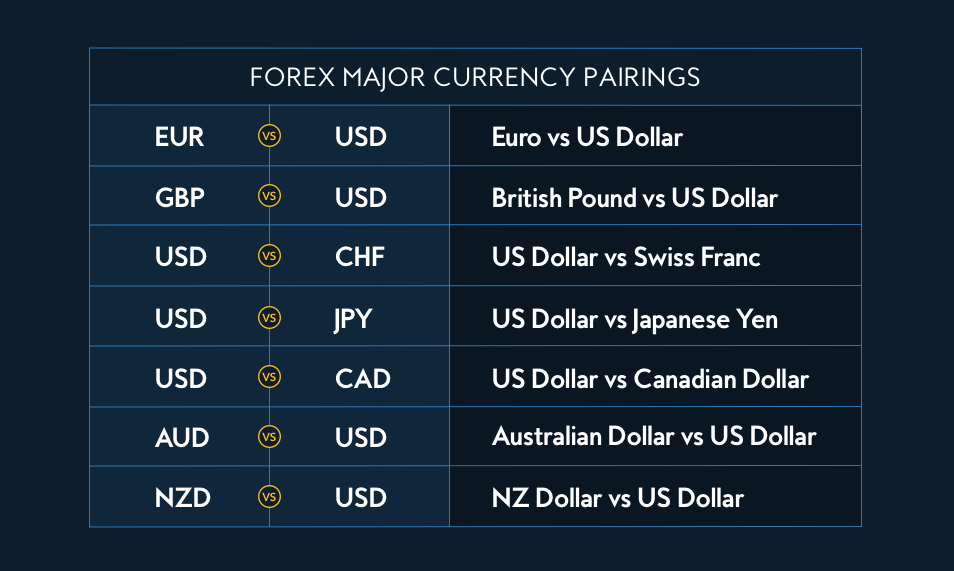
Beyond currencies, many traders add gold (XAU/USD), oil, or index CFDs as they gain confidence. One point specific to Pakistan is that most international brokers do not offer USD/PKR as a tradable pair, mainly due to limited offshore rupee liquidity. Traders seeking global market exposure focus on major international pairs and instruments instead.
A few habits serve beginners better than any complex strategy:
Learn on a demo account before committing real funds.
Understand position sizing, and risk only a small portion of your account on any single trade.
Know what a pip is and how it converts to money at your position size.
Keep a trading journal so you learn from your own record.
Leverage can grow an account quickly but can also produce losses just as fast, so treat risk management as part of the skill, not an afterthought.
Yes. Income from trading is taxable in Pakistan and should be declared to the Federal Board of Revenue (FBR) when you file your annual return. This applies whether you trade with a local or international broker.
For trading on PMEX, capital gains tax applies under the Income Tax Ordinance 2001 and is collected through the National Clearing Company of Pakistan. Rates are set annually through the Finance Act, so check current figures on the FBR website. Being a registered tax filer generally means lower withholding than a non-filer, so keeping organized records of deposits, trades, and withdrawals from the start is worthwhile.
This is an important question for many traders, and views among scholars differ, so this section explains the facts rather than giving a religious ruling.
The main concern in Islamic finance is riba, meaning interest. In a standard account, positions held overnight can be charged or paid a small interest adjustment called a swap. To address this, many brokers offer swap-free accounts e.g. EBC Financial Group, also known as Islamic accounts, which hold positions overnight without that interest charge.
Traders who want to follow Islamic principles also tend to favor planned, informed positions over gambling-like behavior. Whether a specific setup meets Sharia requirements is something individuals often confirm with a qualified scholar.
The global forex market runs 24 hours a day, five days a week, moving through the Sydney, Tokyo, London, and New York sessions. In Pakistan Standard Time, the most active hours for major pairs fall in the afternoon and evening, when the London and New York sessions overlap, and volatility is highest.
For the exact session times converted to local time, see the guide to forex market hours in Pakistan time. If you also want exposure to US companies, there is a separate guide on how to trade US shares from Pakistan.
Forex trading is not banned, and taking part is not a criminal act for an individual. Pakistan does not license local retail forex brokers, so most residents trade through internationally regulated brokers. The SBP oversees foreign exchange, and the SECP oversees markets, and both advise using properly regulated firms.
Learn the basics, choose and verify a well-regulated broker, complete identity verification, review funding options for Pakistan, practice on a demo account, then start small on a live account.
Yes. Trading income is taxable and should be declared to the FBR. PMEX trades are subject to capital gains tax under the Income Tax Ordinance 2001, with rates set annually by the Finance Act.
Most international brokers do not offer USD/PKR due to limited offshore rupee liquidity. Beginners usually focus on major international pairs such as EUR/USD instead.
Scholarly views differ, and this is not a religious ruling. The main concern is interest (riba) on overnight positions. Swap-free, or Islamic, accounts remove that interest element and are widely used by traders in Pakistan.
Many brokers allow small starting deposits. What matters more is beginning with an amount you are comfortable learning with and practicing on a demo account first, since leverage can produce losses as well as gains.
Forex trading in Pakistan is accessible, and thousands of beginners start each year. The traders who last are not those chasing quick wins but those who build on a solid foundation: a well-regulated broker they have verified, a clear understanding of leverage, honest record-keeping for tax, and steady practice before risking real money.
If you get those basics right, you give yourself a genuine footing in the global market. A good next step is to strengthen fundamentals with a guide on how the forex market works for new traders, then open a demo account and begin learning by doing.
Disclaimer: This material is for general information purposes only and is not intended as (and should not be considered to be) financial, investment or other advice on which reliance should be placed. No opinion given in the material constitutes a recommendation by EBC or the author that any particular investment, security, transaction or investment strategy is suitable for any specific person.