Published on: 2026-01-06
Updated on: 2026-01-06
EBC Financial Group observed that the sharpest, most
tradable response to the latest Venezuela developments has been the repricing of
US energy exposure, with investors moving first into liquid sector instruments
and the largest constituents most sensitive to policy outcomes.
David Barrett, Chief Executive Officer at EBC Financial Group (UK) Ltd, said: "When geopolitics drives markets, investors often pick the simplest way to express a view. For example, instead of choosing one oil company, they may trade an energy sector ETF that holds many of them, so the price reflects the whole theme at once."
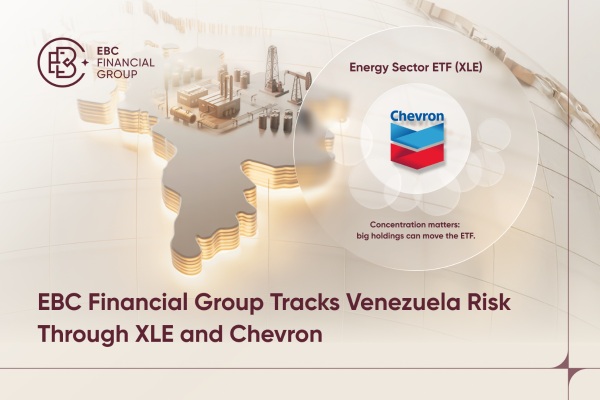
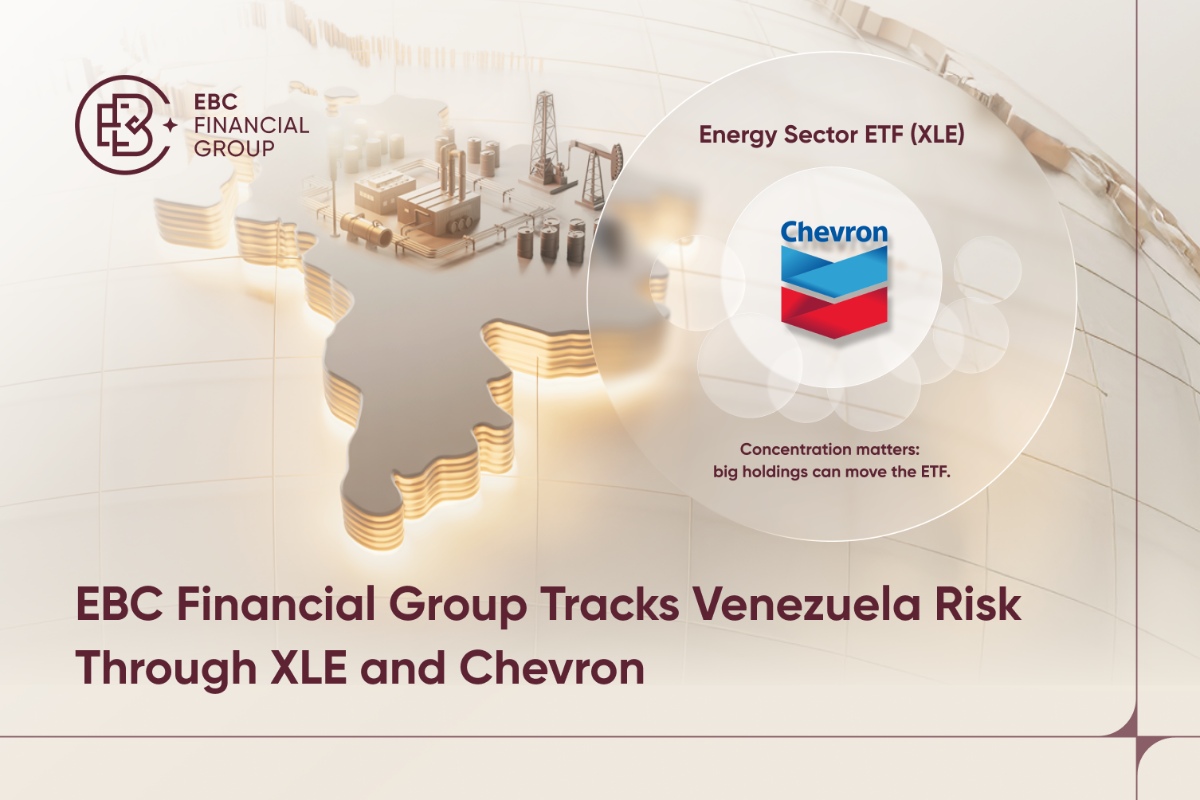
One of the cleanest gauges has been the Energy Select Sector SPDR Fund (XLE), widely used to track US energy equities in a single price. On 5 January 2026, XLE closed at $46.89, up $1.24 or 2.72% on the session. This move came alongside a broader reassessment of energy pathways and timelines. While the event raised the geopolitical premium, the market also continued to weigh ample global supply and the practical limits on how fast Venezuela's output can be rebuilt.
XLE is concentrated, meaning a handful of holdings can steer performance. As of 2 January 2026, Exxon Mobil accounted for 23.66% of the fund and Chevron for 17.63%, based on the fund's published holdings. Chevron's weight matters because it sits close to the policy narrative. On 5 January, Chevron closed at $163.85, up 5.10% on the day, as investors repriced the odds of a shift in access, investment permissions and future cash flow potential tied to Venezuela's oil industry.
Barrett added: "In a concentrated ETF, the market is effectively voting on which companies sit closest to the policy lever. When that view hardens, the ETF can move even if the wider sector is mixed."
Crude prices settled higher on 5 January, with Brent at $61.76 and WTI at $58.32, reflecting a modest risk premium rather than a supply shock. The longer-dated constraint remains capacity. Venezuela's oil industry has deteriorated after years of underinvestment and sanctions, with current output cited around 1.1 million barrels a day, well below historic levels. That gap between reserves and usable capacity is why energy equities can move on policy headlines even when physical supply changes take time to materialise.
EBC Financial Group's approach to thematic risk periods has focused on helping eligible clients follow market repricing through transparent, widely traded benchmarks, rather than trying to trade every individual headline. ETF CFDs are one such route, designed to track ETF price movements without owning the underlying fund, and can be used to express a view in either direction, subject to local rules and product availability. For readers who want a plain-language overview of how this works, EBC Financial Group has published an explainer on its website, "ETF CFD explained: what it is and how it works."
EBC's Product Guide lists XLE.P (Energy Select Sector SPDR Fund) among the ETF instruments available through EBC, offering a clear way to follow how geopolitical developments translate into US energy sector pricing.
Disclaimer: This material is for information only and does not constitute a recommendation or advice from EBC Financial Group and all its entities ("EBC"). Trading Forex and Contracts for Difference (CFDs) on margin carries a high level of risk and may not be suitable for all investors. Losses can exceed your deposits. Before trading, you should carefully consider your trading objectives, level of experience, and risk appetite, and consult an independent financial advisor if necessary. Statistics or past investment performance are not a guarantee of future performance. EBC is not liable for any damages arising from reliance on this information.



World's Best Broker