Published on: 2025-11-10
Updated on: 2026-04-17
Nigeria’s retail trading community continues to expand. More Nigerian traders now look for platforms that combine forex access, global stock exposure, transparent funding, and practical risk controls in one account.
When comparing brokers from Nigeria, the key checks are regulation, platform stability, product range, funding and withdrawal process, and risk-management tools.
EBC Financial Group positions itself for this need through a professional trading ecosystem tailored for Nigerian clients. The broker was named “Most Trusted Broker” and “Best Trading Platform” at the 2025 World Finance Forex Awards.
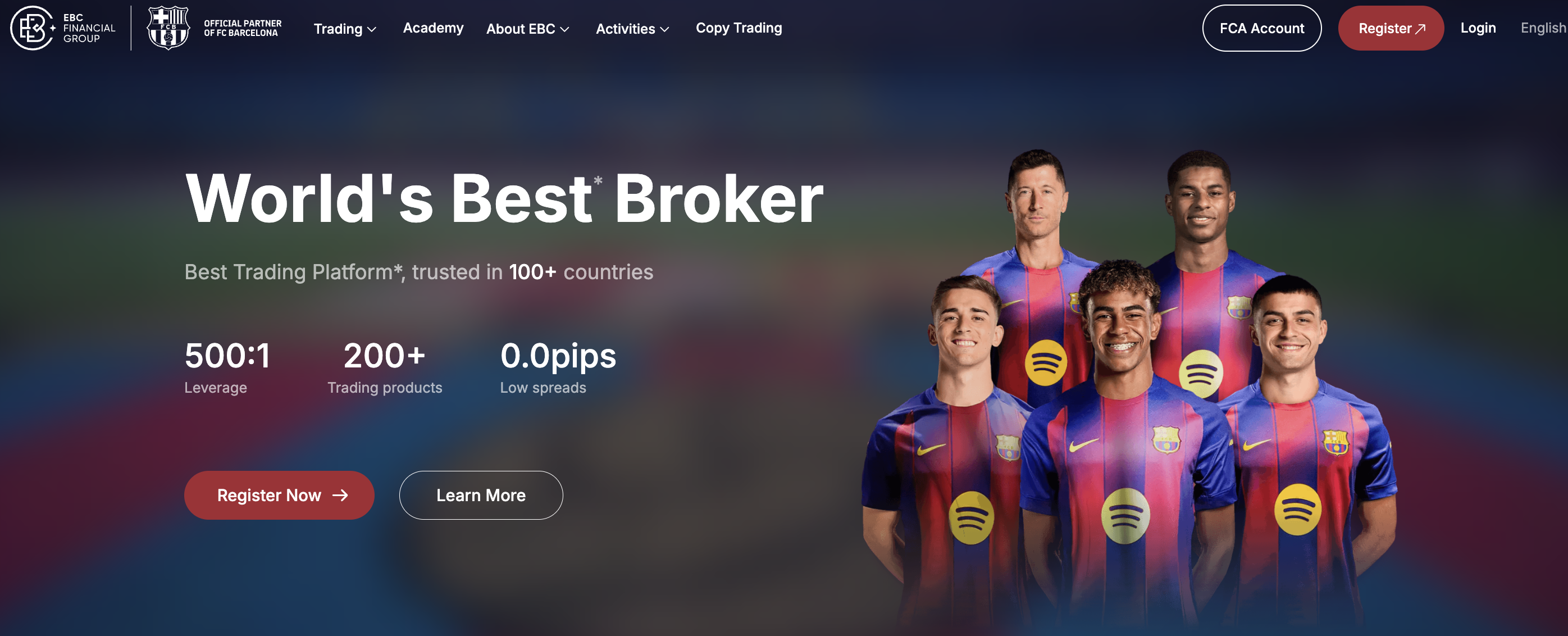
EBC Financial Group gives Nigerian traders access to MT4 and MT5, a broad multi-asset product range, and execution tools designed for active trading. Across EBC’s current public materials, the firm presents more than 200 instruments spanning forex, stock CFDs, indices, commodities, and ETF CFDs.
Account opening available to Nigerian residents, subject to current onboarding checks
Provides MetaTrader 4 and MetaTrader 5
Fast execution with no requotes, according to EBC’s public trading materials
Public regulatory pages list oversight from FCA, ASIC, and CIMA
Funding methods for Nigerian clients depend on the onboarding entity and current availability
Check current deposit, withdrawal, and conversion costs before funding
Multi-asset access across forex, stock CFDs, indices, commodities, and ETF CFDs
That broader product coverage can support cross-asset strategies from one account. Traders should still review spreads, leverage, margin requirements, funding methods, and withdrawal conditions before opening a live account.
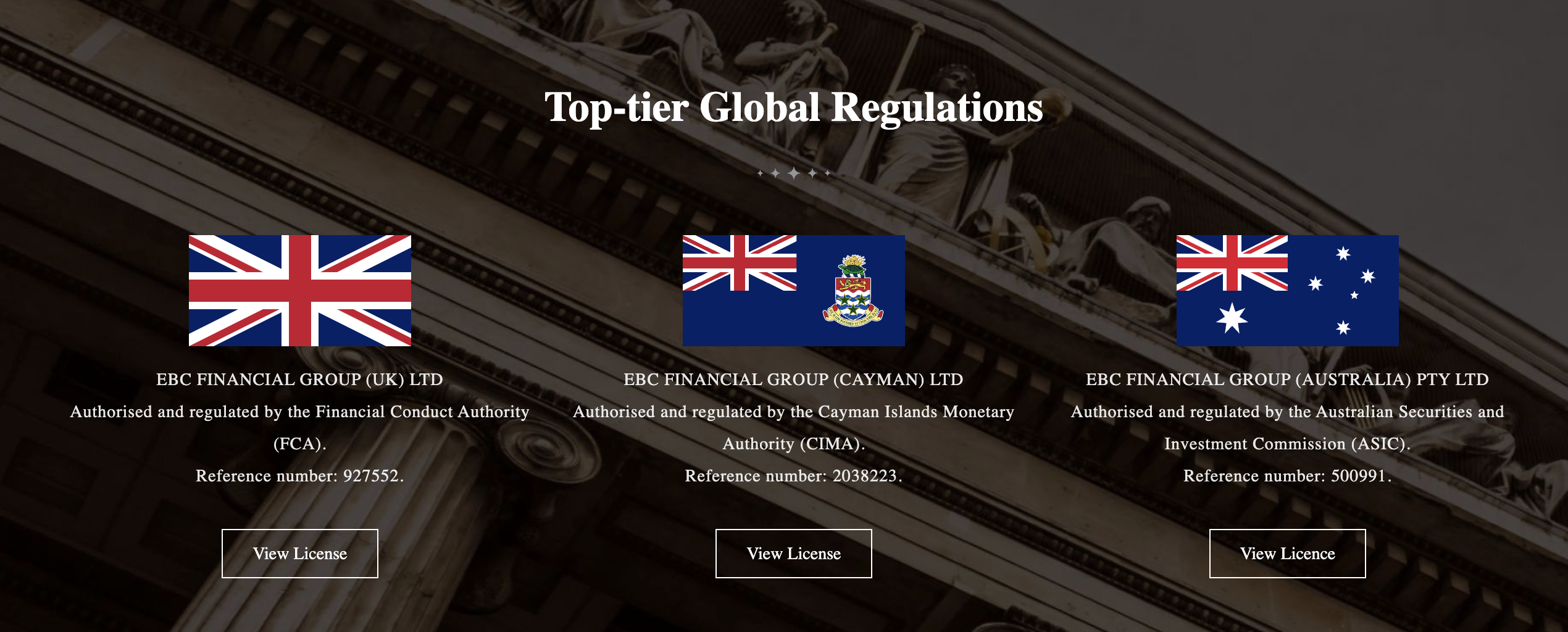 EBC Financial Group operates through multiple licensed entities. Nigerian clients should confirm which EBC entity will onboard their account, because protections, leverage limits, and product availability can vary by jurisdiction.
EBC’s public regulatory pages list oversight from the Financial Conduct Authority (FCA), the Australian Securities & Investments Commission (ASIC), and the Cayman Islands Monetary Authority (CIMA).
Segregated client accounts: Client funds are held in separate bank accounts at tier‑1 global banks, distinct from the company’s operational funds. In the event of insolvency of the broker, client funds are not mixed with corporate assets.
Negative balance protection: For retail clients trading via the FCA/ASIC‑regulated entities, EBC ensures clients cannot lose more than their account balance during extreme market moves.
Robust framework compliance: Through its FCA, ASIC and CIMA licences, EBC adheres to major regulatory requirements: capital adequacy rules, regular financial audits, anti‑money‑laundering (AML) programs, and client money (funds) protection standards.
Create Your Account: Visit EBC’s official website and sign up using your email or mobile number. Select Nigeria as your country of residence.
Complete KYC Verification: Upload a valid ID and proof of address to activate funding and withdrawals.
Select Account Type: Choose between Standard or Professional, based on your trading strategy, experience, and capital size.
Fund Your Account: Deposit using the funding methods currently available in the client portal for Nigerian clients, including local payment options, e-wallets, or cryptocurrency where supported. Minimum deposit starts from USD 50.
Start Trading: Access MT4 or MT5 to trade forex, stock CFDs, commodities, indices, and ETF CFDs, while reviewing spreads, leverage, and margin requirements before entering positions.
Withdraw Profits: Use the same funding channel. Most withdrawals are processed within 1-2 business days, ensuring convenience for Nigerian users.
For example, a trader in Abuja may fund an account in USD terms and use it to monitor both forex and U.S. stock CFDs from one platform. If the trade thesis is correct, returns still depend on the asset move, position size, spreads, financing costs, and the exchange rate at the time profits are withdrawn.
This is only an illustration, not a real client case study or a promise of profit. Nigerian traders should assess market risk, currency conversion, and trading costs before using live capital.
Nigerian traders must fully understand margin requirements and liquidation levels before executing trades.
Gaps at the open, major news events, and thin liquidity can all cause orders to fill at worse levels than expected.
Careful position sizing relative to account equity is essential, especially when leverage is involved.
Funding accounts in Naira can involve conversion costs, and the timing of withdrawals can affect realized returns when converting profits back to local currency. Nigerian traders should actively monitor NGN exchange rates and total funding costs before depositing or repatriating funds.
Interest rate differentials can also affect overnight swap charges on leveraged positions. Swing traders should factor those financing costs into their profit calculations.
Platform familiarity prevents execution errors during volatile markets. Demo account practice builds muscle memory for order types and risk parameters. Nigerian traders should test order entry, stop-loss placement, and position sizing in a demo environment before risking live capital.
The next phase of retail trading in Nigeria is likely to be shaped by better platform tools, stronger risk controls, and wider access to global markets. Traders are increasingly comparing brokers on execution quality, product range, payment convenience, and platform reliability, not on marketing claims alone.
For Nigerian users, that means choosing a broker with clear account terms, dependable funding channels, transparent risk disclosures, and support for the markets they actually want to trade.
EBC’s current product set spans forex, stock CFDs, indices, commodities, and ETF CFDs, giving traders a broader multi-asset framework to evaluate.
EBC's current onboarding content indicates that Nigerian residents can open accounts, but traders should verify the onboarding entity, available funding methods, and current regulatory position before depositing.
USD 50, allowing traders to start small and test execution.
MetaTrader 4 and 5 for manual and automated trading.
Processing time depends on the funding method, account checks, and the onboarding entity. EBC’s public funding materials emphasise fast, secure deposits and withdrawals, but traders should confirm the current timeline in the client portal before funding.
EBC’s current public product pages present a multi-asset offering that includes forex, stock CFDs, indices, commodities, and ETF CFDs from one trading environment.
Choosing the right broker is crucial for trading forex and stock CFDs smoothly from Nigeria. EBC Financial Group presents a regulated, multi-asset offering with platform access and funding support aimed at Nigerian users.
Before opening an account, confirm the onboarding entity, current funding rails, product availability, and total trading costs. Whether your goal is forex, global stock CFDs, or both, the better choice is the broker whose regulation, tools, and risk controls fit your trading plan in 2026.