Published on: 2025-04-21
Updated on: 2025-12-22
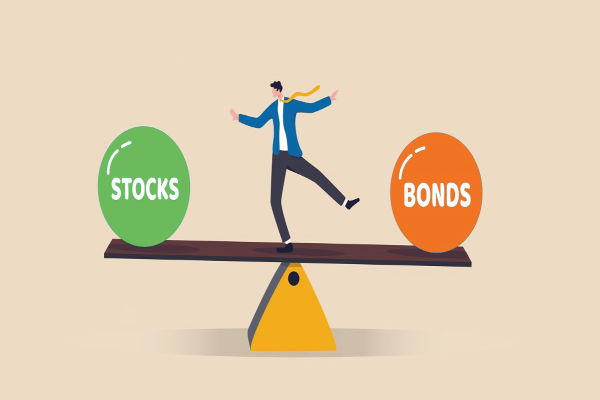
Most investment decisions come down to one question: how much risk are you willing to take for potential returns?
For many new investors, the comparison between stocks and bonds is one of the first concepts to understand. Each plays a different role in an investment portfolio, offering its own balance of opportunity, risk, and stability.
Stocks are often associated with higher growth potential and greater price swings, while bonds tend to provide more predictable income and capital preservation. Understanding how these assets complement each other helps investors build portfolios that align with their goals, time horizon, and risk tolerance.
Stocks represent partial ownership in a company. When you buy shares, you are purchasing a small stake in that business, which may entitle you to a share of its profits and, in some cases, voting rights on key company decisions.
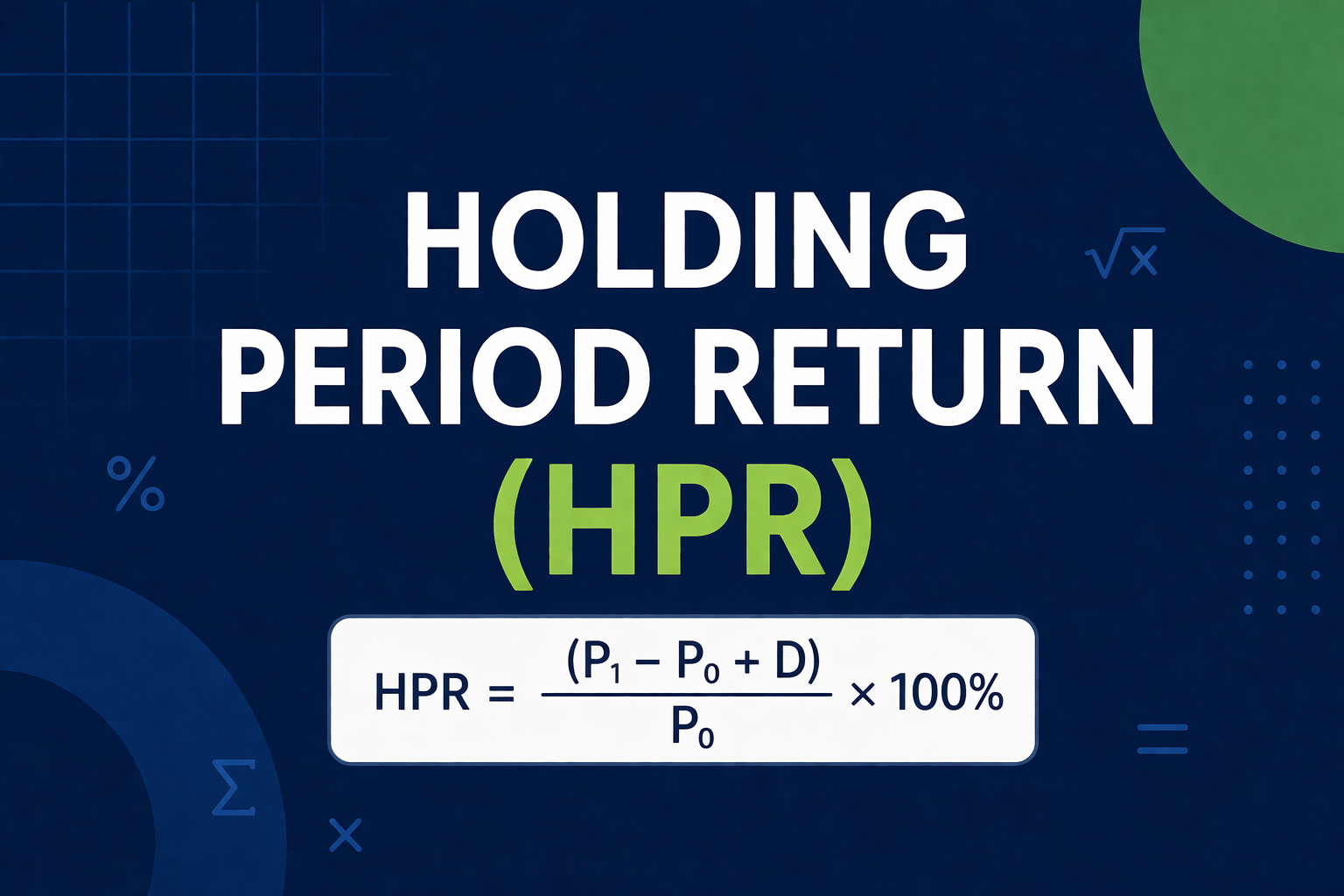
Returns from stocks generally come from two sources. The first is capital appreciation, which occurs when the share price rises. The second is dividends, which are periodic payments some companies distribute to shareholders.
That said, stocks are inherently volatile. Share prices can rise or fall based on economic conditions, company performance, and overall market sentiment. While this volatility increases risk, it also creates opportunities for higher long-term returns.
Stock investors prioritize growth and long-term wealth creation.
Retail investors – aiming for capital appreciation over time.
Asset managers & mutual funds – benchmarked to equity indices.
Hedge funds – trading equities for alpha, momentum, or relative value.
Family offices – long-term growth across generations.
Corporate insiders – ownership stakes aligned with company performance.
Bonds are a type of debt investment. When you purchase a bond, you are effectively lending money to a government, municipality, or corporation. In exchange, the issuer agrees to pay you interest at regular intervals and return the bond’s face value once it reaches maturity.
Compared to stocks, bonds tend to be less volatile and are often viewed as more stable, particularly during uncertain market conditions. Their main attraction is the predictable income they provide, along with a higher degree of capital preservation.
Conservative individual investors – especially retirees or near-retirees who need predictable income and lower volatility.
Pension funds – long-term liabilities require steady cash flows to meet future payouts.
Insurance companies – bonds match their predictable claim obligations and regulatory capital requirements.
Central banks – use government bonds for monetary policy operations and reserve management.
| Aspect | Stocks | Bonds |
|---|---|---|
| What you own | Ownership stake in a company | Loan to a government or company |
| Role in a portfolio | Long-term growth | Stability and income |
| Risk level | Higher volatility | Lower volatility |
| Return potential | Higher over the long term | Lower but more predictable |
| Best market conditions | Economic growth, bull markets | Market downturns, falling interest rates |
| When to invest | Long investment horizon, higher risk tolerance | Capital preservation, steady income needs |
| Suitable for | Younger or growth-focused investors | Conservative or income-focused investors |
During periods of economic uncertainty or market stress, bonds often perform more defensively than stocks. Investors tend to shift capital toward safer assets, which can drive bond prices higher and push yields lower.
Stocks, on the other hand, are more sensitive to negative news, earnings concerns, and shifts in market sentiment, which can lead to sharp price declines.
This contrast highlights the value of holding both asset classes. While stocks may experience short-term losses, they have historically shown strong recovery potential over time.
Bonds help offset volatility during downturns, providing stability and reducing the overall impact of market swings on a diversified portfolio.
Taxes play an important role in investment returns and should not be overlooked. Stock investments may generate taxable income through dividends, while capital gains taxes apply when shares are sold at a profit. The tax rate can vary depending on the holding period and local tax regulations.
Bonds also carry tax implications, particularly through interest income. In some cases, government or municipal bonds may offer tax advantages, such as exemptions from certain taxes, which can be appealing to investors in higher tax brackets.
Understanding how different investments are taxed is essential for effective long-term planning, and consulting a qualified tax professional can help ensure your strategy is structured efficiently.
Diversification: Spread investments across different stocks, bonds, sectors, and issuers to reduce the impact of any single loss.
Risk tolerance alignment: Choose a stock-bond mix that matches your time horizon, financial goals, and ability to handle market fluctuations.
Position sizing: Avoid allocating too much capital to one investment; smaller positions help limit downside risk.
Volatility awareness (stocks): Stock prices can move sharply in the short term. Be prepared for fluctuations and avoid emotional decisions.
Interest-rate sensitivity (bonds): Bond prices fall when interest rates rise, especially for long-maturity bonds.
A well-balanced portfolio typically includes both stocks and bonds. Combining these assets helps manage risk by reducing the impact of market volatility, as they often perform differently under the same conditions.
Stocks contribute growth potential, while bonds provide stability and more predictable income.

The right mix of stocks and bonds depends on your financial goals, investment timeframe, and tolerance for risk. For instance, a younger investor with a long time horizon may lean heavily toward stocks to pursue growth.
In contrast, someone nearing retirement may increase bond exposure to protect capital and generate steady income.
Yes, stocks are generally riskier because their prices fluctuate more based on market conditions and company performance. However, this higher risk also comes with greater long-term return potential compared to bonds.
Absolutely. Many beginners start with a mix of stocks and bonds to balance growth and stability. This approach helps reduce volatility while allowing participation in market upside.
Rising interest rates tend to pressure bond prices and can slow stock market growth. Falling interest rates often benefit bonds and can support stock valuations by lowering borrowing costs.
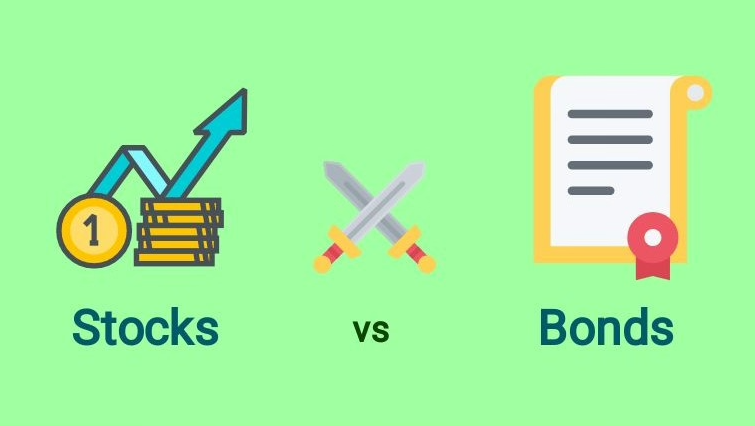
Stocks represent ownership in a company and offer the potential for capital growth and dividends, but they come with higher price volatility. Bonds are debt instruments that provide fixed or predictable income and return principal at maturity, generally offering lower risk and lower long-term returns compared to stocks.
Stocks and bonds serve different purposes, and neither is universally better than the other. What matters most is how they fit your goals, your trading type, and your tolerance for risk.
For many investors, using both makes sense. Stocks help grow wealth over time, while bonds add stability and help soften the impact of market downturns. As your priorities change, adjusting this balance can help keep your portfolio aligned with where you are and where you want to be.
Disclaimer: This material is for general information purposes only and is not intended as (and should not be considered to be) financial, investment or other advice on which reliance should be placed. No opinion given in the material constitutes a recommendation by EBC or the author that any particular investment, security, transaction or investment strategy is suitable for any specific person.