Published on: 2025-12-05
Updated on: 2025-12-05
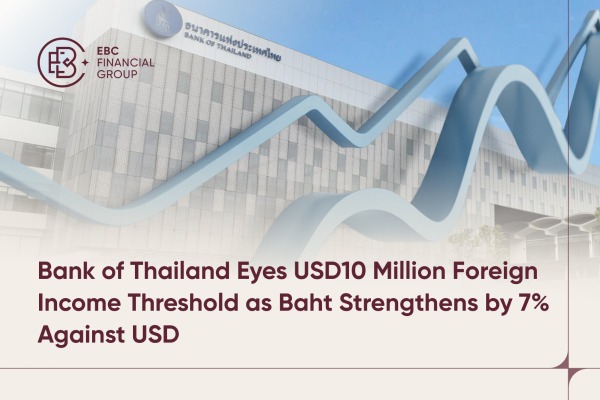
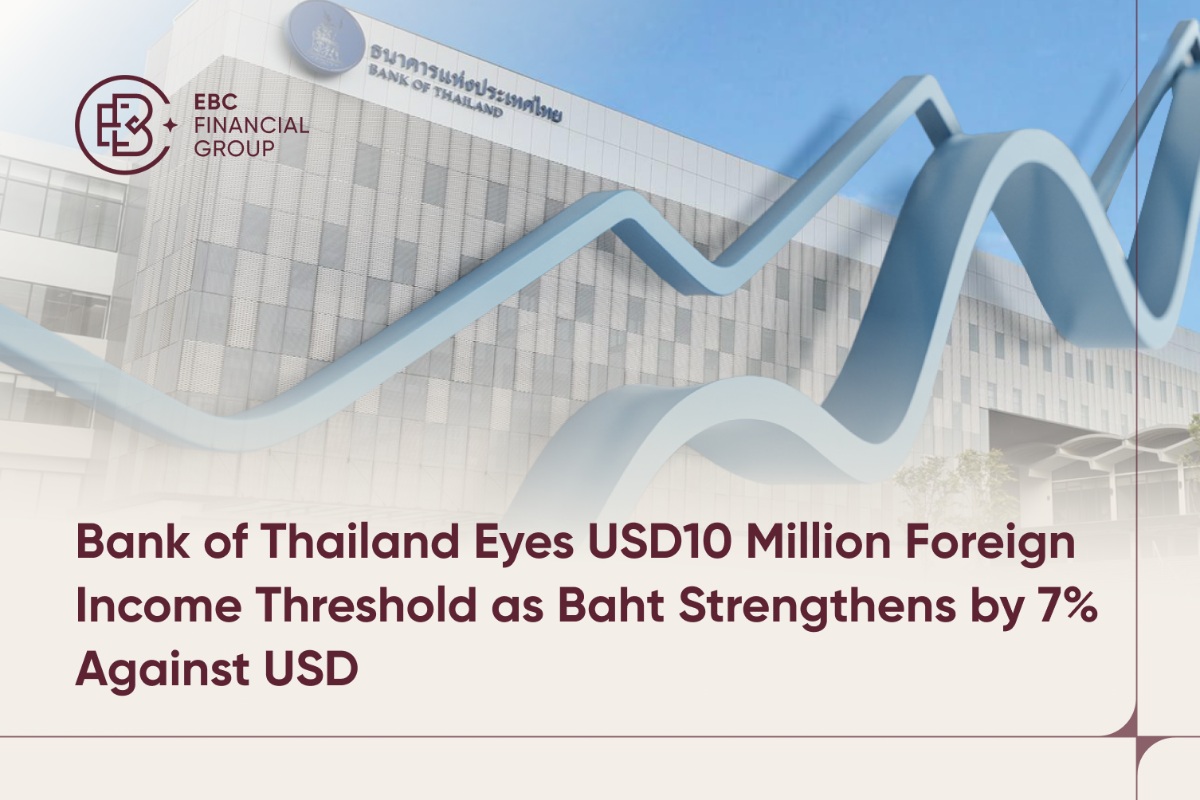
BANGKOK, 3 December 2025 — Thailand's central bank is preparing measures to ease persistent upward pressure on the baht, which has strengthened by 7% against the U.S. dollar so far this year, making it Asia's second-best performing currency. The Bank of Thailand (BOT) has recommended that the Finance Ministry raise the limit for foreign income that does not need to be repatriated to USD10 million per transaction, up from USD1 million, with implementation expected this month. The higher threshold is aimed at giving firms greater flexibility in managing foreign revenues while reducing the amount of foreign exchange being brought into the country, easing upward pressure on the baht.
Samuel Hertz, Head of APAC, EBC Financial Group ("EBC"), said "The scale of the increase represents a clear attempt to slow the volume of foreign currency entering the country and provide greater flexibility for companies managing liquidity. The move reflects concerns from policymakers that rapid appreciation could erode competitiveness in export sectors and tourism, which remain key drivers for Thailand's economy."
Alongside the foreign income rule, the BOT is tightening scrutiny of gold-related forex flows. Financial institutions have been instructed to adopt stricter due-diligence procedures before processing transactions, while major gold traders may be required to report detailed transaction data to improve monitoring and assess the impact on the currency.
Hertz said, "Monitoring gold flows is becoming increasingly important due to the role they have played in recent currency movements, particularly when sharp rises in global gold prices prompt dollar selling and increased foreign exchange activity. Greater supervisory clarity may help policymakers evaluate the scale and timing of currency pressures more accurately. Measures that enhance visibility around transaction behaviour tend to support calmer market conditions, especially for investors and institutions tracking liquidity trends."
Over the past week, the baht has strengthened by about 1%, largely due to a weaker U.S. dollar, exporters' foreign exchange sales, bond inflows, and trading linked to a more than 4% surge in global gold prices, according to the central bank. The baht opened Monday at THB32.09 per dollar, strengthening from Friday's close of THB32.12, and is expected to trade this week within a range of THB31.85–32.45 per dollar.
Central Bank Governor Vitai Ratanakorn has said there is room for interest rate cuts, although such moves may have limited impact on deeper structural challenges. The policy rate currently stands at 1.50% following four reductions over the past year, and the next review is scheduled for 17 December. Analysts anticipate the possibility of another cut, after the central bank unexpectedly left the rate unchanged in October.
"Interest rate decisions will remain closely watched because global currency markets remain sensitive to expectations of changes in both Thai policy and United States monetary direction. Traders and companies are likely to evaluate policy developments in parallel with exchange rate ranges," remarked Hertz.
He concluded, "Exchange rate management, transaction oversight and foreign income rule changes form a combined strategy aimed at reducing excess volatility rather than redirecting economic fundamentals." The BOT has signalled it will continue to closely monitor baht movements and intervene if necessary to limit impacts on businesses.
Disclaimer: This material is for information only and does not constitute a recommendation or advice from EBC Financial Group and all its entities ("EBC"). Trading Forex and Contracts for Difference (CFDs) on margin carries a high level of risk and may not be suitable for all investors. Losses can exceed your deposits. Before trading, you should carefully consider your trading objectives, level of experience, and risk appetite, and consult an independent financial advisor if necessary. Statistics or past investment performance are not a guarantee of future performance. EBC is not liable for any damages arising from reliance on this information.