Published on: 2023-11-06
Updated on: 2026-05-26
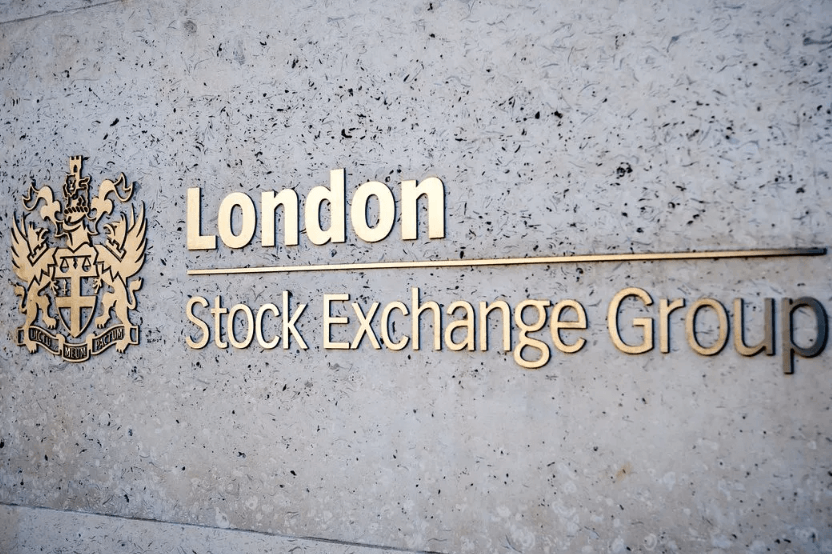
The London Stock Exchange helped turn London from a merchant city into one of the world’s most important financial centres. Its role has always been larger than share trading. It connects companies that need capital with investors seeking ownership, liquidity and transparent prices.
That role matters again in 2026. London still has deep institutional capital, global companies and strong market infrastructure, but it faces tougher competition from New York, private markets and faster-growing listing venues. The London Stock Exchange is therefore not only a historic institution. It is a test case for how older financial centres adapt when capital becomes more global, selective and mobile.
The London Stock Exchange traces its roots to 1698, when John Castaing published regular stock and commodity prices at Jonathan’s Coffee House.
London’s first regulated exchange appeared in 1801, creating the foundation for the modern market structure.
The Main Market reached about £4.12 trillion in market capitalisation in 2025, while 1,753 issuers had listed securities.
London IPO proceeds rose to £2.1 billion in 2025 from £777.7 million in 2024, but activity remained weak compared with historical levels.
FCA listing reforms and the new PISCES private market framework are central to London’s competitiveness in 2026.
The London Stock Exchange was not the world’s first stock exchange. That distinction is usually linked to Amsterdam, where shares in the Dutch East India Company began trading in the early 1600s. London’s importance came later, but it grew from something more durable than novelty: trust, law, banking depth and a city built around commerce.
Before the exchange had a formal home, trading took place through networks of brokers, merchants, and investors. They gathered near the Royal Exchange, in Exchange Alley, and in coffeehouses, where commercial news moved quickly. In an age before screens and instant data, information itself was market power.
Jonathan’s Coffee House became one of the most important meeting points. In 1698, broker John Castaing began publishing “The Course of the Exchange and other things,” a list of stock and commodity prices. That simple price list was a major step toward organised markets because it made valuation more visible and trading less dependent on private conversations.
In 1773, brokers adopted the name Stock Exchange. In 1801, London established its first regulated exchange, giving the market a more formal structure. The timeline is important: London’s market culture began in coffeehouses, gained identity in the 18th century and became a regulated exchange in the 19th century.
London’s rise did not happen because of one exchange building. It came from a financial ecosystem. Banks provided credit. Insurers covered shipping risk. Lawyers enforced contracts. The government issued debt. Investors funded trade, railways, mining, utilities and industrial expansion.
The London Stock Exchange gave that ecosystem a central market. Companies could raise equity capital. Investors could buy and sell ownership. Prices could reflect changing expectations. This helped London shift from a trading hub to a capital allocation centre.
That distinction still matters. A stock exchange is not only a place to trade shares. It is a confidence mechanism. Companies are listed because they want access to capital and credibility. Investors trade because they trust the rules, disclosures and liquidity. When those conditions weaken, capital moves elsewhere.
The London Stock Exchange now operates within the London Stock Exchange Group, or LSEG. The group is much broader than the exchange itself. It provides financial market infrastructure, data, analytics, news and index products to more than 44,000 customers in over 170 countries.
This is one of the biggest changes readers should understand. LSEG is no longer simply an exchange operator. Its divisions include Data and Analytics, FTSE Russell, Risk Intelligence, Capital Markets and Post Trade. It serves customers across the trade lifecycle, from pre-trade information to execution, clearing and optimisation.
The London Stock Exchange provides regulated markets where securities can be admitted, traded and priced. Trading is electronic, with orders matched through market systems rather than the old physical trading floor.
For investors, liquidity is the key value. A liquid market allows buyers and sellers to transact without large price gaps. For companies, the key value is access to capital. A public listing can support expansion, acquisitions, employee incentives and shareholder exits.
The exchange also supports price discovery. When investors buy and sell, the market constantly updates its valuation of a company. This is why listed markets matter beyond individual stocks. They help allocate capital across sectors, industries and economies.
The Main Market is the London Stock Exchange’s flagship market for larger UK and international companies. It includes many companies in the FTSE 100, FTSE 250 and FTSE All-Share indices.
AIM, the Alternative Investment Market, serves smaller and growth-oriented businesses. It has helped many younger companies access public capital earlier, but investors should recognise the trade-off. AIM shares can offer growth potential, but they often carry thinner liquidity, smaller balance sheets and higher volatility.
The London Stock Exchange enters 2026 with a mixed but improving picture. FCA data shows Main Market capitalisation rose to about £4.12 trillion in 2025. The number of issuers with listed securities stood at 1,753, down from 1,782 in 2024, which shows that market value recovered faster than issuer breadth.
IPO activity also improved. In 2025, 23 companies were listed on the London market, raising £2.1 billion. That was a strong recovery from 2024, when 18 issuers raised £777.7 million. The problem is that recovery from a weak base is not the same as a full revival. London still needs a deeper pipeline of high-quality growth companies to regain momentum.
Regulation is part of that response. The FCA introduced the biggest changes to UK listing rules in more than three decades in July 2024. The reforms created a simplified listing regime with a single category for commercial companies and streamlined eligibility for companies seeking to list in the UK.
The more interesting development is PISCES, the Private Intermittent Securities and Capital Exchange System. In August 2025, the FCA approved the London Stock Exchange to operate a PISCES platform, allowing intermittent trading of private company shares. This gives London a bridge between private and public markets, which could matter as more companies stay private for longer.
Competition remains intense. AstraZeneca began trading ordinary shares on the New York Stock Exchange in February 2026 while maintaining a harmonised structure across New York, London and Stockholm. That example does not mean London is losing all major companies. It means global companies increasingly want access to multiple capital pools.
No. Amsterdam is usually considered the first modern stock exchange because shares of the Dutch East India Company traded there in the early 1600s. The London Stock Exchange developed later, with roots dating back to 1698 and a regulated exchange structure established in 1801.
The London Stock Exchange provides companies with access to public capital and offers investors a regulated market to buy and sell securities. Its main functions are capital raising, price discovery, liquidity, disclosure and market confidence.
No. The London Stock Exchange is part of LSEG. LSEG is the broader financial infrastructure and data group, covering markets, analytics, indices, risk intelligence, clearing and post-trade services.
It matters because London remains a major global capital market. Its challenge is no longer history or reputation. Its challenge is whether reforms, liquidity and investor demand can attract enough high-quality listings in a world where companies have more choices.
The London Stock Exchange began with brokers, coffeehouses and printed price lists. Its lasting importance came from a deeper function: creating trust in financial prices. That function still defines the market today.
London remains one of the world’s leading financial centres, but status alone is not enough. The next phase depends on whether the London Stock Exchange can combine its historic credibility with stronger listings, better liquidity and a smoother bridge between private and public capital.
Disclaimer: This material is for general information purposes only and is not intended as (and should not be considered to be) financial, investment or other advice on which reliance should be placed. No opinion given in the material constitutes a recommendation by EBC or the author that any particular investment, security, transaction or investment strategy is suitable for any specific person.