Published on: 2023-09-15
Updated on: 2026-05-20
Credit Suisse became the clearest warning of modern banking’s confidence problem. The bank did not fail because of one quote, one shareholder, or one bad week. It failed because years of scandals, weak controls, and poor risk judgment left investors ready to run when market stress arrived.
The rescue was brutal in speed and symbolism. UBS agreed to acquire Credit Suisse on 19 March 2023 in an all-share deal worth CHF 3 billion, with Credit Suisse shareholders receiving 1 UBS share for every 22.48 Credit Suisse shares held. A 167-year-old Swiss institution disappeared into its old rival in one weekend, proving that even a globally systemically important bank can lose independence once trust breaks down.
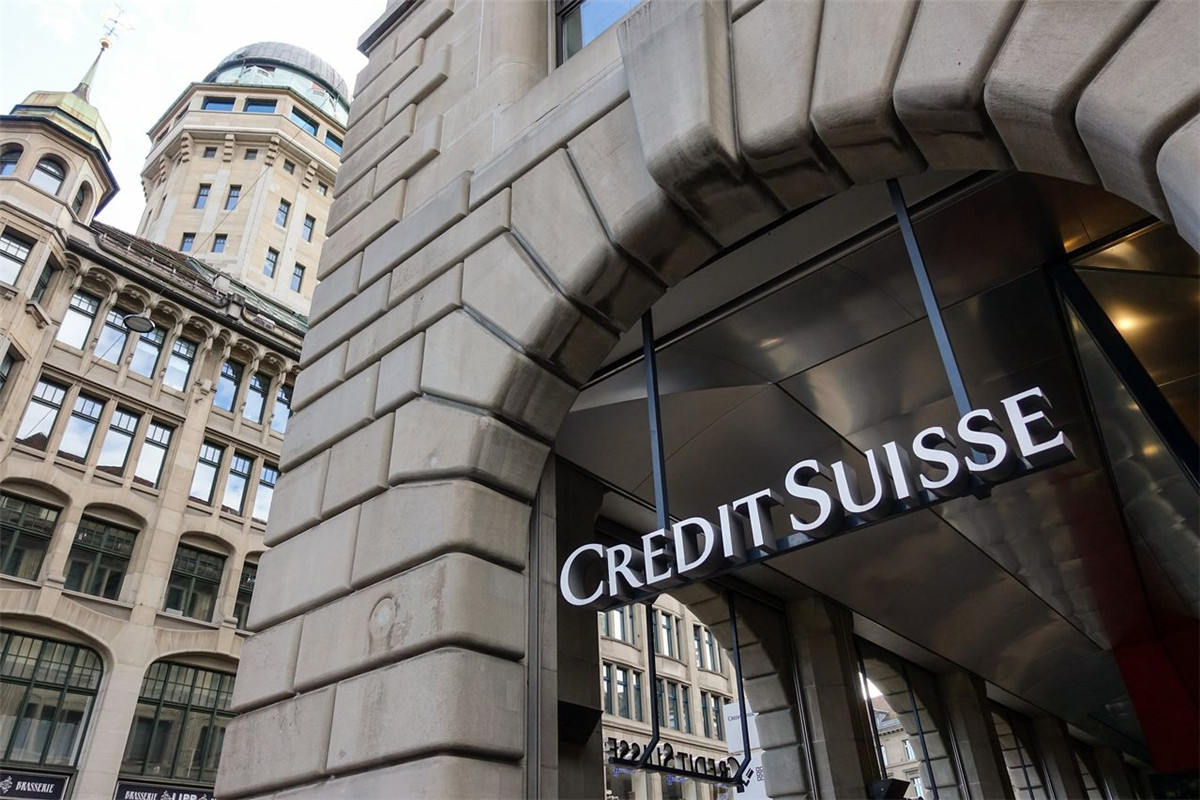
Credit Suisse collapsed because confidence evaporated after years of losses, scandals, and weak risk management.
UBS bought Credit Suisse for CHF 3 billion, with Swiss authorities supporting the rescue through liquidity measures and a CHF 9 billion loss guarantee.
Around CHF 16 billion of Credit Suisse AT1 bonds were written down, creating a dispute over investor hierarchy.
By 2025 and 2026, UBS integration and tougher Swiss banking reforms had turned the rescue into a long-term regulatory issue.
Credit Suisse entered 2023 already weakened. It had changed leadership several times, absorbed repeated legal costs, and tried to convince investors that a restructuring could restore stability. The plan needed time. The market did not give it any.
The immediate pressure came after Silicon Valley Bank failed in the United States in March 2023. Investors began looking for the next vulnerable bank, and Credit Suisse was an obvious target because confidence had already been damaged.
The final trigger was a public loss of confidence. Saudi National Bank, Credit Suisse’s largest shareholder, said it would not provide more capital. Regulatory limits were part of the explanation, but markets heard something simpler: the largest shareholder was unwilling to provide support.
In a calm market, that statement might have passed. In March 2023, it became a signal for clients, counterparties, and investors to reduce exposure. Depositors do not need to prove insolvency before they leave. They only need to believe others may leave first.
For UBS, the deal had value and danger. Credit Suisse still owned wealth management relationships, Swiss domestic banking operations, and global client franchises. It also carried litigation risk, complex trading books, duplicated systems, and a damaged brand. UBS therefore needed a low price and public protection.
Swiss authorities helped create that structure. The package included a CHF 9 billion guarantee for UBS against potential losses on specific Credit Suisse assets, plus liquidity support linked to the Swiss National Bank and federal measures. UBS later terminated the protection arrangements after reviewing the acquired assets, and Swiss authorities reported that there was no taxpayer loss from those guarantees.
The deal stopped the immediate panic, but it left Switzerland with a larger policy question. If Credit Suisse had been too big to fail, the combined UBS would have become even harder to resolve in a future crisis.
AT1 bonds are risky bank capital instruments. They pay higher yields because investors accept the possibility that the bonds can be written down or converted into equity when a bank faces severe stress.
In Credit Suisse’s case, around CHF 16 billion of AT1 instruments were written down to zero, while shareholders still received UBS shares. That shocked bond investors because it appeared to reverse the usual assumption that equity absorbs losses first. FINMA said extraordinary government support triggered a complete write-down.
The dispute continued after the rescue. In October 2025, the Swiss Federal Administrative Court ruled in a lead case that FINMA’s decision lacked a sufficient legal basis. FINMA said it would appeal to the Federal Supreme Court. The case affects how investors price bank capital instruments in future crises.
Credit Suisse failed because its credibility had been weakening for years.
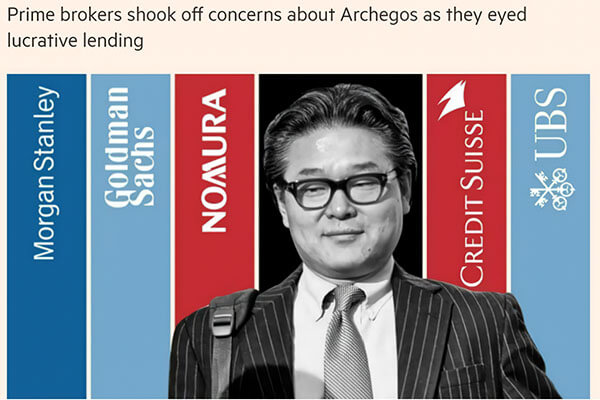
The Archegos Capital collapse was one of the clearest examples. Credit Suisse suffered about $5.5 billion in losses after failing to properly manage counterparty exposure. The issue was that a major global bank allowed risk concentration to build, even though senior controls did not stop it.
Greensill Capital damaged confidence further. Credit Suisse had sold funds linked to Greensill to wealth clients, then had to freeze and wind down those funds when Greensill collapsed. For a bank built partly on a private banking trust, that episode directly affected the client franchise.
Other scandals compounded the damage. Tax disputes, spying allegations, compliance failures, and executive turnover created a pattern. Each issue looked separate. Together, they suggested a deeper cultural weakness.
Bank risk is not limited to capital ratios. A bank can meet regulatory requirements and still become fragile if clients doubt its judgment, counterparties reduce limits, employees leave, and funding becomes more expensive.
The Credit Suisse story did not end when UBS signed the deal. UBS still had to absorb clients, technology platforms, legal entities, risk books, employees, and compliance obligations across multiple jurisdictions.
By the third quarter of 2025, UBS reported that more than two-thirds of Swiss-booked client accounts had migrated, Asset Management integration was substantially complete, and cumulative cost reductions had reached $10 billion. The market’s question changed from whether Credit Suisse could survive to whether UBS could absorb it without creating a new concentration risk.
The rescue forced Switzerland to confront an uncomfortable issue. A country can save one major bank by merging it into another. But if that second bank becomes much larger, the next crisis may be harder to manage.
In April 2026, the Swiss Federal Council adopted proposals to strengthen too-big-to-fail rules. A key measure would require systemically important banks to fully back foreign subsidiary participations with Common Equity Tier 1 capital. The goal is to reduce the risk that the state, taxpayers, or the wider economy must again carry an emergency rescue.
For investors, this matters because regulation changes after crises. In a systemic event, legal structure, capital ranking, liquidity access, and political urgency all affect outcomes.
Credit Suisse collapsed due to scandals, losses, and management instability, which destroyed confidence. The March 2023 banking panic and the Saudi National Bank’s capital comment accelerated the crisis, but they did not create the underlying weakness.
The AT1 bonds were written down while shareholders still received UBS shares. That challenged normal expectations about loss hierarchy and later led to court challenges over FINMA’s legal authority.
Credit Suisse no longer operates as an independent Swiss banking group. UBS completed major legal mergers in 2024, and the brand, systems, and client accounts have been progressively absorbed into UBS.
Credit Suisse did not disappear because of one dramatic headline. It disappeared because trust had been drained by years of weak risk controls, strategic confusion, and reputational damage.
UBS ended the immediate crisis, but the rescue sparked a broader debate over bank regulation, investor hierarchy, and Switzerland’s reliance on a single enlarged banking champion. The Credit Suisse collapse remains one of the clearest modern examples of how confidence, once lost, can turn a historic institution into a weekend rescue.
Disclaimer: This material is for general information purposes only and is not intended as (and should not be considered to be) financial, investment or other advice on which reliance should be placed. No opinion given in the material constitutes a recommendation by EBC or the author that any particular investment, security, transaction or investment strategy is suitable for any specific person.