Published on: 2023-10-17
Updated on: 2026-05-13
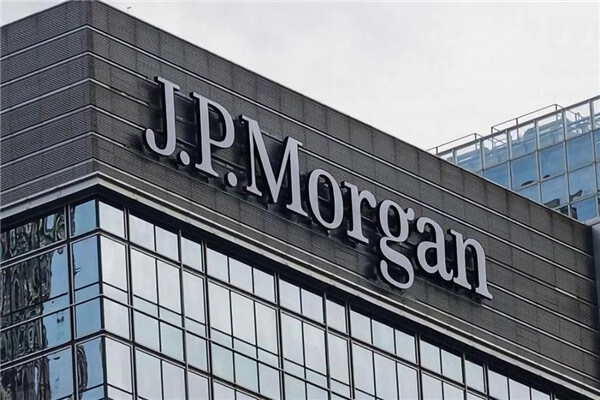
Jamie Dimon remains one of Wall Street’s clearest examples of how executive leadership, stock ownership, and disciplined risk management can compound into personal wealth. As chairman and CEO of JPMorgan Chase, Jamie Dimon is not simply a highly paid banker. He is a long-term shareholder in the institution he has led through financial crises, banking shocks, inflation cycles, and one of the strongest profit runs in modern U.S. banking.
That makes his money life more interesting than a standard CEO salary story. In 2025, JPMorgan Chase delivered record managed revenue of $185.6 billion, net income of $57.0 billion, return on equity of 17%, and return on tangible common equity of 20%. The bank then opened 2026 with first-quarter net income of $16.5 billion, supported by strong results across trading, investment banking, payments, consumer banking, and wealth management.
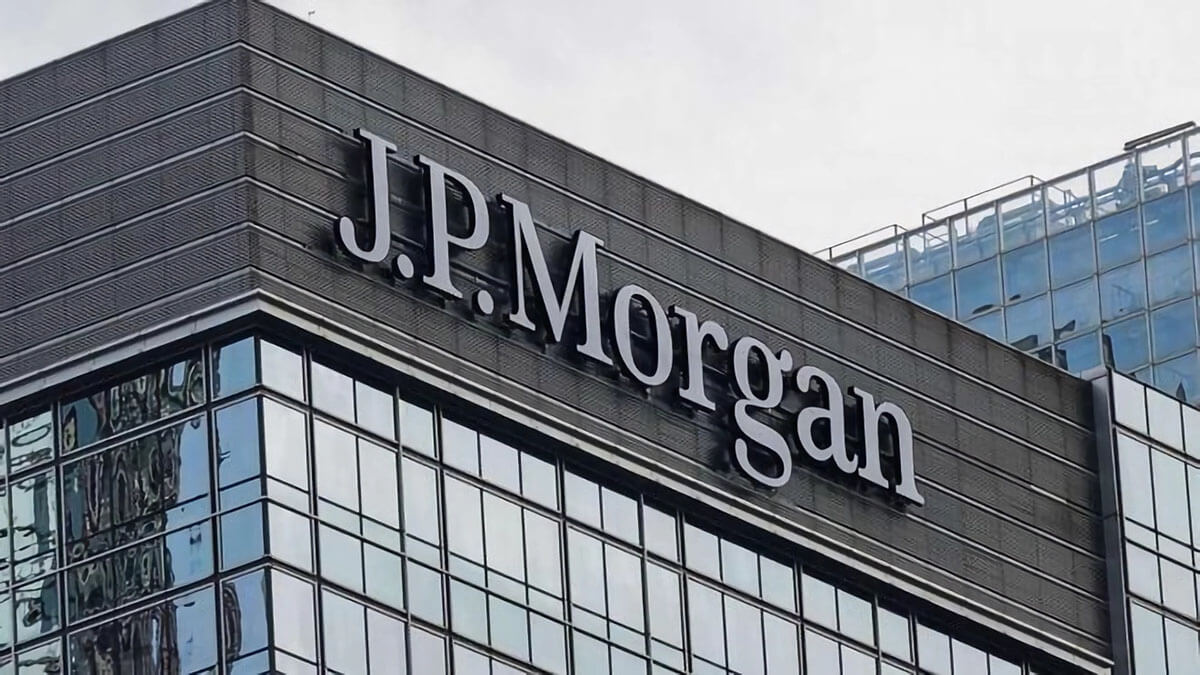
Jamie Dimon’s wealth comes mainly from JPMorgan Chase stock, equity awards, long-term compensation, and decades of value creation.
His 2025 annual compensation reached $43 million, including a $1.5 million salary, $5 million cash incentive, and $36.5 million in performance share units.
Dimon beneficially owned 6.27 million JPMorgan shares as of February 28, 2026, plus 653,426 additional underlying stock units.
JPMorgan’s 2025 net income of $57.0 billion and 20% ROTCE support the board’s argument that Dimon’s pay is tied to performance.
The biggest 2026 issue is no longer whether Dimon is influential, but how JPMorgan prepares for succession after a two-decade CEO era.
Jamie Dimon’s personal fortune is built differently from that of a founder-billionaire. He did not create JPMorgan Chase from scratch, nor does he own a controlling stake in it. His wealth comes from staying at the centre of a public financial institution and holding a meaningful stake in it as its earnings power expanded.
His 2025 compensation shows how that model works. JPMorgan awarded Dimon a total annual compensation of $43 million. The package included $1.5 million in salary, $5 million in cash incentive compensation, and $36.5 million in performance share units. His total compensation rose from $36 million in 2023 to $39 million in 2024, reflecting the bank’s strong multi-year results.
This is the point that the older version of the article failed to explain clearly. Dimon’s wealth is not just “salary.” It is stock exposure. When JPMorgan earns more, raises dividends, repurchases shares, and trades at a higher valuation, its personal balance sheet benefits. When bank stocks fall, credit losses rise, or investors question leadership continuity, that wealth can also move lower.
As of February 28, 2026, Dimon beneficially owned 6,266,647 JPMorgan common shares and had 653,426 additional underlying stock units. JPMorgan also states that each named executive officer’s beneficial ownership was below 1% of the bank’s outstanding common stock, which corrects the exaggerated ownership impression in the old article.
Dimon’s path to wealth began long before JPMorgan. He was born in New York in 1956, studied at Tufts University, and earned an MBA from Harvard Business School. His early career included American Express, Commercial Credit, Travellers, Smith Barney, Salomon Smith Barney, and Citigroup. These roles gave him experience in lending, brokerage, acquisitions, capital markets, and large-company integration.
The decisive turning point came in 2000, when he became chairman and CEO of Bank One. At the time, Bank One needed tighter controls and stronger execution. Dimon cut costs, repaired operations, and strengthened the bank’s credibility. JPMorgan Chase merged with Bank One in 2004, bringing Dimon into the combined company as president and chief operating officer. He became JPMorgan Chase's CEO on January 1, 2006, and chairman the following year.
That timeline matters because it separates Dimon from short-cycle executives. His wealth accumulated over decades of retained equity, not a single transaction. He became rich by staying exposed to the same company whose performance he controlled.
Jamie Dimon’s reputation was built during stress. JPMorgan entered the 2008 financial crisis in stronger condition than many rivals, acquired Bear Stearns and Washington Mutual, and emerged with a larger franchise. That period shaped the image that still defines Dimon today: a CEO focused on capital, liquidity, controls, and what JPMorgan often calls a fortress balance sheet.
The scale of the bank gives his views unusual market weight. JPMorgan Chase is a leader in investment banking, consumer finance, commercial banking, payments, and asset management. In the first quarter of 2026, the firm reported managed revenue of $50.5 billion, ROTCE of 23%, a CET1 capital ratio of 14.3%, and $1.5 trillion of cash and marketable securities. Those numbers explain why investors listen when Dimon discusses credit, inflation, regulation, geopolitics, and consumer strength.
The bank’s first-quarter 2026 performance also showed why his wealth remains tied to several engines rather than one business line. Market revenue rose 20% year over year, investment banking fees increased 28%, consumer debit and credit card sales volume rose 9%, and asset and wealth management assets under management reached $4.8 trillion.
Dimon’s money life is a lesson in alignment. A large part of his compensation is equity-based, and his stock ownership keeps him financially connected to shareholders. JPMorgan’s dividend growth and buybacks add another layer. In the first quarter of 2026, the bank paid $4.1 billion in common dividends and repurchased $8.1 billion of common stock.
This does not mean every investor sees his pay as uncontroversial. A $43 million package is large even by Wall Street standards. The stronger argument is that JPMorgan’s board can point to measurable performance: record revenue, high ROTCE, strong capital ratios, and consistent franchise gains. The weaker argument is governance. As long as Dimon remains both chairman and CEO, critics will question whether board oversight is sufficiently independent.
That debate became more visible in 2026. Proxy advisers ISS and Glass Lewis supported a shareholder proposal to split JPMorgan’s chair and CEO roles, citing concerns about concentrated authority at a complex global bank. JPMorgan opposed the proposal, arguing that its current leadership structure has supported strong long-term performance.
The next chapter of Jamie Dimon’s money life is succession. Investors already know he is one of the most successful bank CEOs of his generation. What they do not know is whether JPMorgan can preserve the same operating discipline after him.
JPMorgan has been preparing senior leaders across consumer banking, commercial and investment banking, asset and wealth management, and finance. That preparation matters because the bank’s valuation includes a leadership premium. If investors believe succession is orderly, the premium can survive. If the transition looks uncertain, the stock could lose some of the confidence Dimon has built.
The operating environment also looks more complex than the headline profit numbers suggest. Dimon warned in April 2026 that the U.S. economy remained resilient, but risks included geopolitical tensions, wars, energy price volatility, trade uncertainty, large fiscal deficits, and elevated asset prices. He also pointed to AI-driven capital investment as one of the forces supporting growth.
That is why Jamie Dimon’s wealth story still matters. It is not only about one executive becoming a billionaire. It is about how leadership, ownership, risk control, and market cycles interact inside the world’s most important banking franchise.
Jamie Dimon is widely regarded as a billionaire, with most of his wealth tied to JPMorgan Chase stock and long-term equity awards. His net worth changes with JPMorgan’s share price, compensation awards, taxes, charitable giving, and personal investment decisions.
Jamie Dimon’s base salary for 2025 was $1.5 million. His total annual compensation was $43 million, including $5 million in cash incentive compensation and $36.5 million in performance share units.
As of February 28, 2026, Dimon beneficially owned 6,266,647 JPMorgan common shares. Including additional underlying stock units, his total exposure shown in the proxy table was 6,920,073 shares and stock units.
Jamie Dimon became CEO of JPMorgan Chase on January 1, 2006. He became chairman one year later, after joining the company through JPMorgan’s 2004 merger with Bank One.
Dimon leads the largest and most systemically important U.S. banking franchise. His comments matter because they combine JPMorgan’s internal data on consumers, companies, markets, payments, credit, liquidity, and global capital flows.
Jamie Dimon’s wealth is not a simple story of salary. It is the result of equity ownership, long-term compensation, disciplined leadership, and JPMorgan Chase’s expansion into a more profitable and diversified financial institution.
For readers, the useful lesson is clear. Dimon became wealthy because his incentives were tied to the bank’s long-term performance. For investors, the next question is equally clear. JPMorgan must prove that its fortress-balance-sheet culture can outlast the executive most closely associated with it.
Disclaimer: This material is for general information purposes only and is not intended as (and should not be considered to be) financial, investment or other advice on which reliance should be placed. No opinion given in the material constitutes a recommendation by EBC or the author that any particular investment, security, transaction or investment strategy is suitable for any specific person.